
Teachers / No. 012
Who was Jesus and what did he teach?
Jesus of Nazareth was a first-century Jewish teacher from Galilee, crucified by Roman authority under Pontius Pilate around 30 CE. Jesus announced the kingdom of God: God’s rule drawing near, calling people to change their lives. The Gospels connect that announcement with love of God and neighbour, mercy, forgiveness, care for the poor, prayer and the difficult command to love enemies. Christians worship Jesus as the risen Christ; historians distinguish that confession from what surviving evidence can establish. [1] [31] [35] [32]
A seed in a field. A debt released. A stranger who stops on the road. Jesus taught with things people could hold in their hands, and then made those things disturb the way they lived. The stories remain small enough to remember and large enough to disagree over. Here the teacher stays within his Jewish world, the texts keep their differences, and readers from other worlds have room to answer.
What do historians agree on about Jesus, and what is uncertain?
Historians overwhelmingly accept that Jesus existed, was Jewish, taught in Galilee, was baptised by John the Baptist and was crucified under Pontius Pilate. Baptism and crucifixion are more securely attested than routes, exact sayings or Jesus’ understanding of his identity. [60] [2] [1]
Which sources about Jesus are earliest?
Jesus left no surviving writing of his own. Paul’s undisputed letters, written in the 50s CE, precede the surviving narrative Gospels. Galatians 1:18-19 describes Paul spending fifteen days with Peter and meeting James, Jesus’ brother. In 1 Corinthians 15:3-8 Paul passes on a resurrection tradition he says he received. These letters give access to the early movement and some of its participants, rather than a continuous account of Jesus’ ministry. [1] [67] [50]
Mark is commonly dated around 70 CE, Matthew and Luke around 80-90 CE, and John around 90-100 CE, with wider ranges defended by scholars. These are composition dates: a story inside a Gospel may be older. Matthew and Luke use much of Mark, so three agreeing narratives may preserve one source rather than three independent witnesses. [2] [60]
Who wrote the Gospels?
The four Gospels do not identify their authors by name within their narratives. Matthew, Mark, Luke and John are traditional attributions; critical scholars distinguish these titles from an author’s signature. Dale Martin’s Yale lecture calls the works anonymous in this sense. Their accounts preserve earlier traditions while arranging them around the authors’ theological purposes. An attribution, a remembered witness and the person composing a book are separate historical questions. [70] [60]
Josephus’ Antiquities, completed around 94 CE, mentions James as the brother of Jesus who was called Christ in book 20. The longer Jesus passage in book 18 contains disputed Christian alterations. Historian Jona Lendering discusses John P. Meier’s reconstruction, which removes declarations of messiahship and resurrection; the received passage cannot be used uncritically as independent Jewish confirmation of Christian belief. Tacitus, writing in the early second century, reports Christ’s execution under Pilate during Tiberius’ reign in Annals 15.44. Neither author witnessed the ministry. [68] [69] [6]
How do historians evaluate the evidence?
Historians compare a source’s date, dependence on other texts, Jewish and Roman setting, and theological interests. Martin illustrates two traditional criteria: independent attestation and material that cuts against a narrator’s purposes. Jesus’ baptism by John, for example, required explanation as Christian claims for Jesus grew. Such arguments weigh probabilities; they do not mechanically certify individual sayings. A Greek theological narrative can preserve historical memory without being a verbatim record. [60]
What remains uncertain about Jesus?
Jesus’ birth is often placed around 6-4 BCE, but an exact year is unavailable. Matthew and Luke locate the birth in Bethlehem through different narratives; Nazareth is the much firmer point of connection with Jesus’ upbringing. The execution is usually placed in 30 or 33 CE. The traditional Christmas date is a later liturgical observance, not a birthday supplied by the Gospels. [2]
Historians differ over whether Jesus is best understood chiefly as an apocalyptic prophet expecting God’s decisive intervention, a wisdom teacher, a healer or a social critic. Ehrman and Martin stress Jewish apocalyptic expectation; other reconstructions give different weight to the sayings and actions. These portraits overlap, but their emphases change how an announcement of God’s kingdom is heard. [60] [1]
What happened in Jesus’ life?
Jesus’ public life runs in the Gospels from baptism in the Jordan through teaching and healing in Galilee to a final confrontation and execution in Jerusalem. The texts agree on that broad movement while arranging particular events differently. [31] [2]

- Family and work. The Gospels identify Mary as Jesus’ mother, associate Joseph with his family, and describe Jesus or Joseph with the Greek word tekton, an artisan or builder, traditionally translated carpenter. Narratives of a miraculous birth belong to Matthew and Luke; Mark begins with the adult ministry. [2]
- Baptism and announcement. In Mark 1, John baptises Jesus, Jesus enters the wilderness, and then announces God’s kingdom in Galilee. The narrative links a change of life with an urgent expectation. [31]
- Teaching, healing and company. Jesus calls fishermen, teaches in synagogues and open places, heals, performs exorcisms and shares meals. The healing stories attest what the communities believed about Jesus’ power; historical investigation cannot simply verify their supernatural explanation. [31] [48]
- Jerusalem. The Gospels bring Jesus to the city at Passover. The temple action, arrest, hearing before Pilate and crucifixion form the last movement. John places the temple action early in the narrative; the Synoptic Gospels place it near the end. Arrangement itself tells us something about the authors’ purposes. [2]
- After the execution. Jesus’ followers proclaimed that God had raised him. Paul’s earlier written testimony and the later Gospel accounts preserve different forms of that proclamation. The emergence of the conviction is a historical question; the event confessed by faith requires another kind of judgement. [50]
Jesus’ Jewish setting matters at every step. Sabbath, Passover, synagogue, temple, the Psalms and the Torah were the world of the teaching. Galilee was governed by Herod Antipas under Roman supremacy; Judaea was under direct Roman rule during Pilate’s prefecture. An argument inside that world should not be turned into an opposition between a supposedly loveless Judaism and a compassionate Jesus. [2] [7]
What does Yeshua mean, and did Jesus call himself teacher?
Yeshua is a shorter form of Yehoshua, the name rendered Joshua in English, conventionally understood as meaning that YHWH saves. English Jesus comes through Greek Iēsous and Latin Iesus. Christ is a title, from Greek christos, anointed one, corresponding to Messiah; it was not a family surname. Of Nazareth identifies a place of association. [62] [2]
Yes, John’s Gospel explicitly portrays Jesus accepting the title teacher. After washing the disciples’ feet, Jesus says: You call me, ‘Teacher’ and ‘Lord.’ You say so correctly, for so I am.
John 13:13, World English Bible. The next movement explains the title through an action: the teacher has washed feet and asks the disciples to do likewise. [38]
Rabbi is another Gospel address, usually rendered teacher or master. It should not automatically imply the later institutional training and ordination associated with the title. [2] [38]
What did Jesus teach about the kingdom of God?
Jesus taught that God’s kingdom was drawing near: God’s rule would overturn what was wrong and called for a changed life in the present. The kingdom is the organising announcement behind the sayings, healings, meals and parables. Matthew frequently uses kingdom of heaven; that expression does not by itself mean a different destination. [31] [3]
Mark gives the announcement its shortest shape: The time is fulfilled, and God’s Kingdom is at hand! Repent, and believe in the Good News.
Mark 1:15, World English Bible. Repentance here involves a turning of life. The demand reaches the purse, the table, the quarrel and the treatment of a stranger. [31]
The texts hold future and present together without resolving every tension. The Lord’s Prayer asks for the kingdom to come. The mustard seed and yeast describe an apparently small beginning with effects beyond its appearance. Luke connects God’s kingdom with Jesus’ activity in the present. Historians debate how strongly Jesus expected an imminent public transformation; Christian traditions differ over how the kingdom is already present and still awaited. A purely private state of calm is too small for the range of these texts. [33] [39] [51] [1]
Did Jesus say that the kingdom of God is within you?
Jesus says, in the World English Bible’s rendering of Luke 17:21, God’s Kingdom is within you.
The Greek expression entos hymōn is also understood as among you or in your midst. The New Revised Standard Version Updated Edition chooses that communal rendering and notes the alternative. Jesus is answering Pharisees in this scene, which is one reason interpreters hesitate to make it a direct declaration about an inward kingdom in each hearer. [37] [5]
Our reading: the inner and outward questions can illuminate each other without making the translations identical. A person can begin by changing the attention, fear and appetite from which an action grows. The action still has to reach another person. An inwardly treasured kingdom that leaves the hungry unfed would collide with Jesus’ teaching about mercy. That is a reading of the connection between passages, not a proof that Luke meant a particular modern psychology.
What did Jesus mean by the Son of Man?
The Son of Man is an expression the Gospels place on Jesus’ lips for authority, suffering and future vindication. Mark 2:10 links it to forgiving sins; Mark 8:31 to rejection, death and resurrection; Mark 14:62 to a figure coming with heaven’s clouds. The last image recalls Daniel 7:13-14, where a humanlike figure receives enduring dominion after visions of beastlike kingdoms. It gives Jesus’ kingdom teaching an apocalyptic horizon as well as an ethical demand. The historical meaning of Jesus’ identity claims remains disputed; the Gospel uses should not all be flattened into a synonym for teacher. [71] [72] [73] [74] [60]
What is the Sermon on the Mount?
The Sermon on the Mount is the collection of Jesus’ teaching in Matthew 5-7, beginning with the Beatitudes and ending with the image of a house built on rock. Matthew presents Jesus teaching from a mountain; Luke 6 preserves related material in a level-place setting. We cannot establish that Matthew transcribes one continuous speech delivered on one occasion. [32] [34] [36] [4]
Why does Matthew present Jesus as a new Moses?
Matthew’s mountain setting evokes Moses receiving and teaching God’s law at Sinai. BibleProject’s reading connects the gathered people, mountain and instruction with Israel’s foundational story. Jesus interprets the Torah with authority while explicitly affirming its fulfilment in Matthew 5:17-20. The parallel is a literary and theological claim within Matthew: the sermon renews Israel’s question of how to live before God, rather than introducing love into a religion that lacked it. [4] [32]
What are the Beatitudes?
The Beatitudes are blessings pronounced on people whose situation hardly looks blessed: the poor in spirit, mourners, the gentle, those longing for righteousness, the merciful, the pure in heart, peacemakers and the persecuted. Jesus’ opening reorders the audience’s estimate of a successful life. One line reads: Blessed are the peacemakers, for they shall be called children of God.
Matthew 5:9, World English Bible. [32]
Matthew’s poor in spirit and Luke’s poor are related but distinct formulations. Luke places warnings to the rich, the full and the publicly praised beside the blessings. Keeping the difference visible prevents an exclusively inward reading from erasing material poverty, and prevents a social summary from exhausting Matthew’s language. [32] [36]
Did Jesus reject the Jewish law?
Jesus says in Matthew 5:17 that he has come to fulfil the Law and the Prophets, not abolish them. The sermon then presses beneath an outward act into anger, contempt, desire, honesty and reconciliation. The relationship between that fulfilment and later Christian practice has produced centuries of interpretation. Matthew’s claim cannot fairly be reduced to the idea that Jews had rules and Jesus replaced them with love. [32] [4]
What did Jesus mean by loving your neighbour and your enemy?
Jesus joins love of God and love of neighbour in Mark 12:28-34, drawing on Deuteronomy 6:4-5 and Leviticus 19:18. The second commandment reads: You shall love your neighbor as yourself.
Mark 12:31, World English Bible. Jesus is interpreting Jewish scripture, and the scribe in the scene recognises the answer’s force. [35]
The Sermon on the Mount extends love to enemies and prayer to persecutors. Jesus’ examples include turning the other cheek and going a second mile when compelled to walk the first, in Matthew 5:38-42. Readers have understood these sayings as non-retaliation, active nonviolence or radical renunciation; the demand resists a simple equation of goodness with defeating an opponent. Its example is the sun and rain reaching both the just and the unjust. The Golden Rule in Matthew 7:12 asks hearers to do for others what they would want others to do for them. These demands leave very little room for a moral life built entirely around deserving recipients. [32] [34]
Our reading: loving a neighbour as oneself removes the comfortable distance that makes another person’s pain feel less real. The stranger is no longer a separate category of concern. Enemy-love asks whether that recognition can survive hostility. This is an ethical interpretation, not a claim that Jesus was teaching that every person is metaphysically identical. The question continues on the oneness of humanity.
What did Jesus teach about wealth, anxiety and judgement?
Jesus warns against serving wealth as a master, storing treasure as if security could be made permanent, and using religion as a public display. Matthew 6 places the birds and flowers beside the anxious human need for food and clothing. Matthew 7 exposes judgement that notices a splinter in another person while overlooking a beam in oneself. The sermon closes by distinguishing hearing the teaching from doing it: a house has to stand when weather arrives. [33] [34]
Why should good works be visible if prayer is private?
Jesus compares his hearers to salt, a city on a hill and a lamp on a stand in Matthew 5:13-16: their good works should help others and direct attention to God. Matthew 6:1-6 warns against giving and praying in order to win spectators’ praise. The distinction turns on the purpose of visibility. A lamp serves the room; a performance makes the room serve the performer. [32] [33]
What is the Lord’s Prayer?
The Lord’s Prayer is the model prayer Jesus gives in Matthew 6:9-13 and, in a shorter form, Luke 11:2-4. Matthew places it inside teaching about prayer without display or empty repetition. The prayer begins with God’s name and kingdom, then turns to bread, forgiveness and deliverance. [33] [51]
In Matthew 6:9-13, World English Bible, the petitions read:
Our Father in heaven, may your name be kept holy.
Let your Kingdom come.
Let your will be done on earth as it is in heaven.
Give us today our daily bread.
Forgive us our debts,
as we also forgive our debtors.
Bring us not into temptation,
but deliver us from the evil one.
[33]
Matthew’s debts become sins in Luke’s first formulation, though Luke also speaks of people indebted to us. The closing praise beginning For yours is the Kingdom appears in the World English Bible’s Matthew text with a manuscript note; other manuscript traditions omit it. That explains why worshippers know different endings. There is also a translation choice between deliverance from evil and from the evil one. [33] [51]
Our reading: the prayer’s scale contracts from heaven to a loaf of bread without a break in seriousness. Its repeated plural makes even the quietest recitation social. Bread is ours; forgiveness is something asked for and something enacted.
What are Jesus’ main parables, and what do they mean?
Jesus’ parables are brief stories and comparisons that make a listener reconsider God, judgement, mercy or ordinary conduct. Their meanings often turn on a disruption: a stranger acts well, late workers receive a full wage, or the respectable person misses what a compromised person understands. The summaries below give a first reading; each story can bear more than a single moral. [39] [40] [42] [43]
- The sower, Mark 4:1-20; Matthew 13:1-23. Seed falls on a path, rocky ground, thorns and good soil. The attached explanation connects these soils with different receptions of the message. Hearing is exposed to shallowness, pressure and distraction; its fruit depends on what happens after the first encounter. [39]
- The mustard seed, Matthew 13:31-32. A tiny seed grows into a plant large enough for birds to shelter in. The comparison makes small beginnings difficult to dismiss. The point is the kingdom’s unexpected scale, rather than a modern botanical claim about the smallest seed on earth. [39]
- The yeast, Matthew 13:33. A woman works a little yeast through a large quantity of flour. The kingdom’s effect can be pervasive while its operation is hidden. A domestic act carries the weight of a cosmic expectation. [39]
- The hidden treasure and the pearl, Matthew 13:44-46. A finder and a merchant sell what they possess to obtain something of surpassing value. The kingdom changes the comparison by which everything else is valued. The stories are about recognition and commitment, not a promise of financial profit. [39]
- The Good Samaritan, Luke 10:25-37. A wounded man receives help from a Samaritan after other travellers pass. The question shifts from deciding who qualifies as a neighbour to asking who becomes a neighbour through mercy. Jesus gives the exemplary action to someone outside the audience’s familiar religious centre. The story should not make all priests or all Jews into its villains. [40]
- The lost sheep and lost coin, Luke 15:1-10. A shepherd searches and a woman searches; finding ends in shared joy. The stories answer complaints about Jesus receiving sinners. Their centre is the value of the one who has gone missing, and the celebration that recovery deserves. [41]
- The prodigal son, Luke 15:11-32. A younger son wastes his inheritance and returns; the father welcomes him before his status can be earned back. An elder son resents the celebration. Calling it the parable of the two sons makes the unfinished question audible: can the obedient brother enter the joy? Forgiveness unsettles both guilt and self-righteousness. [41]
- The workers in the vineyard, Matthew 20:1-16. Workers hired late receive the same agreed daily wage as those hired early. The story makes generosity feel offensive to people measuring worth by comparison. It raises a question about the giver’s freedom and the observer’s envy; it is not a complete theory of employment. [42]
- The Pharisee and the tax collector, Luke 18:9-14. One worshipper praises his own religious record; another asks for mercy. Jesus directs the ending against self-exaltation. The danger is an attitude available to any reader, including the reader who congratulates themselves for being unlike the Pharisee. [43]
- The persistent widow, Luke 18:1-8. A widow keeps demanding justice from an unjust judge until the judge acts. Luke introduces the story as encouragement to pray without giving up. The comparison does not make God an unjust judge; the contrast intensifies the expectation that justice should be heard. [43]
- The rich man and Lazarus, Luke 16:19-31. Wealth and destitution are reversed after death. The rich man’s proximity to suffering never became attention to it. The ending turns back toward the hearer’s existing obligations, rather than offering a reliable map of the afterlife. [44]
- The talents, Matthew 25:14-30. Servants receive their master’s money and respond differently during his absence. In Matthew’s setting the story concerns responsibility before an eventual reckoning. A talent here is a large monetary unit, not originally a word for artistic ability; the later English meaning can conceal the story’s economic force. [45]
Judgement is part of this teaching too. The weeds and the wheat in Matthew 13 postpone a destructive sorting; the bridesmaids and the sheep and goats in Matthew 25 insist that readiness and conduct matter. A portrait consisting only of reassuring sayings would lose the warnings. A portrait consisting only of warnings would lose the father running to meet his son. [39] [45] [41]
Whom did Jesus welcome, and what did forgiveness demand?
Jesus welcomes people whom the Gospel narratives describe as sinners, and that welcome becomes a dispute about what restoration requires. Luke 15 places the lost sheep, lost coin and returning son inside complaints about Jesus receiving such people and eating with them. The table makes forgiveness visible before the story explains it. [41]
The company was wider than the named male disciples. Luke 8 identifies Mary Magdalene, Joanna and Susanna among women supporting the ministry from their resources. Luke 10 shows Mary listening as a disciple at Jesus’ feet while Martha attends to hospitality. Mark 10 has Jesus receive children when the disciples try to turn them away. These scenes move people usually treated as background into the teaching’s foreground. [48] [40] [49]
Jesus’ teaching also contains difficult demands. Mark 10 joins a warning about wealth to a request that a rich man sell, give to the poor and follow. The same chapter has a stringent teaching about divorce. Matthew 6 connects receiving forgiveness with forgiving others. Generosity and mercy do not make the texts morally weightless. [49] [33]
Matthew 18:21-35 makes forgiveness more than a favourable feeling. Peter asks how often to forgive; Jesus rejects a small tally, then tells of a servant released from an immense debt who refuses mercy over a much smaller one. The World English Bible renders the reply as seventy times seven; other translations read seventy-seven. The point of the narrative is the failure of received mercy to become mercy given. [63]
What about the woman threatened with stoning?
The woman accused of adultery appears in John 7:53 to 8:11, a much-loved passage with an important textual difficulty. Jesus disperses the accusers and tells the woman: Neither do I condemn you. Go your way. From now on, sin no more.
John 8:11, World English Bible. The edition flags uncertainty about the passage’s place in the original text; the story is absent from the earliest surviving manuscripts of John. Its influence on Christian imagination is clearer than its status as evidence for an event in Jesus’ life. [46] [2]
Our reading: the returning son and the spared woman make room to distinguish a deed from the whole person. Wrongdoing can be named without deciding that its author has no future. The stories concern the possibility of return, not the removal of responsibility.
What was the Last Supper, and what is the Eucharist?
The Last Supper is Jesus’ final meal with his disciples before his arrest. Mark 14:12-25 presents a Passover meal in which Jesus shares bread and a cup, connecting them with his body and covenant blood, then looks towards drinking anew in God’s kingdom. Paul’s earlier account in 1 Corinthians 11:23-26 transmits the bread-and-cup tradition as an act of remembrance and a proclamation of Jesus’ death until his return. [74] [76]
The Eucharist, also called Holy Communion or the Lord’s Supper, is the Christian celebration of that meal. Catholic teaching describes a sacramental memorial of Christ’s death and resurrection; the Anglican catechism identifies bread and wine as its outward signs and Christ’s body and blood as the inward reality received by the faithful. Paul also rebukes a congregation where some feast while others go hungry: remembrance is damaged when the table humiliates the poor. The meal joins worship, hope and the obligations of eating together. [84] [78] [76]
Who were the twelve disciples?
The twelve disciples are the named inner group whom Mark 3:13-19 presents Jesus appointing to accompany him and be sent out. Mark’s list gives Simon, whom Jesus names Peter; James son of Zebedee; John, James’ brother; Andrew; Philip; Bartholomew; Matthew; Thomas; James son of Alphaeus; Thaddaeus; Simon the Zealot; and Judas Iscariot. [47]
Luke 6 gives Judas son of James where Mark has Thaddaeus. The traditional identification of those names is a harmonisation, rather than something both lists explain. The number twelve evokes the tribes of Israel and the renewal of Israel in Jesus’ mission. Disciple means learner or follower; apostle concerns being sent. The words overlap in the narratives without making every follower a member of the Twelve. [36] [1]
Paul was not one of the original Twelve. Mary Magdalene was not on those lists either, but the Gospel resurrection narratives give her a major place. A history restricted to the list of male names would miss both the women in the ministry and the wider circle through which the teaching travelled. [48] [50] [2]
Why was Jesus crucified, and what can history say about resurrection?
Jesus was crucified by Roman authority under Pontius Pilate on a charge associated with kingship. The precise motives and proceedings are less secure than the execution itself. Mark’s cross inscription identifies Jesus as king of the Jews; Martin’s reconstruction connects the Roman response with the temple action and the possibility of unrest. A kingdom announced in occupied territory could be heard as a political threat even without an army. [75] [60] [6]
Mark 14:53-65 describes a hearing before the high priest and council: testimony about the temple fails to agree, and Jesus’ answer about Messiah and the Son of Man leads to an accusation of blasphemy. In Mark 15:1-15, Pilate questions Jesus about kingship, releases Barabbas and hands Jesus over to be crucified. The narrative moves from a religious accusation to Roman punishment. It is a Gospel account shaped by its narrator, rather than surviving court minutes. [74] [75] [60]
The Gospels portray involvement by some Jerusalem authorities. They do not justify blaming Jewish people collectively, either then or later. Jesus, his first disciples and the scriptures through which they understood events were Jewish. The Catholic declaration Nostra aetate, issued in 1965, explicitly rejects attributing the Passion indiscriminately to all Jews of the time or to Jews today. The distinction matters both historically and because of the destructive afterlife of collective blame. [8]
Christians confess that God raised Jesus from the dead and understand the cross and resurrection as saving events. Paul’s account in 1 Corinthians 15:3-8 shows that proclamation established within the earliest surviving Christian correspondence. Historians can study the testimony and formation of belief; historical methods alone neither establish nor refute divine action. [50]
How does the world see Jesus?
Jesus is understood worldwide as the Christ confessed by Christians, a Jewish teacher studied within Judaism, the prophet Isa in Islam, and a figure reinterpreted by Hindu and Buddhist thinkers, poets and artists. The following voices are dated examples of later religious and literary interpretation, not first-century witnesses or spokespeople for entire communities. Admiration sometimes joins these readings; claims about divinity and resurrection divide them.
How do Christians understand Jesus beyond the image of a teacher?
Christians generally understand Jesus through identity as well as instruction: Messiah, risen Lord and, in the major creedal traditions, the incarnate Son of God. The Nicene Creed professes the Son’s divinity, becoming human, crucifixion, resurrection and future judgement. Paul’s first-century resurrection testimony already makes the death and raising central. Christianity therefore cannot be adequately described as an ethical school organised around memorable sayings. [77] [50]
Christian contemplation develops that relationship inwardly. Meister Eckhart, in his early fourteenth-century preaching, explores the birth of the Word in the soul. Pierre Teilhard de Chardin, in The Phenomenon of Man (published posthumously in 1955), approaches Christ in relation to the cosmos and its becoming. [65] [66]
How do Jewish readers understand Jesus?
Jewish readers can study Jesus as a Jewish historical figure without accepting Christian claims that he is the divine Son or the Messiah. Géza Vermes, the Hungarian-born Jewish scholar, made that context central in Jesus the Jew (1973) and The Religion of Jesus the Jew (1993). The University of Illinois’s record of his 1993 lecture documents that programme. Jesus’ arguments belong inside Jewish life before they become evidence for a separate Christian movement. [7]
This approach also corrects a recurrent distortion. Love of neighbour, care for vulnerable people and criticism of hypocrisy did not begin with Christianity. Jesus teaches from Jewish scriptures; the Mark 12 scribe answers him approvingly. Reading the encounter as two participants recognising something within a shared tradition is closer to the scene than making one religion the darkness behind another’s light. [35]
How do Muslims and Persian poets understand Jesus?
Muslims honour Jesus as Isa ibn Maryam, Jesus son of Mary, a messenger of God and the Messiah. The Qur’an, a seventh-century text, gives him an exceptional place while rejecting the Christian understanding of divine sonship in 4:171. Qur’an 4:157-158 underlies the mainstream Islamic belief that Jesus was not killed by crucifixion and was raised by God. This is an Islamic theological claim; historians’ judgement about Roman execution rests on a different body of evidence. [9] [10] [11]
In Persian poetry, Jesus also becomes a figure of life-restoring breath. Annemarie Schimmel’s 1991 Encyclopaedia Iranica essay traces that image through Jalal al-Din Rumi and other poets, largely from Qur’anic material. Breath, healing and the beloved’s kiss can enter one another’s language. The literary Jesus is a presence inside an Islamic imaginative world, not an accidental copy of a European painting. [12]
How have Hindu thinkers in India read Jesus?
Hindu interpretations of Jesus differ because Hindu traditions differ. Four influential modern readers approach Jesus through incarnation, spiritual experience and human possibility, without producing a Hindu consensus or a substitute account of first-century history.
Sri Ramakrishna is described in Swami Nikhilananda’s introduction to The Gospel of Sri Ramakrishna (1942) as encountering a picture of the Madonna and Child and experiencing a vision of Jesus in 1874. This devotional account presents Christ as an incarnation among other divine incarnations. [14]
Swami Vivekananda, speaking in Los Angeles in 1900 in Christ, the Messenger, honours Jesus as a spiritual power whose effect continues across centuries. His interpretation locates Jesus within an account of human capacity for divine realisation. [13]
Sri Aurobindo, in Essays on the Gita, first serialised in 1916-1920, considers Christ alongside Krishna and Buddha when explaining divine birth. The avatar, in his account, makes divine nature visible in a human life so that human nature can be transformed through that example. Jesus becomes a sign of what humanity may grow towards. This is Aurobindo’s philosophical theology, distinct from Christian accounts of the unique incarnation. [15]
Paramahansa Yogananda reads Jesus through inward spiritual realisation in The Second Coming of Christ, published posthumously in 2004. An excerpt preserved by Self-Realization Fellowship treats Christ as a presence to be received in consciousness through devotion. This reading belongs to Yogananda’s interpretation of yoga and the Gospels; it does not establish that Jesus historically taught yoga techniques. [16] [17]
How have Buddhists in Vietnam and Tibet read Jesus?
Thich Nhat Hanh, the Vietnamese Zen teacher, brings Jesus and the Buddha into dialogue through compassion and embodied practice in Living Buddha, Living Christ (1995). [64] The point is a lived meeting between traditions rather than a demand to erase either one. Readers approaching from Gautama Buddha can recognise shared ethical concerns while keeping differences about God, self and liberation in view. [18]
The Fourteenth Dalai Lama’s The Good Heart, published in 1996, offers a Buddhist perspective on Gospel teachings. His official bibliography identifies the work and its publication. A Buddhist reader can appreciate Jesus’ compassion and discipline without accepting resurrection or creation in a Christian sense. Respectful comparison can leave a disagreement intact. [19]
How have African and Latin American Christians read Jesus?
John S. Mbiti, the Kenyan theologian, argued in 1980 that African peoples already knew God through their own religious traditions when missionaries proclaimed Jesus. His The Encounter of Christian Faith and African Religion insists that African religious knowledge has its own history and names. This changes who gets to interpret the meeting: African people are participants with inherited understanding, not empty recipients of a European possession. [20]
Gustavo Gutiérrez, the Peruvian theologian, gave his Toward a Theology of Liberation address in Chimbote in 1968. Loyola University Chicago’s account connects liberation theology with the option for the poor and with passages including Matthew 25 and Luke 6. Jesus is read from the situation of people enduring structural poverty and oppression. The question becomes what salvation demands in the conditions that organise everyday suffering. [21]
How did a Japanese novelist imagine Jesus?
Shūsaku Endō’s A Life of Jesus, published in English in 1978, presents a Jesus whose love remains with people through failure and suffering. The Japanese Catholic novelist’s emphasis gives a particular emotional shape to the figure: companionship persists where worldly success disappears. [22]
Where can you visit the places of Jesus’ life?
Jesus’ life can be approached through Nazareth, Capernaum and the Sea of Galilee, the Jordan baptism sites, Bethlehem and Jerusalem. Landscapes, excavated buildings and traditional pilgrimage identifications offer different kinds of evidence; the surviving sanctuaries belong to the history of remembrance as well as to the places remembered.
What can you see in Nazareth and Bethlehem?
Nazareth in Galilee is Jesus’ home town in the Gospel tradition; its churches, including the Basilica of the Annunciation, preserve later devotional associations. Bethlehem, in the West Bank, is the birthplace named by Matthew and Luke. UNESCO carefully describes the Church of the Nativity as standing on a place identified by Christian tradition since the second century; the first church there was completed in 339 CE. A building can document a long tradition of remembrance without proving every detail of a birth narrative. [2] [24]
What can you see around the Sea of Galilee?
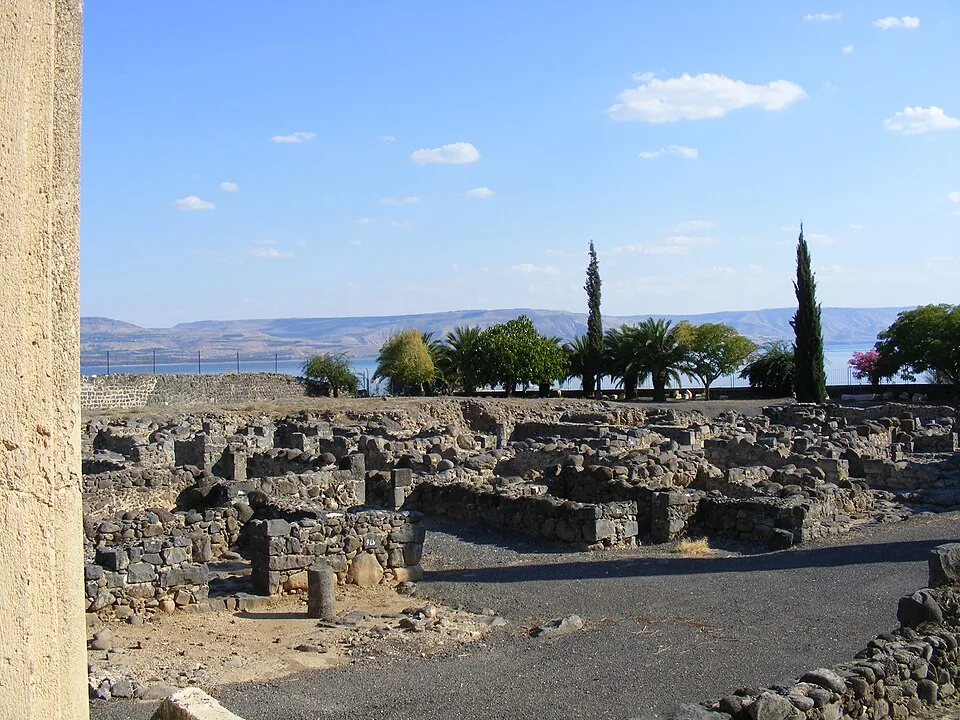
The Sea of Galilee gives the teaching its working landscape: fishing, boats, crossings, villages and cultivated shores. At Capernaum, ruins and successive places of worship reveal a village’s long religious history. The monumental pale limestone synagogue visible to visitors is later than Jesus; the house traditionally identified with Peter has its own archaeological and devotional history. [31] [23]
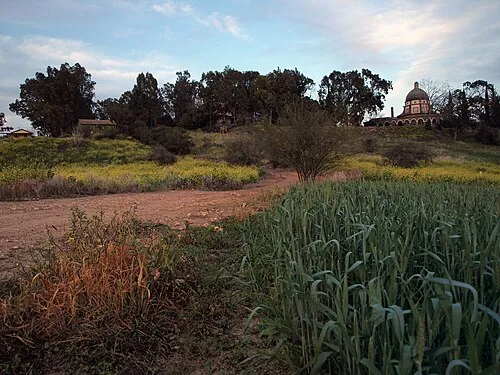
The Mount of Beatitudes above the lake is a traditional place for remembering Matthew’s sermon. The church’s own history dates Antonio Barluzzi’s octagonal building to 1936-1938, on a site with fourth-century Byzantine ruins. Its eight-sided plan recalls the Beatitudes. The institution presents the location as a tradition, not an archaeologically established speaking position. [79]
What can you see beside the Jordan?
Al-Maghtas, Bethany Beyond the Jordan, lies on the river’s eastern bank in Jordan. UNESCO describes churches, chapels, baptismal pools and other remains at a place traditionally associated with John’s baptism of Jesus. [25] [31]
What can you see in Jerusalem?
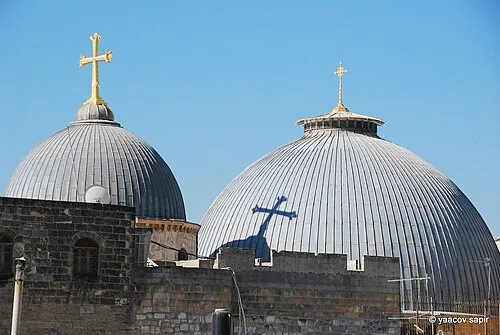
The Church of the Holy Sepulchre in Jerusalem encloses the traditional places of Jesus’ crucifixion and tomb. The sanctuary has been built, damaged, restored and shared across Christian communities; Custodia di Terra Santa documents that layered history. The church is evidence of sustained remembrance as well as a place of active worship. Its association with the Passion is ancient, while particular architectural surfaces belong to later centuries. [26]
This is a guide to the historical and religious meaning of places, not a statement of present travel access. For a visit, consult the institution responsible for each site and current local access information.
What did the earliest images of Jesus look like?
The earliest surviving images usually identified with Jesus include a youthful healer and shepherd, often without the beard familiar from later icons. No surviving image is an authenticated portrait made during Jesus’ lifetime. The history of Jesus’ face is a history of interpretation. [27] [28] [2]
What survives at Dura-Europos?
Dura-Europos, in present-day Syria, preserves some of the earliest surviving Christian narrative paintings. Yale dates the conversion of the Christian building to about 240 CE; the New York University object entry dates the healing of the paralytic to about 232 CE. These are approximate datings. The baptistery paintings include healing and water scenes whose identification remains debated in places. [27] [28]
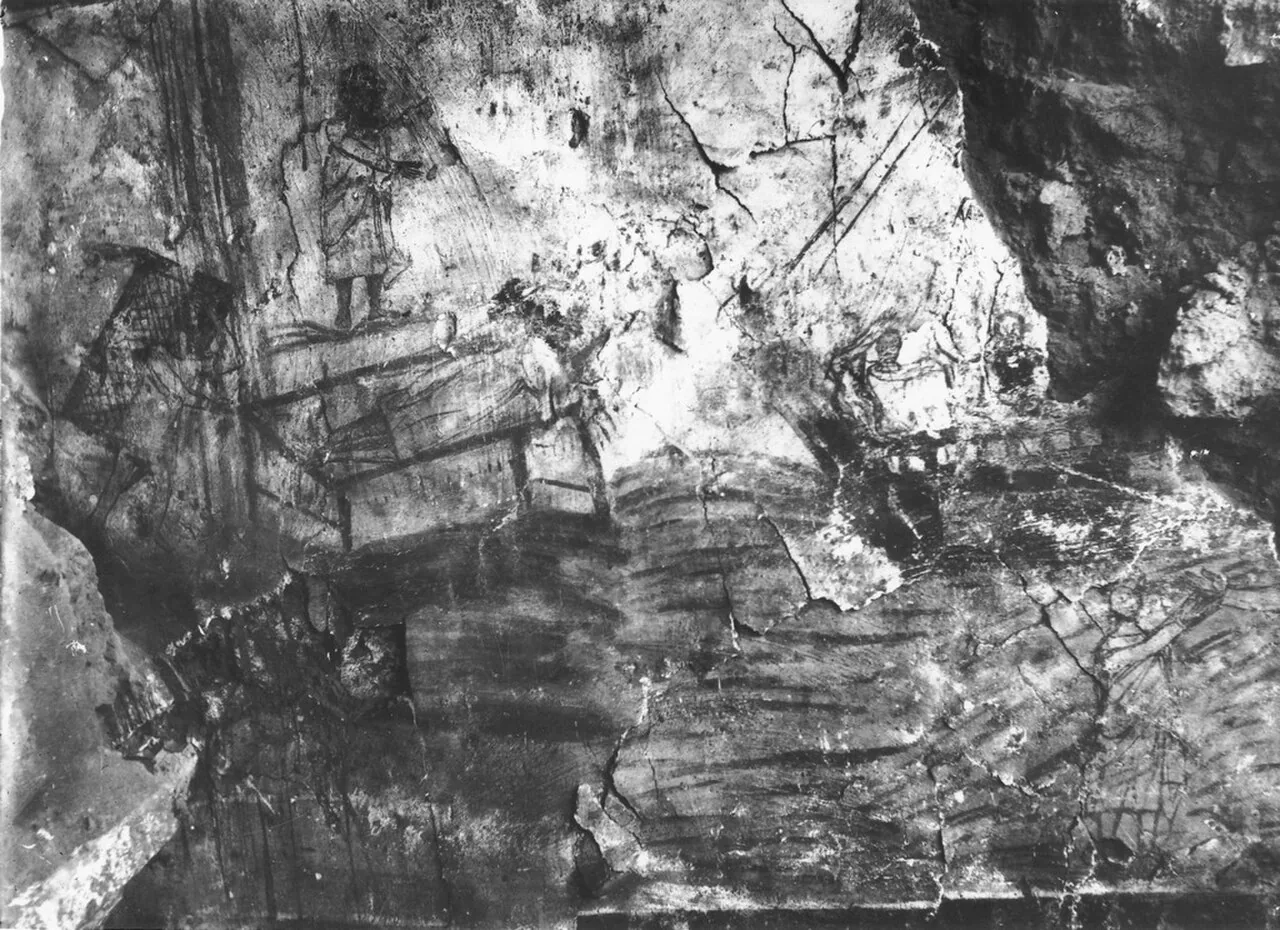
In the paralytic scene, a figure identified as Jesus stands beside the sick man; the man also appears carrying his bed. Successive moments share one painted surface. The excavation photograph above documents that wall in 1932. [27] [28]
Why was Jesus shown as a shepherd in Rome?
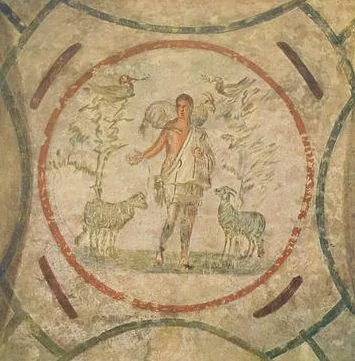
Jesus appears as the Good Shepherd in Roman catacomb art, drawing on the pastoral language through which Christians understood care and salvation. The Priscilla fresco reproduced here shows a young man carrying a sheep, surrounded by a quiet decorative world. Its second-half-of-the-third-century dating in the Commons record places it long after Jesus. The image can carry Christian meaning without being a likeness of the historical person.
How did the bearded Christ of icons emerge?
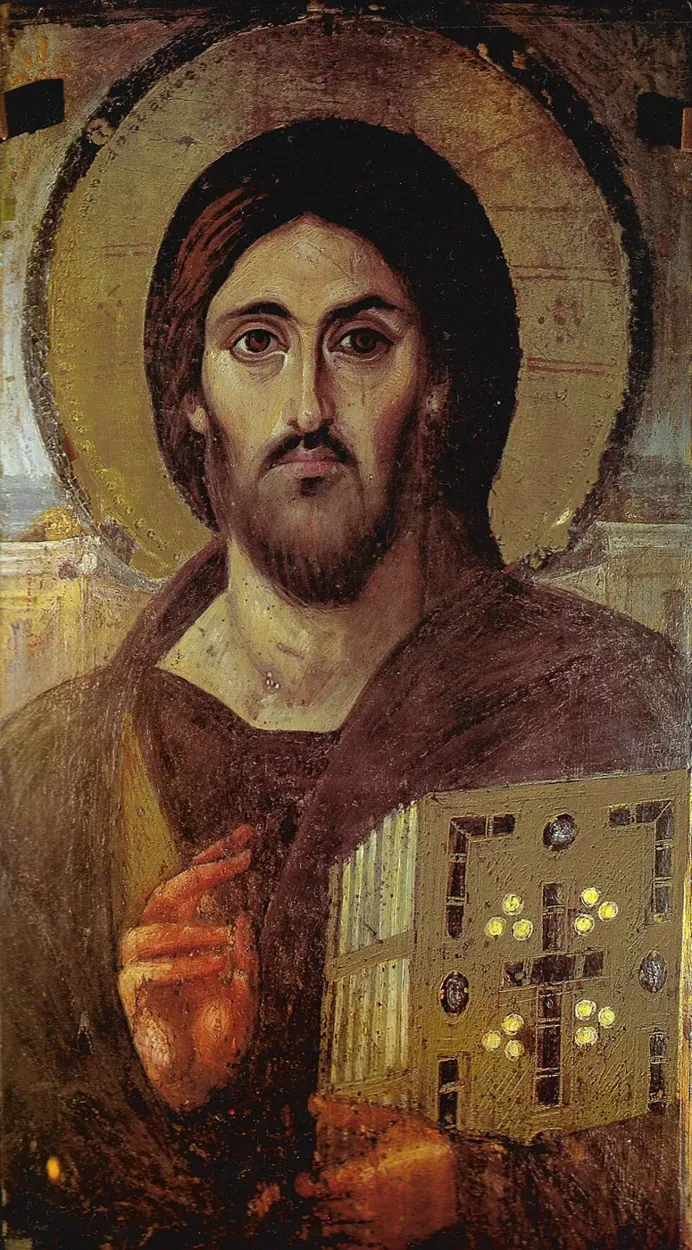
The Sinai Christ Pantocrator, painted in the sixth century and preserved at Saint Catherine’s Monastery, gives a mature, bearded Christ a Gospel book and a blessing gesture. Encaustic uses colour mixed with molten wax, applied while hot; the Foundation of the Hellenic World identifies this technique in the surviving Sinai icons. The face meets the viewer with the authority of an image intended for religious attention. Its asymmetry has invited theological readings. [80] [52]
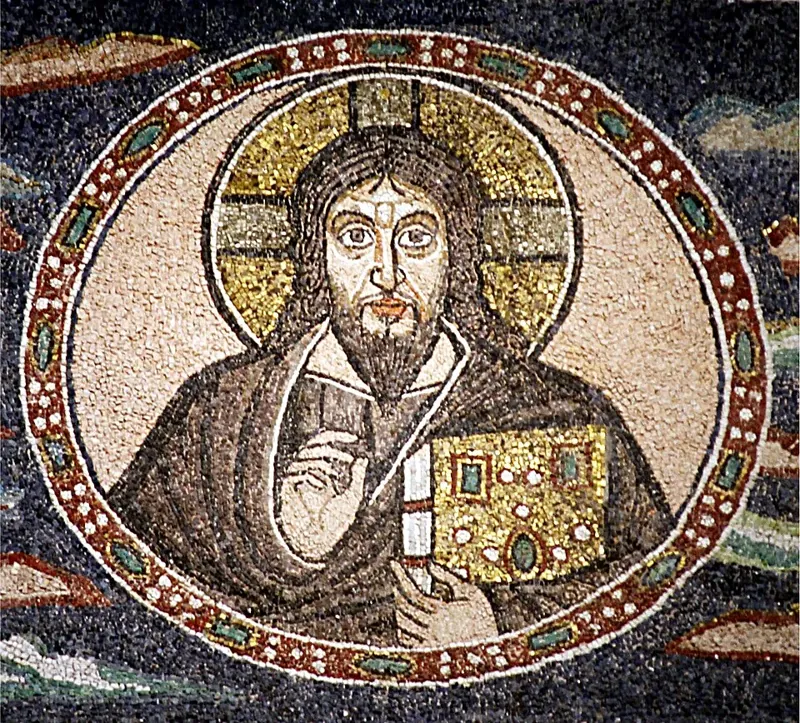
At Sant’Apollinare in Classe in Ravenna, Christ occupies a medallion above the sacred space. The basilica was consecrated in 549 CE and the triumphal arch’s decoration has several phases. Mosaic moves the image into architecture: a face can govern the way a congregation experiences an entire interior. These Italian and Egyptian works are both part of the image’s history, rather than competing candidates for a lost photograph.
Why were images of Jesus contested?
Images of Jesus became a dispute about whether depicting and honouring Christ protected belief in the incarnation or risked idolatry. Byzantine iconoclasm in the eighth and ninth centuries interrupted the making and display of sacred figures. The Second Council of Nicaea in 787 defended images, distinguishing the honour given to an image from worship owed to God; opposition later returned, before the restoration of icons in 843. The council’s reasoning connects the visible image with Christ’s becoming human. A face on a panel was therefore a theological argument as well as a painter’s work. [81] [82]
Can abstract art carry the subject without depicting Jesus?
Abstract art can take up an encounter with Jesus through a question instead of a likeness. Barnett Newman began The Stations of the Cross in 1958; the cycle was first exhibited in 1966. The National Gallery of Art identifies the cry of abandonment from the cross as its central subject. The paintings address anguish through divisions of light and dark rather than a sequence of illustrated incidents. [29]
Mark Rothko offers a related question about attention at the Rothko Chapel in Houston, an interfaith space containing his paintings. Rothko’s chapel is not an illustration of Jesus’ biography. Our reading: placing these works beside the earlier images makes a useful distinction. Sacred subject matter may be carried by a recognisable person, a story, a room or the pressure of looking itself. [30]
What else do people ask about Jesus?
Was Jesus Christian?
Jesus lived and taught as a Jew. Christianity developed among people proclaiming him as the risen Christ; calling Jesus Christian can conceal the Jewish setting of his own life. [7] [50]
What language did Jesus speak?
Jesus probably taught chiefly in Aramaic. Hebrew belonged to the scriptural and religious world, and Greek was present in the wider region; his exact command of each is uncertain. Mark 5:41 preserves Talitha cumi before explaining it as an instruction to a girl to get up. Such retained words show a trace of the linguistic setting inside a Greek narrative; an English Gospel translates that narrative, rather than directly transcribing Jesus’ speech. [60] [83] [2]
Did Jesus teach only kindness?
Jesus taught mercy and enemy-love alongside repentance, judgement, costly discipleship and severe warnings about wealth. Reading the stories of welcome beside Mark 10 and Matthew 25 preserves that demanding combination. [41] [49] [45]
What did Jesus look like?
Jesus’ exact appearance is unknown. A first-century Jewish Galilean belongs in the population and material culture of that region, but no text supplies measurements for a reliable facial reconstruction. Catacomb shepherds, Byzantine icons and modern paintings reveal the people making them as well as the subject they honour. [2] [27]
Are the Gospels the same story told four times?
The Gospels share Jesus as their subject and differ in chronology, selection, wording and theological emphasis. Matthew, Mark and Luke are called Synoptic because they can be compared closely in parallel; John has a distinct arrangement and voice. Reading the differences is part of understanding the evidence. [3] [2]
Who wrote the Gospels?
The Gospels bear the traditional names Matthew, Mark, Luke and John, but their narratives do not name their authors directly. Critical scholarship distinguishes these attributions from authors signing their own work. [70]
What did Jesus mean by the Son of Man?
The Gospels use Son of Man for Jesus’ authority, suffering and future vindication. Mark 14:62 recalls Daniel’s humanlike figure receiving dominion, connecting the expression with God’s coming rule. [71] [72] [73] [74]
Why does Matthew compare Jesus with Moses?
Matthew’s mountain, gathered people and authoritative teaching recall Moses at Sinai. The comparison frames Jesus’ interpretation of Torah, which Matthew 5:17 describes as fulfilment. [4] [32]
What was the Last Supper, and what is the Eucharist?
The Last Supper is Jesus’ final meal before arrest. Its bread-and-cup tradition, attested in Paul before the Gospels, grounds the Christian Eucharist or Holy Communion, remembering Jesus’ death and awaiting his return. [74] [76] [78] [84]
Did Jesus want people to see their good works?
Matthew 5:13-16 asks for goodness visible like a lamp, directing praise to God. Matthew 6 warns against seeking praise for the performer. The purpose of an action distinguishes witness from display. [32] [33]
Why were images of Jesus contested?
Byzantine iconoclasm contested sacred images in the eighth and ninth centuries. Nicaea in 787 defended honouring images while reserving worship for God; icons were restored in 843 after renewed opposition. [81] [82]
Where should a reader begin with Jesus’ teaching?
Jesus’ teaching is best approached through a short primary text before a synthesis. The following route keeps the kingdom, ethics, story and historical question in view.
- Read Mark 1 for the opening announcement, then Mark 12:28-34 for love of God and neighbour. [31] [35]
- Read Matthew 5-7 without extracting only the agreeable lines. Notice that the prayer, the purse, the enemy and the house on rock belong together. [32] [33] [34]
- Read Luke 10 and Luke 15 for the neighbour, the lost and the difficult joy of forgiveness. [40] [41]
- Read John 13 for a teacher explaining authority by washing feet, then 1 Corinthians 15 for the earlier written testimony about resurrection. [38] [50]
- Read the Oxford chapter on historical method beside the Gospel narratives, then choose one of the named worldwide interpreters. Keep an ancient source and a later reading recognisably separate. [1]
Jesus’ stories end repeatedly with an unresolved human action: an elder brother outside a feast, a traveller passing a wounded man, a hearer deciding where to build. Their endurance has something to do with that unfinished space. The reader can understand the sentence before discovering what it asks of them.
Which sources support this page?
Sources were opened by the writer or researcher on 2 November 2026. Historical reconstruction, Gospel narrative and later religious interpretation are distinguished in the text. Every biblical quotation is from the public-domain World English Bible Classic, with book, chapter and verse; quotations were checked against the linked text. Interpretations introduced as our reading are editorial readings, not historical findings.
This independent art site has no affiliation with any religious tradition, church or organisation.
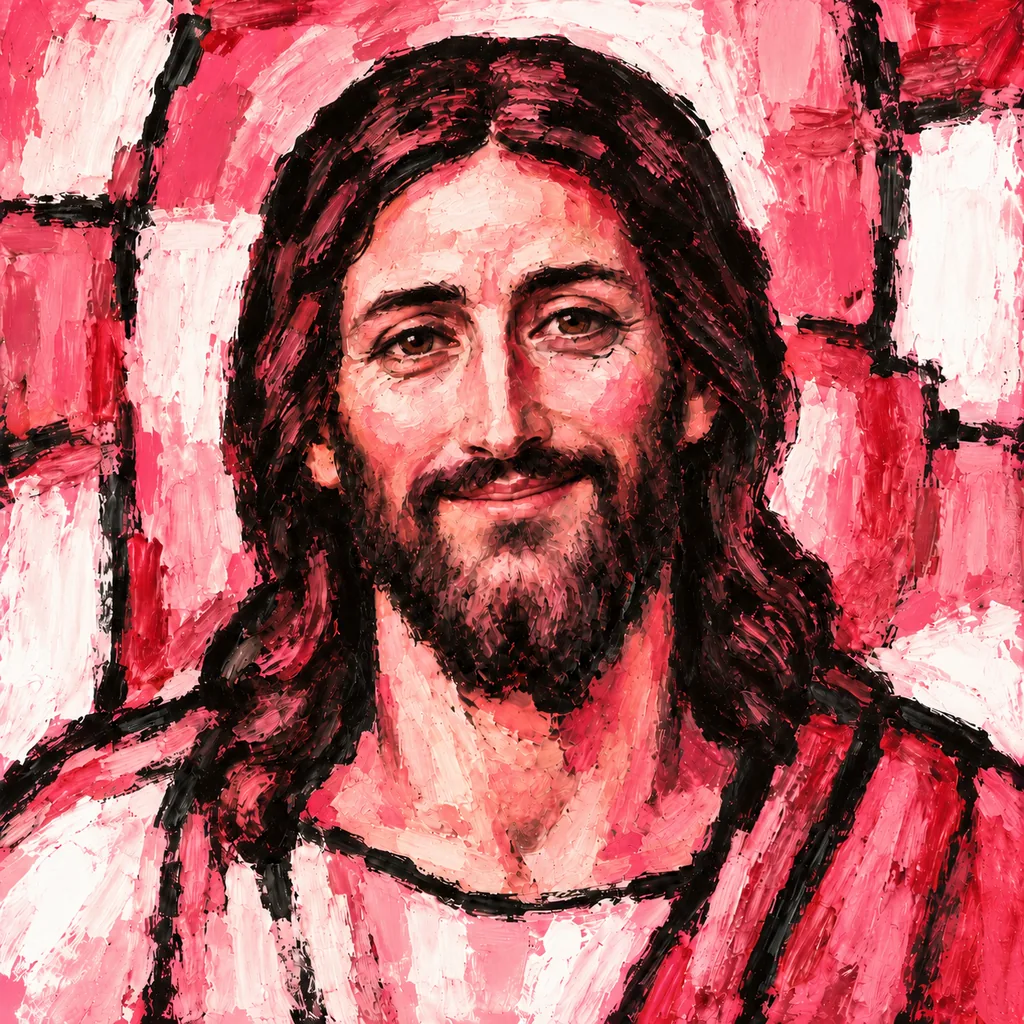
Commons image records were checked through the Wikimedia Commons API on 2 November 2026. Captions identify the work or place, maker, date, source and licence. The portrait and abstract opening image were made for this site and are not historical images of Jesus.
- Bart D. Ehrman, The Life of Jesus and Its Aftermath, chapter 9, A Brief Introduction to the New Testament, fifth edition, Oxford University Press.
- Wikipedia, Jesus. Chronology, names, languages and scholarly overview; consulted 2 November 2026.
- Joshua Schachterle, Teachings of Jesus: 10 Messages Jesus Really Taught, edited by Laura Robinson, 19 February 2024. The contributor’s view, not necessarily Ehrman’s.
- BibleProject Scholarship Team, What Is the Sermon on the Mount?, 7 December 2023. Christian theological interpretation and the sermon’s composition.
- Luke 17:20-21, NRSV Updated Edition, Bible Gateway. Consulted for the alternative translation and footnote; no quotation reproduced.
- Tacitus, Annals 15.44, John Jackson translation, Loeb Classical Library, 1937, University of Chicago. Opened by the researcher on 2 November 2026.
- University of Illinois, The Religion of Jesus as a Jew, Géza Vermes lecture, 28 November 1993; includes Jesus the Jew (1973).
- Second Vatican Council, Nostra aetate, 28 October 1965, section 4. Catholic rejection of collective Jewish responsibility for the Passion.
- Qur’an 3:45, Quran.com. Jesus, Mary and Messiah. Paraphrased.
- Qur’an 4:171, Quran.com. Messenger and divine sonship. Paraphrased.
- Qur’an 4:157-158, Quran.com. Crucifixion and raising. Paraphrased.
- Annemarie Schimmel, Christianity vii. Christian Influences in Persian Poetry, Encyclopaedia Iranica, 15 December 1991, updated 26 January 2015.
- Swami Vivekananda, Christ, the Messenger, Los Angeles, 1900, Complete Works, volume 4. Text at Wikisource.
- Swami Nikhilananda, introduction to The Gospel of Sri Ramakrishna (1942), Christianity. Devotional account of an experience in November 1874.
- Sri Aurobindo, Essays on the Gita, first series, chapter 15, pages 147-148. Serialised 1916-1920; Complete Works, volume 19, 1997 edition.
- Paramahansa Yogananda, A Cradle for the Christ of Everywhere, excerpt from The Second Coming of Christ, Self-Realization Fellowship.
- Self-Realization Fellowship, Global Awareness of Yogananda’s Teachings on the Rise, 2018. Original English publication in 2004.
- Thich Nhat Hanh, Living Buddha, Living Christ (1995), Plum Village book page.
- Office of the Dalai Lama, bibliography, The Good Heart: A Buddhist Perspective on the Teachings of Jesus, Wisdom Publications, 1996.
- John S. Mbiti, The Encounter of Christian Faith and African Religion, The Christian Century, 27 August to 3 September 1980, pages 817-820, Religion Online.
- Loyola University Chicago, Liberation Theology. Gutiérrez’s 1968 Chimbote address and the option for the poor.
- Shūsaku Endō, A Life of Jesus, English edition 1978, Yale Summer Study excerpt. Opened by the researcher on 2 November 2026.
- Custodia di Terra Santa, Capernaum. Archaeology, later synagogue and Peter’s house. Institutional pilgrimage account.
- UNESCO, Birthplace of Jesus: Church of the Nativity and the Pilgrimage Route, Bethlehem. Tradition and building history.
- UNESCO, Baptism Site Bethany Beyond the Jordan, Al-Maghtas. Archaeology and pilgrimage tradition.
- Custodia di Terra Santa, Basilica of the Holy Sepulchre. History, buildings and communities.
- Yale University Art Gallery, Dura-Europos: Excavating Antiquity, Christian Building. Paintings and excavation.
- New York University, ISAW, Wall Painting of Christ Healing the Paralytic, about 232 CE, Yale University Art Gallery 1932.1202.
- National Gallery of Art, Barnett Newman: The Stations of the Cross. Begun 1958, exhibited 1966; subject and interpretation.
- Rothko Chapel, The Rothko Chapel. Houston, paintings and the contemplative space.
- World English Bible Classic, Mark 1. Public domain.
- World English Bible Classic, Matthew 5. Public domain.
- World English Bible Classic, Matthew 6. Public domain.
- World English Bible Classic, Matthew 7. Public domain.
- World English Bible Classic, Mark 12. Public domain.
- World English Bible Classic, Luke 6. Public domain.
- World English Bible Classic, Luke 17. Public domain.
- World English Bible Classic, John 13. Public domain.
- World English Bible Classic, Matthew 13. Public domain.
- World English Bible Classic, Luke 10. Public domain.
- World English Bible Classic, Luke 15. Public domain.
- World English Bible Classic, Matthew 20. Public domain.
- World English Bible Classic, Luke 18. Public domain.
- World English Bible Classic, Luke 16. Public domain.
- World English Bible Classic, Matthew 25. Public domain.
- World English Bible Classic, John 8 and textual note. Public domain.
- World English Bible Classic, Mark 3. Public domain.
- World English Bible Classic, Luke 8. Public domain.
- World English Bible Classic, Mark 10. Public domain.
- World English Bible Classic, 1 Corinthians 15. Public domain.
- World English Bible Classic, Luke 11. Public domain.
- Christ Pantocrator, sixth century, encaustic on panel. Saint Catherine’s Monastery, Sinai, Egypt. Unknown painter; digital reproduction credited in the Commons record to Michel Bakni. Public domain.
- The Good Shepherd, second half of the third century CE. Catacomb of Priscilla, Rome. Unknown fresco painter; reproduction by Joseph Wilpert, published in 1903. Public domain.
- North wall of the baptistery at Dura-Europos, present-day Syria, with the healing of the paralytic and Christ walking on water, third century CE. Yale University Art Gallery excavation archive, negative y288. Anonymous excavation photograph, 1932. CC0 1.0.
- Christ in the triumphal arch of Sant’Apollinare in Classe, Ravenna, Italy. Medieval mosaic in the basilica consecrated in 549 CE; the arch has several phases. Unknown mosaicists. Photograph José Luiz, 18 September 2016. CC BY-SA 4.0.
- The Sea of Galilee, also called Lake Tiberias or Kinneret, with the Jordan flowing south. NASA Expedition 20 crew, photograph taken 15 August 2009, released by NASA Earth Observatory in September 2009. Public domain.
- Ruins of the later limestone synagogue, Capernaum, beside the Sea of Galilee. The visible structure is later than Jesus. Photograph zeevveez, 4 November 2008. CC BY 2.0.
- Church of the Holy Sepulchre, Jerusalem, the sanctuary traditionally associated with Jesus’ crucifixion and tomb. Photograph Hoshvilim, dated 17 August 2012 in the file metadata. CC BY-SA 4.0.
- Church of the Beatitudes, on the traditional hillside associated with the Sermon on the Mount near the Sea of Galilee. The church is modern. Photograph Obendorf, 28 February 2014. CC0 1.0.
- Dale B. Martin, The Historical Jesus, lecture 13, Introduction to the New Testament History and Literature, Open Yale Courses. Primary scholarly lecture and transcript.
- Direzione Regionale Musei Emilia-Romagna, Basilica di Sant’Apollinare in Classe. Consecration in 549 CE and the different phases of the mosaic decoration.
- Encyclopedia of the Bible, Jeshua, at Bible Gateway. Name forms, their relation to Joshua and the Greek Iēsous.
- World English Bible Classic, Matthew 18:21-35. Repeated forgiveness and the unforgiving servant. Public domain.
- The Mindfulness Bell, From the Editors, September 1995. Contemporary notice of Living Buddha, Living Christ’s publication.
- John Orme Mills, His Teachings, conference paper 2002, The Eckhart Society. The birth of the Word in the soul.
- American Teilhard Association, Teilhard’s Publications. French publication of Le Phénomène humain in 1955 and the work’s scope.
- World English Bible Classic, Galatians 1:18-19. Paul’s visit to Peter and meeting with James. Public domain.
- Jona Lendering, Josephus’ Jewish Antiquities, Livius. Completion in 94 CE; the Testimonium Flavianum and John P. Meier’s reconstruction of Christian additions.
- Josephus, Jewish Antiquities, book 20, at Early Jewish Writings. James in 20.9.1 and the closing dating notice under Domitian.
- Dale B. Martin, Paul’s Disciples, lecture 17, Open Yale Courses. Gospel anonymity distinguished from pseudonymous authorship.
- World English Bible Classic, Daniel 7:13-14. The humanlike figure, clouds and enduring dominion. Public domain.
- World English Bible Classic, Mark 2:1-12. The Son of Man and authority to forgive sins. Public domain.
- World English Bible Classic, Mark 8:31-38. The Son of Man, suffering and future glory. Public domain.
- World English Bible Classic, Mark 14. Passover meal, bread and cup, arrest and high-priestly hearing. Public domain.
- World English Bible Classic, Mark 15:1-26. Pilate, Barabbas, Roman execution and the kingship inscription. Public domain.
- World English Bible Classic, 1 Corinthians 11:17-34. The Lord’s Supper tradition and unequal treatment at the shared meal. Public domain.
- Vatican News, Credo. Texts of the Apostles’ Creed and Nicene Creed; divinity, incarnation, crucifixion and resurrection.
- Church of England, Book of Common Prayer, A Catechism. The Lord’s Supper, bread and wine, remembrance, and receiving Christ’s body and blood.
- Church of the Beatitudes in Galilee, About/Contact Us. Traditional identification, Antonio Barluzzi, construction in 1936-1938 and Byzantine remains.
- Foundation of the Hellenic World, Early Byzantine Period, Icons. Sixth-century Sinai panels and the technique of colour mixed with molten wax.
- Foundation of the Hellenic World, Middle Byzantine Period, Religious Painting. Iconoclasm, the council of 787 and restoration of icons in 843.
- Second Council of Nicaea, 787, acts and definition, New Advent. Honour paid to images, worship reserved for God and the incarnation.
- World English Bible Classic, Mark 5:41. Talitha cumi and its explanation in the narrative. Public domain.
- Catechism of the Catholic Church, The Sacrament of the Eucharist, paragraphs 1322-1323. Catholic account of the Last Supper and sacramental remembrance.


