Teachers / No. 011
Who was the Buddha, and what did he teach?
The Buddha was Siddhartha Gautama, a teacher active in northern India around the fifth century BCE whose teachings form the basis of the Buddhist tradition; the title means “the awakened one”. He taught that there is suffering, that it has a cause in craving, that it can end, and that a path of eight practices leads to that end: a Middle Way between sensual indulgence and severe asceticism. [1] [3]
This page gives the life as tradition tells it and as historians weigh it, the Four Noble Truths and the Eightfold Path in plain words, the teachings on impermanence, not-self, dependent origination, meditation and nirvana, five passages in the Buddha’s own voice, the four places you can visit, the story of how his image came to be carved, and how China, Japan, India, the Arabic world, Brazil and the West read him. Every fact carries a source you can open. No tradition or school is ours; the page is about the teacher.
When did the Buddha live, and what do we actually know?
The Buddha lived in the fifth century BCE by most current scholarship, but the dates are contested and no text survives from his lifetime. The Stanford Encyclopedia of Philosophy opens plainly: “The Buddha (fl. circa 450 BCE) is the individual whose teachings form the basis of the Buddhist tradition.” The Internet Encyclopedia of Philosophy lays out the spread: the Theravāda tradition dates him 623 to 543 BCE; from the mid-nineteenth to the late twentieth century Western scholars believed about 560 to 480 BCE; after the publication in 1991 and 1992 of new studies the consensus shifted later, toward the fifth century. Wikipedia’s summary gives his death as around 483 or 400 BCE, aged 80. [1] [2] [3]
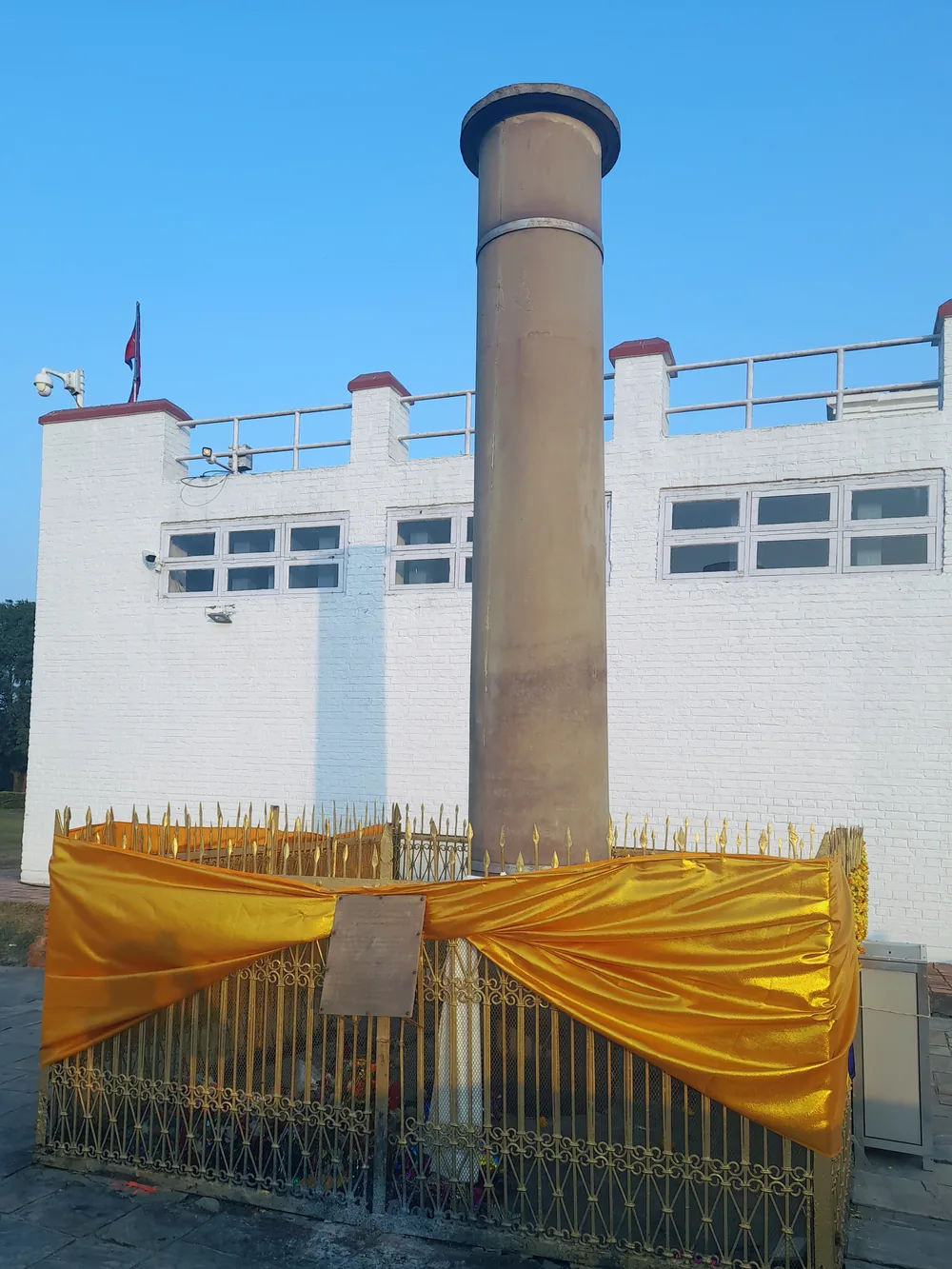
What exists in writing comes later. No written records about Gautama were found from his lifetime or from the one or two centuries after it. From the middle of the third century BCE several Edicts of Ashoka, who reigned about 268 to 232 BCE, mention the Buddha and Buddhism; Ashoka’s pillar at Lumbini, around 250 BCE, carries the words “Bu-dhe” and “Sa-kya-mu-nī”, sage of the Shakyas, in Brahmi script. The oldest surviving Buddhist manuscripts are the Gandhāran texts from present-day northwestern Pakistan and eastern Afghanistan, dating from the first century BCE to the third century CE. Scholars are hesitant about historical detail, but most accept that the Buddha lived, taught and founded a monastic order during the reign of Bimbisara of Magadha. [3]
The Japanese Wikipedia puts the same uncertainty in one line: there are several theories placing him in the seventh, sixth or fifth century BCE. What the sources leave standing once the dates are argued over is a historical teacher, a fifth-century setting, and a body of discourses written down generations later that nonetheless agree on a core. [17]
What is the story of the Buddha’s life?
The story of the Buddha’s life, as Buddhist tradition tells it, runs from a birth at Lumbini to a death at Kushinagar, with awakening at Bodh Gaya and the first teaching at Sarnath between them. He was born Siddhartha Gautama into the Shakya clan; his father was Śuddhodana and his mother Maya. The Chinese Wikipedia adds that the family was of the kshatriya, the warrior caste, and that he left home to wander as a seeker. He is called Shakyamuni, sage of the Shakyas, and used the word Tathāgata of himself, often read as “one who has thus gone”. [3] [16]
The Japanese account records that after leaving home he went to Rajagriha in the great kingdom of Magadha, where King Bimbisara tried to talk him out of the ascetic life and failed, and that he studied the austerities of forest teachers and judged them insufficient: even a rebirth in heaven ends and returns to the round of rebirth. Tradition then has him sit beneath a pipal tree at Bodh Gaya until he awakened, and walk to Sarnath to teach the Four Noble Truths to five companions. [17] [3] [11]
The end is told in the Mahāparinibbāna Sutta. After a meal with Cunda he and his companions travelled on until he was too weak to continue and stopped at Kushinagar, where Ānanda prepared a resting place in a grove of Sala trees. His last words, in the Buddhist Publication Society translation, were: “All compounded things are subject to vanish. Strive with earnestness.” [3] [7]
Richard Gombrich, the Oxford scholar, sums up why this life matters beyond piety. The Oxford Centre for Buddhist Studies presents his book What the Buddha Thought with the claim that “the Buddha was one of the most brilliant and original thinkers of all time”, and notes that “He ethicized and radically reinterpreted older ideas of karma (human action) and rebirth.” That reinterpretation is the hinge of the teaching that follows. [15]
What are the Four Noble Truths?
The Four Noble Truths are the Buddha’s first teaching at Sarnath: the truth of suffering, of its origin, of its cessation, and of the path to its cessation. The Internet Encyclopedia of Philosophy gives the plainest gloss: “The four noble truths are primarily four realities whose contemplation leads to sainthood or the state of the noble ones (ariya).” Contemplation is the operative word in that gloss: the truths are offered to be looked at in one’s own experience, and the looking is what does the work. [2] [4]
The first truth, in Thanissaro Bhikkhu’s translation of the Dhammacakkappavattana Sutta, reads: “Now this, monks, is the noble truth of stress: Birth is stressful, aging is stressful, death is stressful; sorrow, lamentation, pain, distress, & despair are stressful; association with the unbeloved is stressful, separation from the loved is stressful, not getting what is wanted is stressful. In short, the five clinging-aggregates are stressful.” Thanissaro renders the Pali dukkha as stress; other translators say suffering or unsatisfactoriness. The second truth locates the origin in craving; the third says that craving can cease; the fourth names the path. Upon hearing this discourse, the sutta records, the monk Kondañña attained the first stage of awakening. [4]
An Arabic encyclopedia, Marefa, introduces them to its readers in one sentence that any tradition would sign: “الحقائق النبيلة الأربع هي واحدة من التعاليم الأساسية في البوذية”, the Four Noble Truths are one of the basic teachings in Buddhism. [18]
What is the Noble Eightfold Path?
The Noble Eightfold Path is the fourth truth spelled out, and the Buddha presents it as the Middle Way. In the first sermon he asks what the middle way is “that – producing vision, producing knowledge – leads to calm, to direct knowledge, to self-awakening, to Unbinding?” and answers: “Precisely this Noble Eightfold Path: right view, right resolve, right speech, right action, right livelihood, right effort, right mindfulness, right concentration.” Wikipedia summarises the setting: “the Buddha taught a Middle Way between sensual indulgence and severe asceticism”, leading to freedom from ignorance, craving, rebirth and suffering. [4] [3]
Read as a whole the eight are three trainings: wisdom (view and resolve), conduct (speech, action, livelihood) and mind (effort, mindfulness, concentration). The point for a modern reader is that none of the eight is a belief about the cosmos; each is something you do with attention. That is why the Buddha could tell the Kalamas, in the passage below, not to accept a teaching on his authority. [5]
What else did the Buddha teach?
The Four Noble Truths and the path are the frame; inside it sit four teachings that the encyclopedias treat more briefly and that the discourses state in the Buddha’s own terms: the three marks of experience, including not-self; dependent origination; meditation; and nirvana as the goal. Each is given here with a passage from the Pali discourses in Thanissaro Bhikkhu’s translations on Access to Insight.
Impermanence and not-self
A short discourse in the Anguttara Nikaya, the Dhamma-niyama Sutta, has the Buddha state three facts that hold whether or not a Buddha appears: “The Tathagata directly awakens to that, breaks through to that. Directly awakening & breaking through to that, he declares it, teaches it, describes it, sets it forth. He reveals it, explains it, & makes it plain: All processes are inconstant.” The formula is repeated for “All processes are stressful” and “All phenomena are not-self.” The Dhammapada puts the first mark as practice: “When you see with discernment, ‘All fabrications are inconstant’ – you grow disenchanted with stress. This is the path to purity.” [39] [36]
Not-self, anattā, is the mark that sets the Buddha apart from the teachers around him. In the discourse to the five ascetics at Sarnath that follows the first sermon, he takes each of the five aggregates in turn: “Form, monks, is not self. If form were the self, this form would not lend itself to dis-ease.” He asks whether form is constant or inconstant, hears “Inconstant, lord”, and concludes that every form, feeling, perception, fabrication and consciousness is to be seen “as it actually is with right discernment as: ‘This is not mine. This is not my self. This is not what I am.’” The Internet Encyclopedia of Philosophy states the result in one line: “In philosophical anthropology, the Buddha explains human identity without a permanent and substantial self.” [34] [2]
Dependent origination
How suffering arises without a self to own it is answered by dependent origination, paṭicca-samuppāda. The Buddha lays out the twelve links as a chain of conditions, beginning “From ignorance as a requisite condition come fabrications. From fabrications as a requisite condition comes consciousness.” and running through name-and-form, the senses, contact, feeling, craving, clinging, becoming, birth, and “aging & death, sorrow, lamentation, pain, distress, & despair”, to close: “Such is the origination of this entire mass of stress & suffering.” Craving, the second truth, is one link in this chain, which is why removing it ends the rest. [35]
Meditation
The path’s last two factors, mindfulness and concentration, are practised sitting. The Anapanasati Sutta opens: “Mindfulness of in-&-out breathing, when developed & pursued, is of great fruit, of great benefit.” Its instruction is plain enough to follow tonight: “There is the case where a monk, having gone to the wilderness, to the shade of a tree, or to an empty building, sits down folding his legs crosswise, holding his body erect, and setting mindfulness to the fore. Always mindful, he breathes in; mindful he breathes out.” The rest of the discourse follows the breath, step by step, into the other factors of the path. [37]
Nirvana, the goal
The goal is nirvana, Pali nibbāna, which Thanissaro renders as Unbinding. The Stanford Encyclopedia of Philosophy summarises the tradition’s account of the awakening: the Buddha “discovers the path to nirvana, the cessation of suffering”. The Buddha himself speaks of it mostly by negation. In the first Nibbāna Sutta of the Udāna he says: “There is that dimension, monks, where there is neither earth, nor water, nor fire, nor wind; neither dimension of the infinitude of space, nor dimension of the infinitude of consciousness, nor dimension of nothingness, nor dimension of neither perception nor non-perception; neither this world, nor the next world, nor sun, nor moon.” He ends: “This, just this, is the end of stress.” That is the whole arc of the teaching: suffering named, its chain of conditions seen, the self that seemed to own it found empty, and the ending reached. [1] [38]
What did the Buddha say in his own words?
Five short passages from the Pali discourses, in free translations published by Access to Insight, give the Buddha’s voice more directly than any summary. The Pali Canon was written down centuries after his death, so “his own words” means the earliest form of the tradition’s memory. [4]
- On not taking anyone’s word, to the Kalamas. “don’t go by reports, by legends, by traditions, by scripture, by logical conjecture, by inference, by analogies, by agreement through pondering views, by probability, or by the thought, ‘This contemplative is our teacher.’” [5]
- On metaphysical questions, the poisoned arrow. To a monk who demanded answers about the eternity of the world before he would practise, the Buddha replied: “It’s just as if a man were wounded with an arrow thickly smeared with poison.” The wounded man who insists on knowing the archer’s caste, name and bow before the arrow is removed would die first. [6]
- On the mind, from the Dhammapada. The first verse begins: “Phenomena are preceded by the heart,” and goes on that they are ruled by the heart and made of the heart. Thanissaro’s choice of “heart” for mano is deliberate; most translations say mind. [8]
- On self-reliance, in his last months. “be islands unto yourselves, refuges unto yourselves, seeking no external refuge; with the Dhamma as your island, the Dhamma as your refuge, seeking no other refuge.” [7]
- Last words. “All compounded things are subject to vanish. Strive with earnestness.” [7]
Readers of Adi Shankara and Gaudapada on this site will recognise the terrain the Vedanta teachers later disputed: whether there is an enduring self behind the flow of experience. The Buddha’s answer in these passages is practical before it is metaphysical: see for yourself, remove the arrow, be your own island.
Where did the Buddha live, and where can you go?
Four places frame the Buddha’s life and are visited today: Lumbini in Nepal, Bodh Gaya in Bihar, Sarnath near Varanasi, and Kushinagar in Uttar Pradesh. UNESCO calls Bodh Gaya “one of the four holy sites related to the life of the Lord Buddha”. [11]
Lumbini, the birth
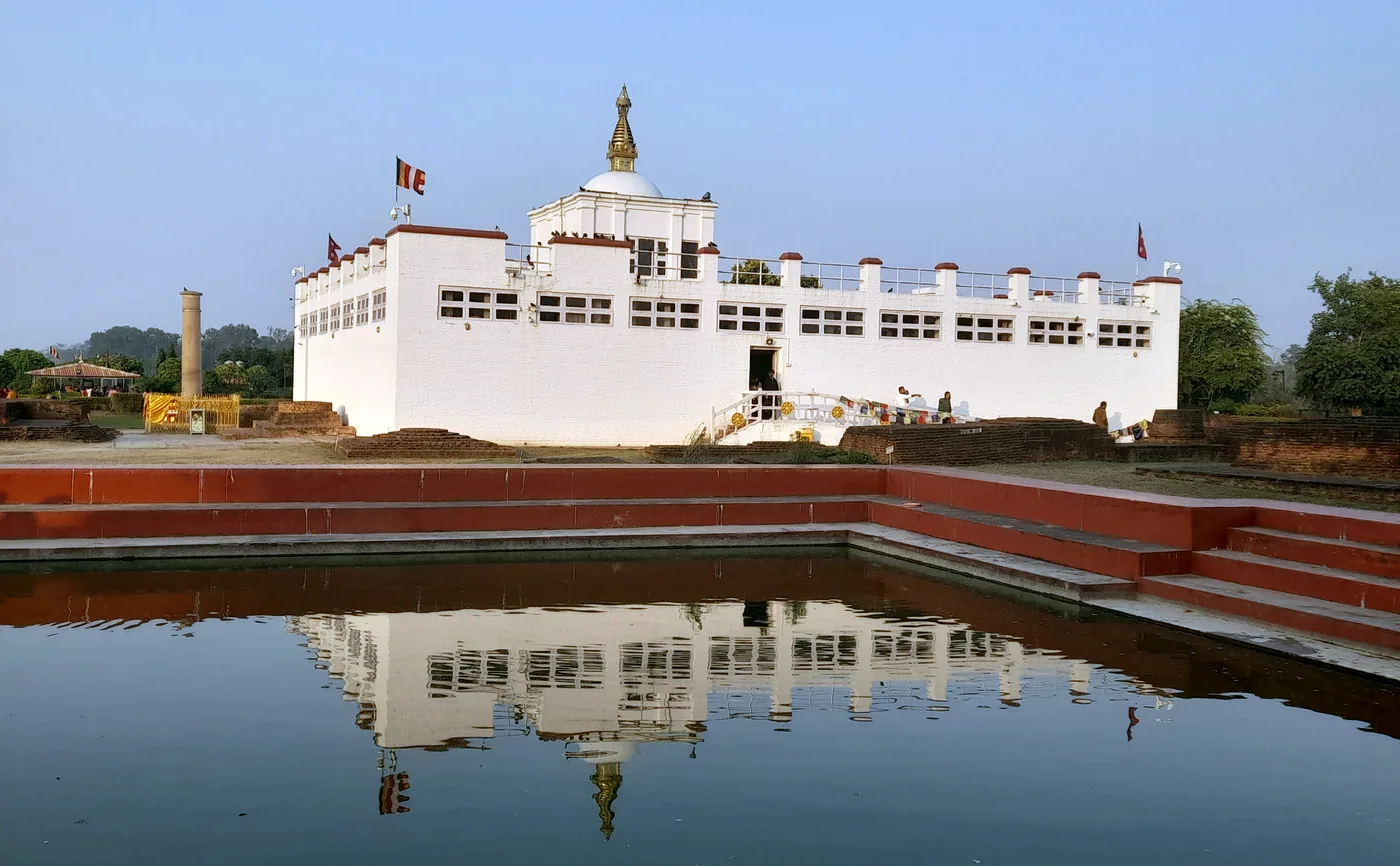
UNESCO’s World Heritage listing states the tradition without hedging: “Siddhartha Gautama, the Lord Buddha, was born in 623 B.C.” in the gardens of Lumbini, and records the pillar that Ashoka raised there. The Chinese Wikipedia dates the pillar to 249 BCE and quotes its inscription that Shakyamuni was born in this place. [10] [16]
Bodh Gaya, the awakening
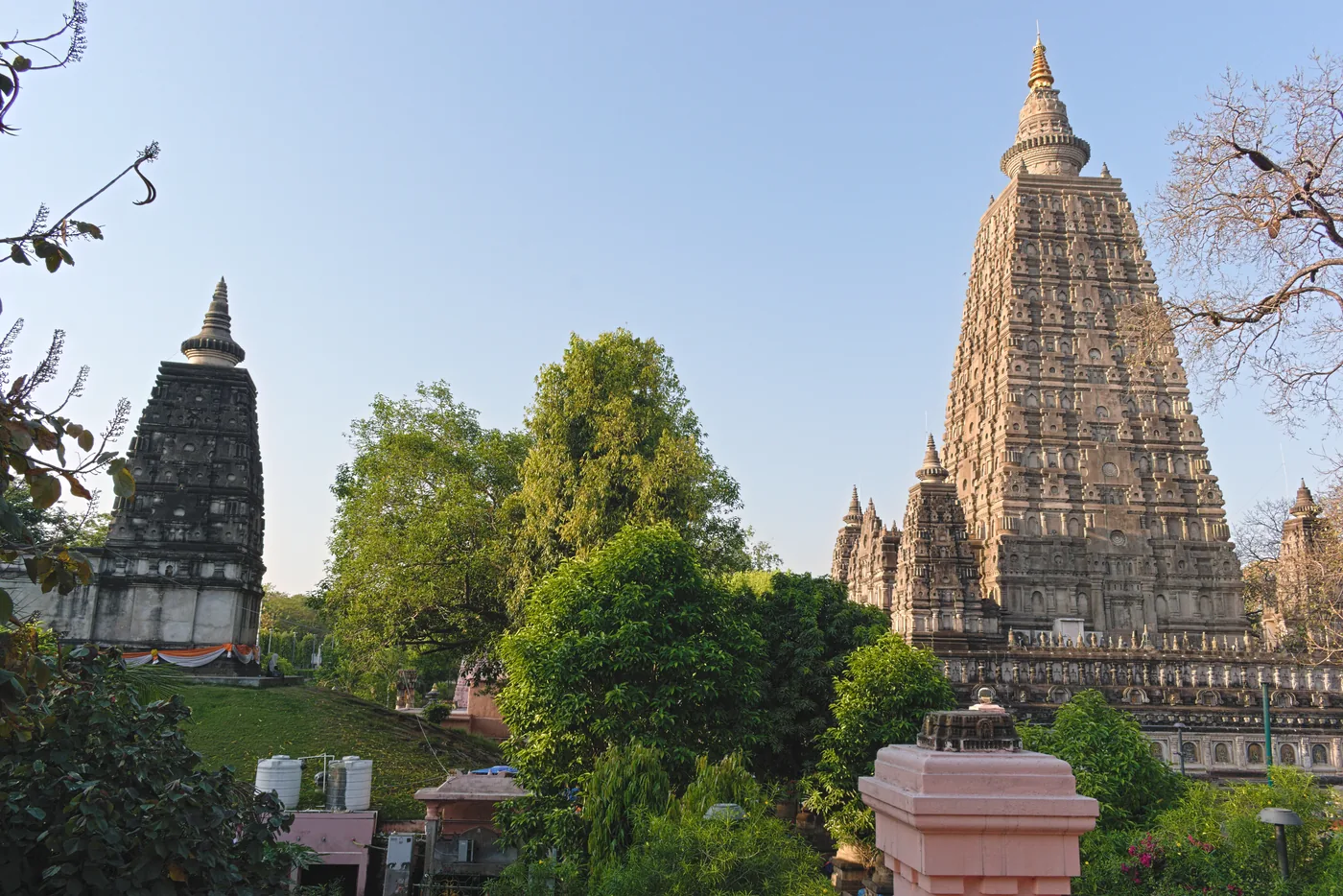
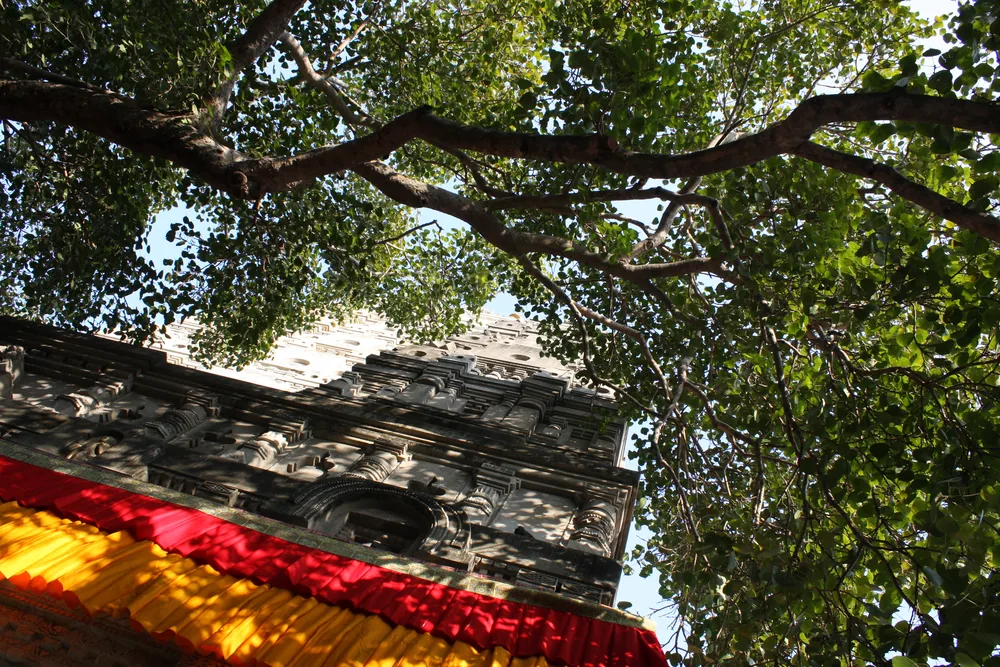
The Mahabodhi Temple complex marks the place of awakening. UNESCO: “The first temple was built by Emperor Asoka in the 3rd century B.C., and the present temple dates from the 5th or 6th centuries.” Beside it grows the Mahabodhi Tree, a pipal said to descend from the one the Buddha sat under. [11] [3]
Sarnath, the first teaching
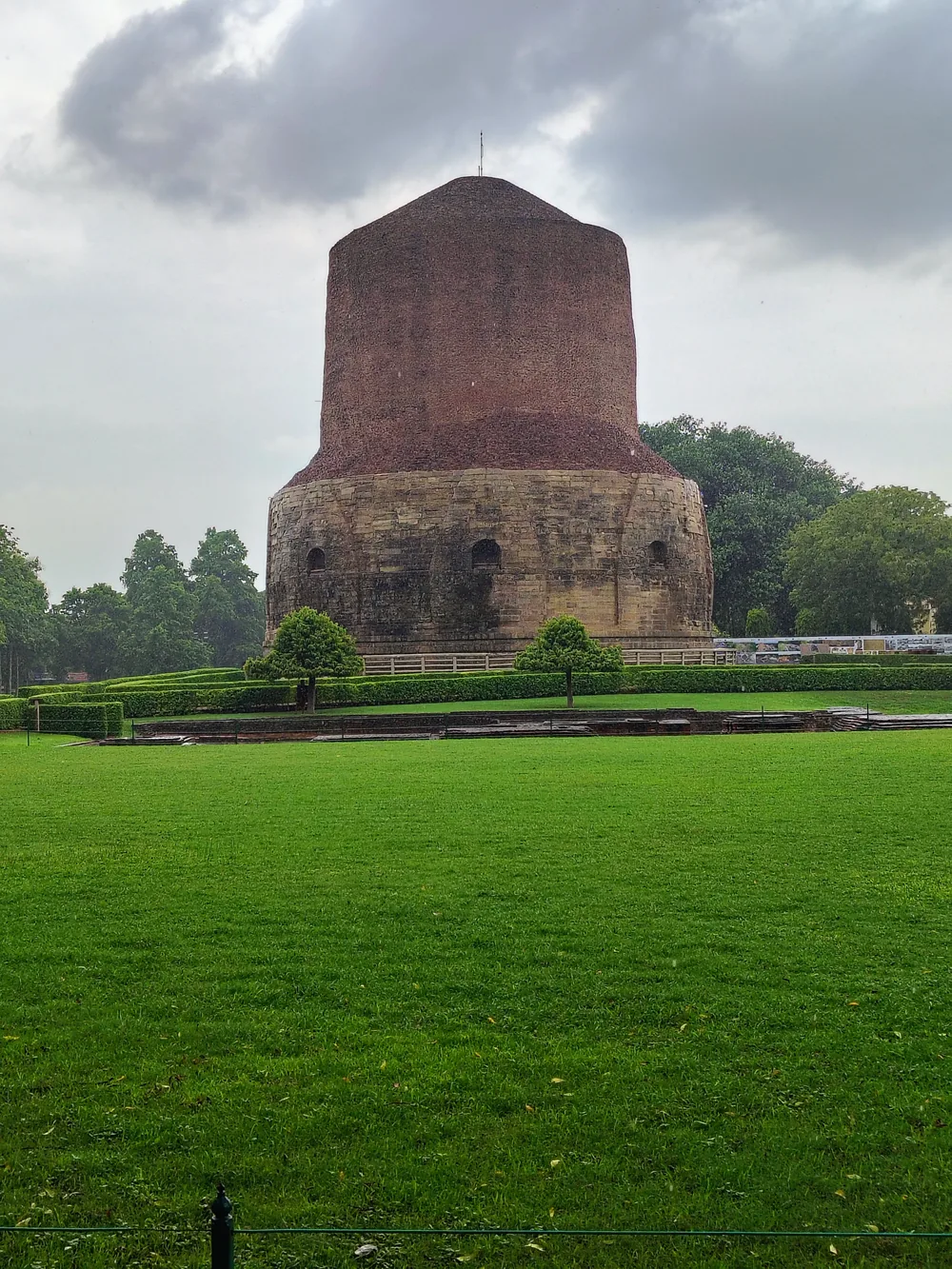
At Sarnath the Buddha taught the Four Noble Truths to his first five disciples; the Dhamek Stupa marks the spot by tradition. Sarnath is on India’s tentative list for World Heritage. Wikipedia records that it was destroyed in the late twelfth century and that later Vajrayana practice and even a Jain temple close to the Dhamek Stupa show how layered the site became. [3] [12] [13]
Kushinagar, the death
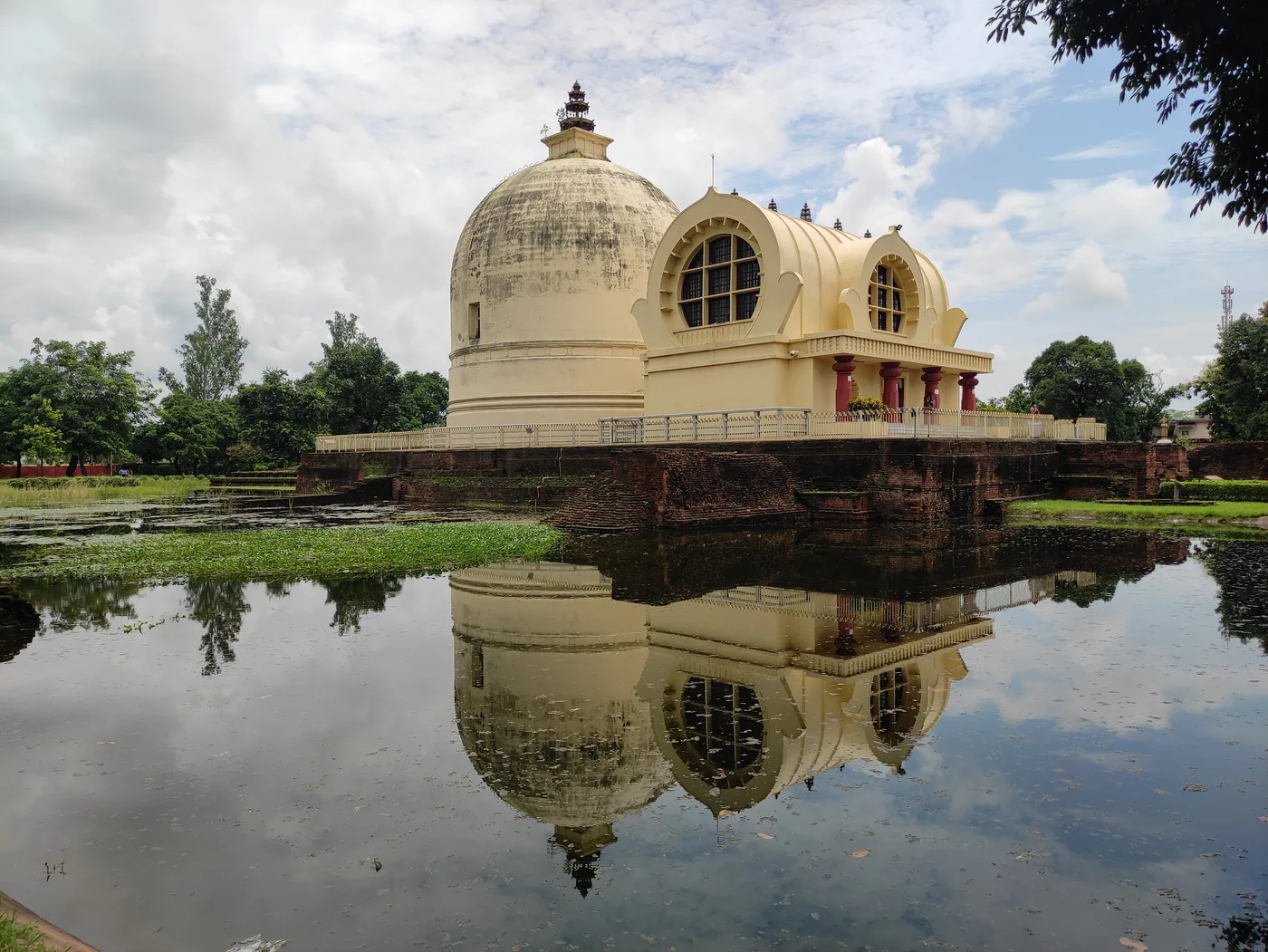
At Kushinagar, in the Sala grove, the Buddha died; the Parinirvana Stupa and temple stand there today. The Mahāparinibbāna Sutta, the long discourse of his last days, is the source for the journey and the final words quoted above. [3] [7]
How was the image of the Buddha made?
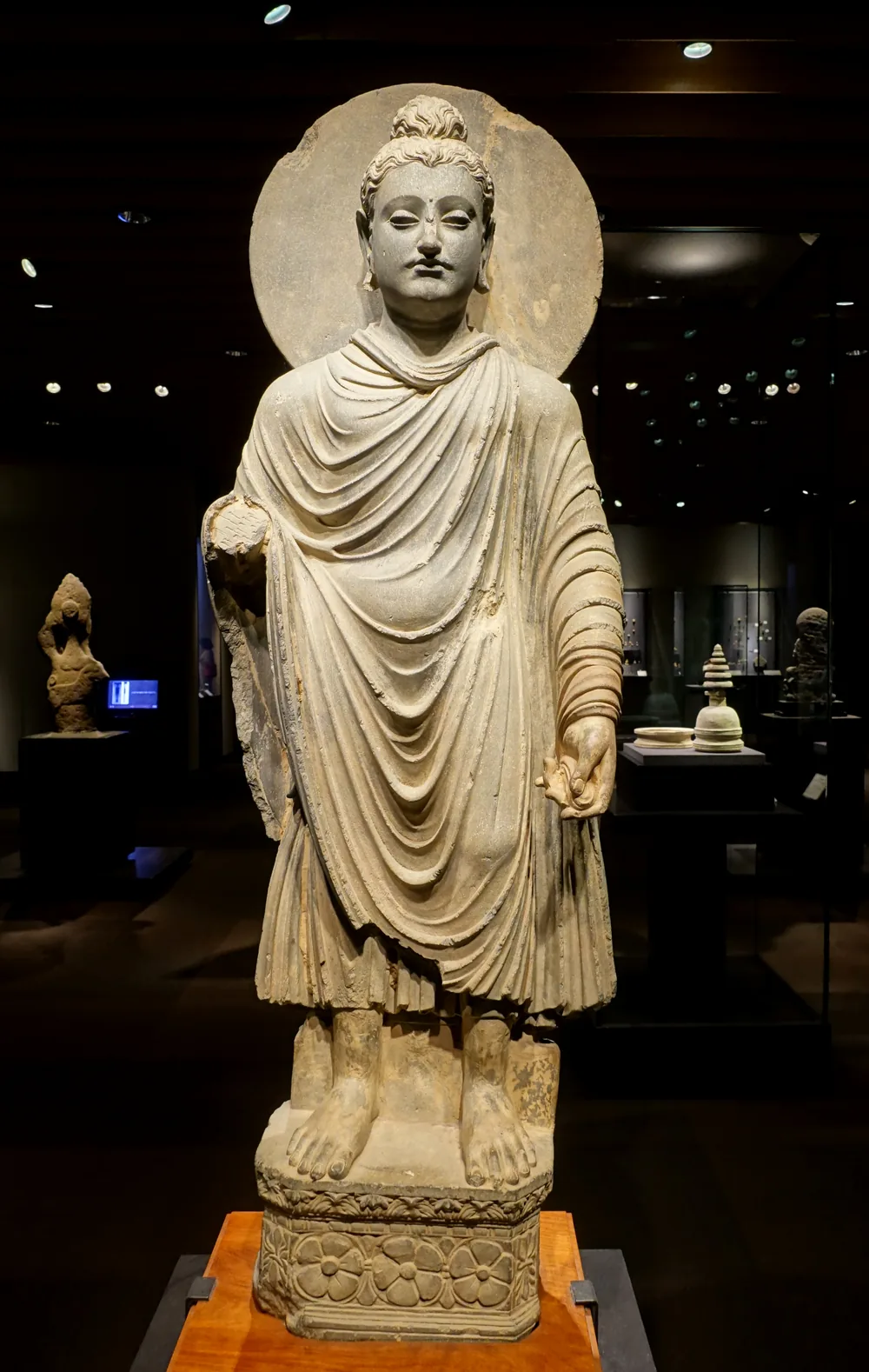
For centuries the Buddha was shown by symbols, not by a body; the human image came to dominate only in the first century CE. Vidya Dehejia’s essay for the Metropolitan Museum traces the steps. In the first century BCE India’s artists, who had worked in brick, wood, thatch and bamboo, adopted stone on a wide scale and covered stupa railings with reliefs of the Buddha’s life and previous lives. “In the first century A.D., the human image of one Buddha came to dominate the artistic scene, and one of the first sites at which this occurred was along India’s northwestern frontier.” In Gandhara, Hellenistic elements met Indian symbolism: “Youthful Buddhas with hair arranged in wavy curls resemble Roman statues of Apollo; the monastic robe covering both shoulders and arranged in heavy classical folds is reminiscent of a Roman toga.” [9] [24]
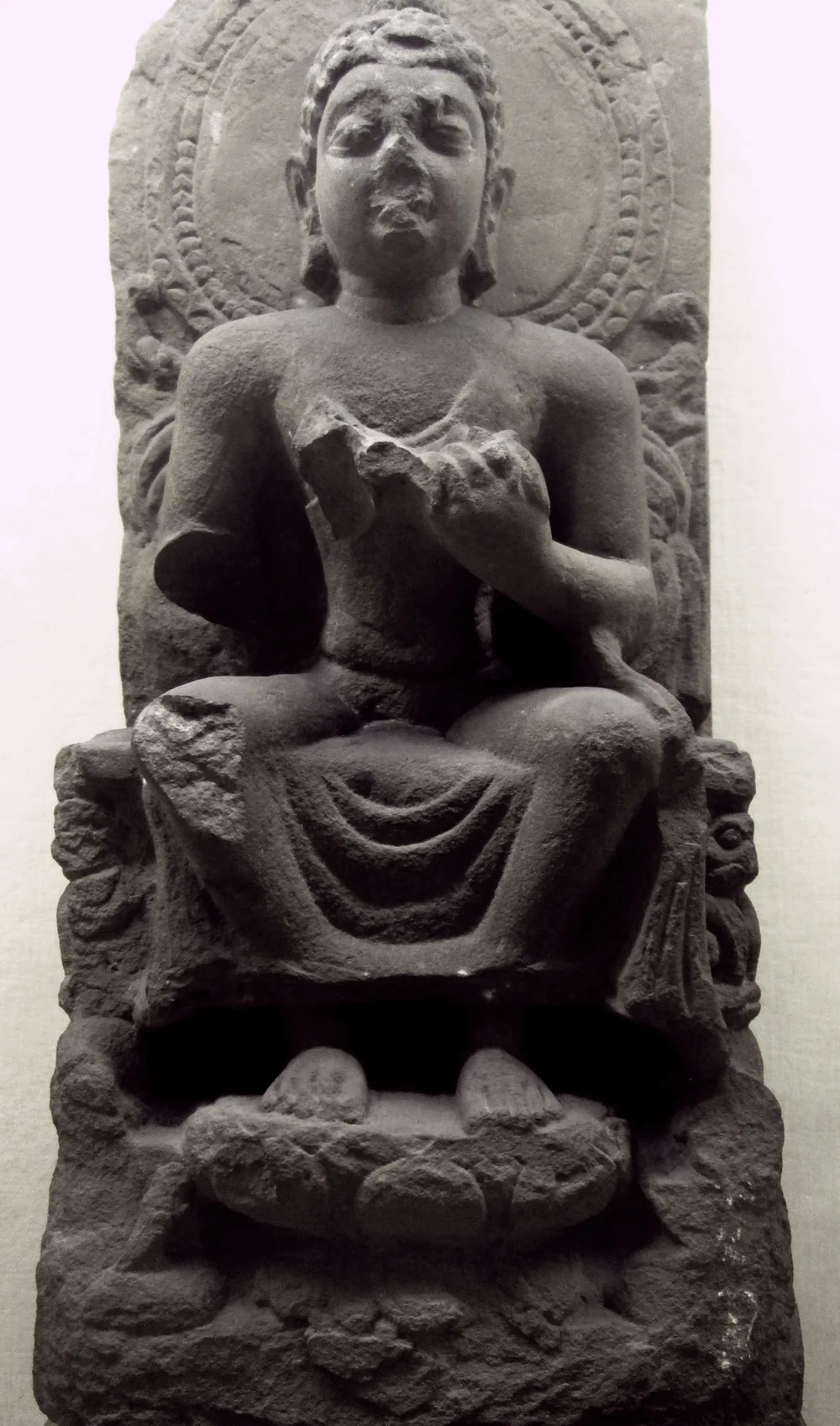
The Gupta period in northern India, the fourth to sixth centuries, “witnessed the creation of an ‘ideal image’ of the Buddha”, Dehejia writes, combining the Gandharan and Mathuran strands. The preaching Buddha from Sarnath, fifth century, is the type: downcast eyes, hands turning the wheel of the teaching, a body at rest. Every later Buddha image, from Japan to Thailand, descends from these two inventions. [9]
How does the world see the Buddha?
The Buddha is read as philosopher in China, as founder in Japan and India, as a social liberator by Ambedkar’s followers, as a possible prophet in some Arabic writing, as self-knowledge in Brazil, and as a thinker of the first rank in Oxford. The Pew Research Center counted “about 488 million Buddhists worldwide, representing 7% of the world’s total population as of 2010”. [14]
China
The Chinese Wikipedia opens by calling him “古印度地區思想家、哲學家”, a thinker and philosopher of ancient India, and the founder of Buddhism. It then makes a point rarely made in Western summaries: some Buddhists hold that the Buddha is not a god, because all Buddhas were originally human and simply awakened, citing the Ekottara Āgama, “諸佛世尊皆出人間,非由天而得也”, all Buddhas, the World-Honoured Ones, arise among humans and are not obtained from heaven, and the Lotus Sutra, “眾生皆可成佛”, all beings can become Buddhas. From there it tells how Buddhism travelled east and became Han Buddhism, embraced by emperors from the Northern Wei onward. [16]
Japan
The Japanese Wikipedia names him simply “仏教の開祖”, the founder of Buddhism, and gives his names in Sanskrit and Pali before turning to the dating problem. The Japanese reception is practical as much as scholarly: the standing Gandharan Buddha above is in the Tokyo National Museum, and the Bukkyō Dendō Kyōkai publishes the Buddhacarita, the ancient life of the Buddha, in English translation. [17] [33]
India
The Hindi Wikipedia calls him “बौद्ध धर्म के संस्थापक”, founder of the Buddhist religion. Modern India also re-read him politically. B. R. Ambedkar, drafting chairman of India’s constitution and born into an “untouchable” family, established Navayāna Buddhism in 1956; 380,000 oppressed community members converted with him on 14 and 15 October 1956 in Nagpur. His book The Buddha and His Dhamma, published in 1957, presents the Buddha as a teacher of social equality. [20] [22] [23]
The Arabic world
Arabic readers meet the Buddha through the Four Noble Truths, as the Marefa entry above shows, and through a question the Arabic Wikipedia records: some writers hold that Dhul-Kifl, named twice in the Quran, refers to the Buddha, while most scholars identify him with Ezekiel; Mirza Tahir Ahmad, fourth caliph of the Ahmadiyya community, wrote in one of his books that Dhul-Kifl may be the Buddha. The claim belongs to one community’s reading; we report it as theirs. [18] [19]
Brazil
Monja Coen, the Brazilian Zen nun interviewed by Hoje em Dia in 2019, quotes the founder of her order: “estudar o caminho de Buda é estudar o Eu (com letra maiúscula). E estudar o Eu é esquecer o eu (com letra minúscula).” To study the way of the Buddha is to study the Self; and to study the Self is to forget the self. Self-knowledge, she says, is the liberation of being, and she sets Socrates beside the Buddha. [21]
The West
Western philosophy now treats the Buddha as a philosopher: Mark Siderits’s Stanford entry and Abraham Velez’s IEP entry analyse the arguments rather than the legend. Gombrich’s verdict, “one of the most brilliant and original thinkers of all time”, is the strong form. Readers who come from Rumi or Laozi on this site will find a different temperament here: not the lover or the sage of the way, but a physician who diagnoses and prescribes. [1] [2] [15]
Where to start reading
- The first sermon, SN 56.11, in Thanissaro Bhikkhu’s translation: twenty minutes, the whole teaching in outline. [4]
- The Kalama Sutta, AN 3.65, for the method: test everything. [5]
- The Dhammapada, beginning with the first chapter. [8]
- The Mahāparinibbāna Sutta, DN 16, for the last days. [7]
- Siderits in the Stanford Encyclopedia for the philosophy, Velez in the IEP for the history of the dates, and Gombrich’s What the Buddha Thought for the argument that he was original. [1] [2] [15]
- Then Dehejia’s Met essay before you look at a single statue. [9]
On this site, the teachers’ pages on Ramana Maharshi and Rumi, and the thinkers’ pages on Gaudapada and Adi Shankara, continue the conversation the Buddha started about the self. Published with this page: Robert Motherwell and Gerhard Richter, two painters who asked whether abstraction can hold grief.
Sources
Every source below was opened on 30 October 2026. Quotations are verbatim from the page cited; translations from Pali are those of the named translators.
- Mark Siderits, Buddha, Stanford Encyclopedia of Philosophy, first published 17 February 2011, substantive revision 6 March 2023.
- Abraham Velez, Buddha (c. 500s B.C.E.), Internet Encyclopedia of Philosophy. Dating debate and the Four Noble Truths.
- Wikipedia, The Buddha. Names, family, Middle Way, Ashoka’s edicts and pillar, Gandhāran manuscripts, Bimbisara, last journey; consulted 30 October 2026.
- Dhammacakkappavattana Sutta: Setting the Wheel of Dhamma in Motion (SN 56.11), translated from the Pali by Thanissaro Bhikkhu, 1993. Access to Insight; CC BY-NC 4.0.
- Kalama Sutta: To the Kalamas (AN 3.65), translated by Thanissaro Bhikkhu. Access to Insight.
- Cula-Malunkyovada Sutta: The Shorter Instructions to Malunkya (MN 63), translated by Thanissaro Bhikkhu. Access to Insight.
- Maha-parinibbana Sutta: Last Days of the Buddha (DN 16), translated from the Pali by Sister Vajira and Francis Story, Buddhist Publication Society, Kandy, 1998. Access to Insight.
- Dhammapada, chapter 1, Pairs, translated by Thanissaro Bhikkhu. Access to Insight.
- Vidya Dehejia, Buddhism and Buddhist Art, Heilbrunn Timeline of Art History, The Metropolitan Museum of Art, February 2007.
- UNESCO World Heritage Centre, Lumbini, the Birthplace of the Lord Buddha. Listing text.
- UNESCO World Heritage Centre, Mahabodhi Temple Complex at Bodh Gaya. Listing text.
- UNESCO World Heritage Centre, Tentative Lists, Sarnath.
- Wikipedia, Sarnath. Destruction in the late twelfth century and later religious layers; consulted 30 October 2026.
- Pew Research Center, The Global Religious Landscape: Buddhists, 18 December 2012.
- Oxford Centre for Buddhist Studies, What the Buddha Thought, by Richard Gombrich. Book page.
- 维基百科 (Chinese Wikipedia), 释迦牟尼. Opening definition, scriptural quotations on the human Buddha, the Lumbini pillar and the eastward spread; consulted 30 October 2026.
- ウィキペディア (Japanese Wikipedia), 釈迦. Founder of Buddhism, dating theories, Rajagriha and Bimbisara; consulted 30 October 2026.
- المعرفة (Marefa), الحقائق الأربع النبيلة. Arabic entry on the Four Noble Truths; consulted 30 October 2026.
- ويكيبيديا (Arabic Wikipedia), غوتاما بوذا. Mirza Tahir Ahmad on Dhul-Kifl; consulted 30 October 2026.
- विकिपीडिया (Hindi Wikipedia), गौतम बुद्ध. Founder of the Buddhist religion; consulted 30 October 2026.
- Hoje em Dia, Monja Coen: ‘o autoconhecimento é a libertação do ser’; confira entrevista, 14 June 2019, updated 5 September 2021. Portuguese original.
- Wikipedia, Navayana. Ambedkar’s biography and the conversions of 14 and 15 October 1956; consulted 30 October 2026.
- Wikipedia, The Buddha and His Dhamma. Publication date 1957; consulted 30 October 2026.
- Wikipedia, Greco-Buddhist art. Context for the Gandharan image; consulted 30 October 2026.
- Rangan Datta Wiki, Lumbini Maya Devi Temple 1, 13 December 2023. CC BY-SA 4.0.
- Rangan Datta Wiki, Ashoka Pillar, Mayadevi Temple, Lumbini, 13 December 2023. CC BY-SA 4.0.
- Rohit Sharma, Mahabodhi temple complex, Bodhgaya 07, 3 April 2023. CC BY-SA 4.0.
- Корыгин Андрей, Bodhi Tree at the Mahabodhi Temple Bodh Gaya, 30 December 2012. CC BY-SA 3.0.
- Hardy Explorer, Dhamek Stupa, 2025, 15 July 2025. CC0 1.0.
- Photo Dharma (Anandajoti), Indian Museum Sculpture, Buddha Preaching, 5c, Sarnath, 1 March 2013. CC BY 2.0.
- Daderot, Standing Buddha, near Peshawar, Pakistan, Kushan dynasty, 100s to 200s AD, schist, Tokyo National Museum, 1 August 2017. Public domain.
- Ronit 255, Parinirvana stupa of Kushinagar, 28 August 2021. CC BY-SA 4.0.
- Bukkyō Dendō Kyōkai, BDK English Tripiṭaka, Buddhacarita: In Praise of Buddha’s Acts, 2009 (PDF).
- Pañcavaggi Sutta: Five Brethren (SN 22.59), translated from the Pali by Thanissaro Bhikkhu. Access to Insight. Not-self in the five aggregates.
- Paticca-samuppada-vibhanga Sutta: Analysis of Dependent Co-arising (SN 12.2), translated from the Pali by Thanissaro Bhikkhu. Access to Insight.
- Dhammapada, chapter 20, Maggavagga: The Path, verses 277 to 279, translated by Thanissaro Bhikkhu. Access to Insight.
- Anapanasati Sutta: Mindfulness of Breathing (MN 118), translated from the Pali by Thanissaro Bhikkhu. Access to Insight.
- Nibbāna Sutta: Unbinding (1) (Ud 8.1), translated from the Pali by Thanissaro Bhikkhu. Access to Insight.
- Dhamma-niyama Sutta: The Discourse on the Orderliness of the Dhamma (AN 3.134), translated from the Pali by Thanissaro Bhikkhu. Access to Insight. The three marks.


