Artists / No. 005
Mark Rothko
Mark Rothko (1903 to 1970) was an American painter born in present-day Latvia whose soft-edged fields of colour turn scale, light and sustained looking into an encounter with human emotion. SFMOMA: biography and collection
What is there to see in a few rectangles? Begin at an edge and allow the relationships to change. This guide connects the early figures, multiforms, mature canvases and mural environments, then asks how museums, artists and dealers have understood them.
How to look without being told what to feel
Our exercise is to give one painting time before assigning it an emotion. Start far enough away to see the whole canvas, then move closer without crossing the museum's barrier. Look at the boundary between two colour fields. Is it opaque, feathered, broken, or interrupted by the ground? Compare that boundary with an outer edge. Ask which colour appears to advance and whether the relationship changes as you continue looking. Your first answer need not be your last.
The Phillips Collection provides a practical historical model. Its Rothko Room places a painting on each wall, uses restrained lighting and offers a bench for sustained viewing. Rothko discussed the installation with Duncan Phillips and suggested lowering the light and replacing chairs with a simple bench. The arrangement treats the viewer's body, the size of the room and the duration of attention as part of the encounter. It also complicates the assumption that large paintings always require enormous galleries. The Phillips Collection: Rothko Room
Our second exercise is to describe a change without immediately explaining it. Write down that a red appears warmer next to one colour than another, or that a dark rectangle becomes more differentiated after a minute. Such observations are more precise than assuming red always means joy or black always means despair. They leave room for pleasure, irritation, grief, indifference or mixed responses. A strong interpretation should make the painting more available to scrutiny, rather than making one emotional response compulsory.
A short timeline: from Dvinsk to Houston
- 1903 to 1913. Born Marcus Rothkowitz on 25 September 1903 in Dvinsk, then in the Russian Empire and now Daugavpils, Latvia, he emigrated to the United States as a child and grew up in Portland, Oregon. National Gallery of Art biography
- 1921 to 1933. He attended Yale, left without a degree and moved to New York. Study, teaching and early exhibitions preceded his abstract work; his first solo exhibition was in Portland in 1933. National Gallery of Art biography
- The 1930s. Figurative paintings included urban scenes and the subway. He helped form The Ten, a group sympathetic to expressionism, and worked for the Federal Art Project. Wikipedia: Mark Rothko
- The 1940s. Mythological and Surrealist imagery gave way to irregular abstract colour masses, often called multiforms. The mature stacked-rectangle format emerged around 1949. Michaela Milgrom, National Gallery of Art Pace: The Exhibitions at Pace
- 1958 to 1961. A mural commission for the Four Seasons restaurant in the Seagram Building was followed by his decision to withdraw the paintings. The Phillips room and MoMA's first major retrospective helped establish another context for his work. Fondation Louis Vuitton: Mark Rothko
- 1962 to 1967. He painted the Harvard murals and then the 14 canvases for the de Menils' chapel in Houston. These projects made the relationship between paintings and architecture especially explicit. Colleen Walsh, Harvard Gazette: A light touch for Rothko murals, 2014 Rothko Chapel: history and mission
- 1970 to 1971. Rothko died by suicide on 25 February 1970 in New York. The Rothko Chapel opened in 1971, after his death. Wikipedia: Mark Rothko Rothko Chapel: history and mission
- After 1970. Estate disputes, museum gifts, dealer exhibitions and international retrospectives shaped public access to the work. The opening of a museum in Daugavpils in 2013 gave his birthplace a continuing role in that history. Wikipedia: Mark Rothko Rothko Museum, Daugavpils: Mark Rothko Originals
What are the rectangles doing?
Colour becomes a relationship
Rothko belongs to the history of American Abstract Expressionism and is commonly discussed through colour-field painting. His mature canvases often place two or three diffuse rectangles against a surrounding field. SFMOMA describes their luminosity and indeterminate space, and the way their large scale could envelop a viewer. The forms are simple enough to identify quickly, but their internal variation and boundaries take longer to register. A description of the format is a starting point, not a complete account of what the painting does. SFMOMA: biography and collection
Our reading is to attend to interactions rather than isolated swatches. The same patch may seem dense at one edge and porous at another. A narrow interval can keep two large areas apart while also making them feel suspended together. Try covering nothing and changing only your attention: first follow the enclosing ground, then the enclosed form. Does one remain consistently behind the other? This offers a way to judge whether a particular canvas generates a convincing space without requiring a conventional landscape or perspective system.
The subject did not disappear with representation
The National Gallery of Art's Michaela Milgrom emphasises that Rothko's abstraction pursued basic human experience, including tragedy and ecstasy, rather than colour relationships alone. She also places his early figurative work alongside Cézanne, Matisse and the mentorship of Milton Avery. The mature rectangles therefore belong to a developing concern with experience, rather than an abrupt discovery that subject matter was unnecessary. Our inference is that the absence of depicted people changes how the human subject enters the painting; it does not remove people from its purpose. Michaela Milgrom, National Gallery of Art
Scale can create intimacy
The Phillips room is a particularly useful correction to the idea that monumentality and intimacy are opposites. A modestly sized enclosure, four surrounding paintings and a bench can bring the picture into relation with a body rather than a distant spectacle. Phillips's acquisitions included Green and Maroon (1953), Green and Tangerine on Red (1956), Orange and Red on Red (1957) and Ochre and Red on Red (1954). This is a documented ensemble, not a proposed universal installation rule. The Phillips Collection: Rothko Room
Our practical consequence is to ask two questions of any display: can I perceive the entire painting, and can I attend closely enough to see its edges and layering? Neither question has a single correct distance for all objects and rooms. Compare the answer when seated and standing. If your experience changes, describe how. The exercise makes the conditions of looking visible without assuming that the right bench or light will guarantee a profound reaction.
The material surface is vulnerable
Harvard's conservation research found that a light-sensitive red pigment and excessive daylight contributed to fading in the murals painted in 1962 and installed in 1964. Rather than repaint them, researchers developed projected compensation images to recover an appearance of the earlier colours. Historical photographs, themselves faded, had to be evaluated and restored digitally; an additional panel supplied a comparison. The intervention concerns the appearance under particular lighting, not a reversal of every material change in the paint. Colleen Walsh, Harvard Gazette: A light touch for Rothko murals, 2014
Our inference is that photographs, screens and displays should never be treated as transparent substitutes for the object. The Harvard case makes the distinction tangible: painted colour, illumination and perceived colour are related but different. It also changes what a collector should ask about condition. A description such as minor fading needs an object-specific account of which layer or pigment changed, how that alters the relationships and what documentation supports the assessment.
What people say around the world
A dealer argues for the dark paintings
Pace founder Arne Glimcher, who knew Rothko, told Victoria Stapley-Brown in The Art Newspaper in 2016: “Time is an ingredient in these paintings just as much as the pigment.” His non-selling Dark Palette exhibition brought together 22 works from the 1950s and 1960s. Glimcher's argument was that darkness could be sensuous and expansive, with the picture unfolding through attention. The report is especially useful because it identifies both his personal relationship with the artist and the gallery's representation of the estate. Arne Glimcher, interviewed in The Art Newspaper
Pace's own publication history makes a complementary claim through selection. Its eleven Rothko exhibitions from 1978 to 2017 included realist and Surrealist work, watercolours, multiforms, murals and late paintings. Our reading is that the programme challenges the narrow idea of Rothko as a producer of one recognisable product. A dealer's sustained scholarship is evidence of serious engagement, while the gallery's role remains part of the context in which that engagement is presented. Pace: The Exhibitions at Pace
Paris: resisting a biography written in black
The Fondation Louis Vuitton's 2023 to 2024 retrospective assembled about 115 works. Its account explicitly cautions against reading the Black and Grey paintings as straightforward illustrations of depression and suicide, noting the persistence of brighter colours even late in his career. This is a curatorial interpretation supported by the range of objects, not a denial of the circumstances of his death. Our reading is that the chronology of a life and the chronology of a palette should be compared carefully before one is made to explain the other. Fondation Louis Vuitton: Mark Rothko
Artists in China, France and the United States
For Pace's 2023 tribute, Chinese artist Li Songsong described the impact of both Dark Palette and the Houston chapel, connecting Rothko with human spiritual freedom. France-based Huong Dodinh responded through an homage and spoke of being moved by the work. Mary Corse stressed a meditative experience, while Tara Donovan understood the medium as a way of opening psychological space. These are named artists' responses gathered by a gallery, not a representative survey of global opinion. Their differences are more informative than a general claim that everyone finds Rothko spiritual. Pace: artists reflect on Rothko
Latvia: recovering a local relationship
The Rothko Museum in Daugavpils presents originals through its relationship with the artist's family and describes a changing selection across career phases. Opened in 2013, it reconnects a painter usually discussed through New York with the place of his birth. The museum's language stresses artistic freedom and transformation. Our inference is that this local history adds something a list of American masterpieces cannot: the movement of a Jewish emigrant's legacy between national narratives. Its current display should be checked with the museum before a visit. Rothko Museum, Daugavpils: Mark Rothko Originals
Houston: a painting environment with a civic life
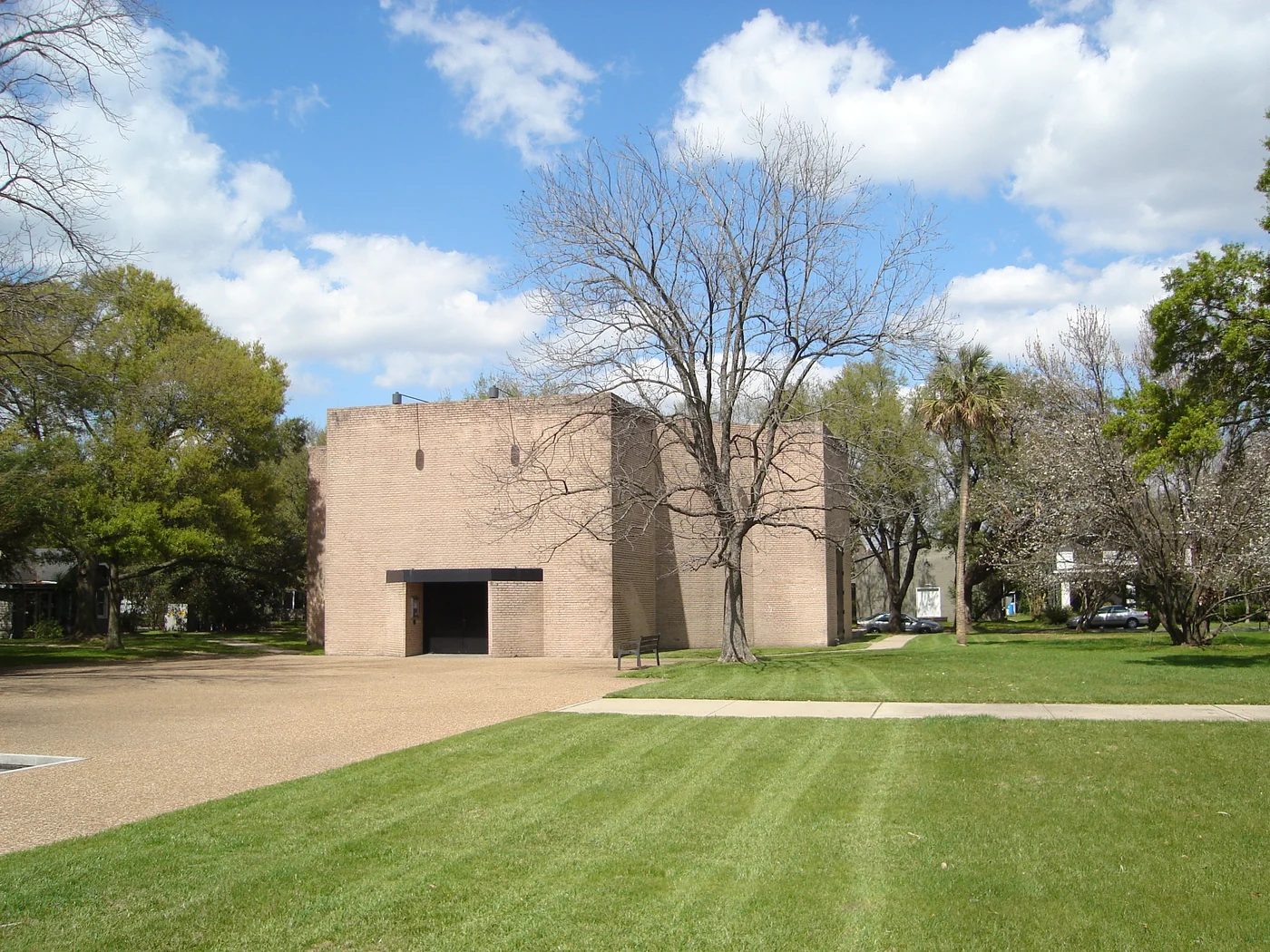
The Rothko Chapel describes itself as both a place for reflection and a forum for dialogue, human rights and spiritual life. John and Dominique de Menil commissioned the paintings in 1964; Rothko completed the 14-canvas suite in 1967. Outside, Barnett Newman's Broken Obelisk is dedicated to Martin Luther King Jr. This setting gives the work a social and civic context as well as a contemplative one. It does not establish that every visitor shares a particular theology or emotional response. Rothko Chapel: history and mission
The auction room: a new record in 2026
No. 15 (Two Greens and Red Stripe) (1964) sold for US$98,385,000, including buyer's premium, at Christie's New York on 18 May 2026. The house reported a new Rothko auction record. The work came from Agnes Gund's collection; Christie's states that she acquired it directly from the artist in 1967. This documented result supersedes the older US$86.9 million auction benchmark still found in introductions. A record for one canvas is neither a guaranteed future value nor a valuation of another object. Christie's: May 2026 results
Six points of entry into the work
The figurative and mythological paintings
The subway scenes, portraits and myth-inspired pictures are essential preparation for the famous rectangles. Pace has devoted separate exhibitions to the realist and Surrealist years, acknowledging bodies of work that the usual shorthand leaves out. Our looking comparison is to ask how isolation or drama appears when figures are present, then ask how a later colour field addresses you without them. The continuity need not be a repeated image; it may be a repeated concern approached with different means. Pace: The Exhibitions at Pace
The multiforms, later 1940s
In these transitional paintings, irregular masses of colour replace identifiable scenes. The Fondation Louis Vuitton traces a reduction in their number and an increasingly organised relationship between them before the mature format settles. Our reading is to resist seeing them merely as rough drafts of something better known. Their unstable arrangements let you examine alternatives: how many forms can a surface sustain, where can they sit and what kind of interval begins to organise the whole? Fondation Louis Vuitton: Mark Rothko
The Phillips Collection's four paintings
The Washington ensemble offers four related yet distinct arrangements from the 1950s. The Phillips documents the acquisition history and the artist's involvement in the room. Our exercise is to choose one interval between forms in each painting, then compare it with the intervals between canvases on the walls. The comparison makes an exhibition's spacing available to observation without assuming it is identical to the space inside a picture. Look at individual objects as well as at the famous room. The Phillips Collection: Rothko Room
The Seagram murals, 1958 to 1959
Made for the Four Seasons restaurant in the Seagram Building, this commission ended with Rothko retaining the paintings. Nine entered Tate through his 1969 gift. The withdrawal distinguishes the series from a decorative scheme successfully delivered to its intended restaurant. Our reading is to notice the more enclosed, portal-like forms and compare their surrounding darkness with an earlier luminous rectangle. Their later museum setting forms another chapter in the works' history, rather than their original purpose. Fondation Louis Vuitton: Mark Rothko Wikipedia: Mark Rothko
The Harvard murals, 1962
The Harvard cycle makes a room's conditions inseparable from the history of its paintings. The conservation project had to address unequal fading as well as the relationships intended across several panels. Our proposed question is not simply whether projected light looks better. Ask which appearance is being reconstructed, how the reconstruction was evidenced and what remains visible when it is switched off. This is a concrete case in which looking, historical research and conservation judgement meet. Colleen Walsh, Harvard Gazette: A light touch for Rothko murals, 2014
The chapel paintings and the last works
The Houston suite includes seven canvases with black rectangles against maroon and seven in purple tones. The chapel's account stresses how natural light reveals their differences. Elsewhere, the late Black and Grey works and continuing brighter pictures complicate a single story of darkening. Our suggestion is to compare the size of an interval and the character of an edge before interpreting a palette biographically. The chapel is a particular installation, while a late easel painting has its own material and viewing history. Rothko Chapel: history and mission Fondation Louis Vuitton: Mark Rothko
Why the encounter and the object both matter
Rothko's legacy involves more than the spread of colour-field painting. The dedicated room, the mural commission and the chapel provide different ways of bringing painting into a viewer's space. Our inference is that these environments explain part of his continuing relevance to artists working with perception and installation, without requiring that every later immersive artwork has a direct line of descent from him. The named artist responses above are stronger evidence of specific engagements than a sweeping genealogy. The Phillips Collection: Rothko Room Pace: artists reflect on Rothko
The legal dispute over the handling of his estate after his death also belongs to the story. The case concerned executors and the Marlborough gallery and changed the subsequent distribution and stewardship of the work. It is a reason to take ownership and institutional histories seriously, rather than treating a picture's journey after the studio as irrelevant. For the details of an individual object, a general biography cannot substitute for provenance documents. Wikipedia: Mark Rothko
Our collecting recommendation begins with the object category: painting on canvas, work on paper, study or reproduction. Ask for an exact title or catalogue identification, date, medium, support, provenance and conservation history. Request an independent account of fading, abrasion, staining and any interventions. Harvard's example shows why colour condition is consequential, while the diversity of Pace's exhibitions shows why two objects carrying the same artist's name may require very different comparisons. Colleen Walsh, Harvard Gazette: A light touch for Rothko murals, 2014 Pace: The Exhibitions at Pace
Our final looking advice is modest: do not use tears as a test of comprehension. The documented aims of emotional communication explain why strong reactions recur in accounts of Rothko, but they do not make every viewer's response identical. A precise observation about an edge, an interval or a changing sensation of depth is already a substantive encounter. Start there, then decide whether the interpretation you have been offered helps you see more. Michaela Milgrom, National Gallery of Art
Questions people ask about Mark Rothko
What is Mark Rothko famous for?
Rothko is famous for paintings with soft-edged rectangular fields of colour, often arranged vertically, that address human emotion through scale, colour and space. His early career also includes figurative and mythological images. The mature format emerged around 1949 after substantial experimentation. Michaela Milgrom, National Gallery of Art
Was Rothko Latvian, Russian or American?
He was born in 1903 in Dvinsk, then in the Russian Empire and now Daugavpils, Latvia. His Jewish family emigrated to the United States, and he grew up in Portland before developing his career in New York. American describes his principal artistic context; present-day Latvia identifies his birthplace. National Gallery of Art biography
Why do people cry in front of Rothko paintings?
Rothko intended his paintings to communicate basic human emotions, and accounts of intense reactions form part of their reception. Our reading is that scale, sustained attention and colour relationships can contribute to that encounter. Crying is one possible response, not a requirement for understanding the work. Michaela Milgrom, National Gallery of Art
Why are Rothko paintings so expensive?
His historical importance and demand for particular works help explain why exceptional canvases achieve high prices. A useful documented example is the 1964 No. 15 from Agnes Gund's collection, which set a new auction record in 2026. That result does not provide a general price for everything bearing his name. Christie's: May 2026 results
What is Mark Rothko's auction record?
No. 15 (Two Greens and Red Stripe) sold for US$98,385,000 including buyer's premium at Christie's New York on 18 May 2026. Christie's reported it as a new artist auction record. The result is a public auction price, which should be distinguished from reported private transactions. Christie's: May 2026 results
Why did Rothko reject the Four Seasons commission?
He withdrew the Seagram murals from their intended restaurant setting and retained them; nine were later given to Tate in 1969. The episode is associated with his concern about the conditions in which the paintings would be experienced. It should be distinguished from the Harvard murals and the Houston chapel, which were separate commissions. Wikipedia: Mark Rothko Fondation Louis Vuitton: Mark Rothko
Is the Rothko Chapel a church?
The Houston chapel is an interfaith spiritual and civic space containing 14 Rothko murals. Commissioned by John and Dominique de Menil, it opened in 1971 after the artist's death. Its programme includes reflection, dialogue and human-rights concerns rather than membership in one denomination. Rothko Chapel: history and mission
Where can I see Rothko, and can I buy an original?
The Phillips Collection, Rothko Chapel, SFMOMA and the Rothko Museum in Daugavpils provide different contexts for seeing the work; check current displays before travelling. Originals also appear at auction, but our recommendation is to establish medium, provenance and condition before discussing price. A reproduction of rectangles is a different object from an original painting. The Phillips Collection: Rothko Room Rothko Chapel: history and mission SFMOMA: biography and collection Rothko Museum, Daugavpils: Mark Rothko Originals Christie's: May 2026 results
Sources and image credits
Sources opened and checked on 26 October 2026. Our looking notes and suggested exercises are interpretations. The benchmark combined Wikipedia: Mark Rothko, National Gallery of Art biography, The Phillips Collection: Rothko Room, Fondation Louis Vuitton: Mark Rothko. Collection records govern titles, dates and ownership; auction results distinguish realised prices from estimates. Each image caption links to its individual rights statement.
- SFMOMA: biography and collection
- The Phillips Collection: Rothko Room
- National Gallery of Art biography
- Wikipedia: Mark Rothko
- Michaela Milgrom, National Gallery of Art
- Pace: The Exhibitions at Pace
- Fondation Louis Vuitton: Mark Rothko
- Colleen Walsh, Harvard Gazette: A light touch for Rothko murals, 2014
- Rothko Chapel: history and mission
- Rothko Museum, Daugavpils: Mark Rothko Originals
- Arne Glimcher, interviewed in The Art Newspaper
- Pace: artists reflect on Rothko
- Christie's: May 2026 results