Who was Jalal al-Din Rumi, and what did he teach?
Jalal al-Din Muhammad Rumi (1207 to 1273) was a Persian-language poet, Sunni Muslim scholar and Sufi teacher who settled in Konya, in present-day Türkiye, after his family migrated from Central Asia. He taught that love of God and tawhid, the oneness of God, transform the ego through devotion, spiritual guidance and the surrender of self-centred desire. His six-book Masnavi teaches through interwoven stories; the Divan-e Shams gives that search a lyric voice, and his followers organised the Mevlevi order after his death. Gamard, life and works; Chittick, 2017
Where was Rumi from, and what does his name mean?
Rumi belonged to the Persianate world of Central Asia and Seljuk Anatolia. Persian was his principal literary language, and Konya his adult home; modern Iranian, Turkish, Afghan and Tajik identities each capture only part of that inheritance. Gamard, pp. 1 to 3
His birth name was Muhammad; Jalal al-Din means “glory of the religion.” Balkhi links him to Balkh, now in Afghanistan, while Rumi refers to Rum, the formerly Byzantine Roman lands of Anatolia. Mawlana, Mowlana and the Turkish Mevlana mean “our master.” Gamard, p. 1
Was Rumi born in Balkh or Vakhsh?
Rumi’s traditional birthplace is Balkh, but research into his father’s journal points to Vakhsh, in present-day Tajikistan, where Baha al-Din Walad worked between 1204 and 1210. His conventional birth date is 30 September 1207. The family migrated west amid Mongol expansion; the precise itinerary and motives remain less certain than popular biographies suggest. Gamard, p. 2, citing Meier and Lewis; Poetry Foundation
Who shaped Rumi’s life before and after Shams?
Rumi came from a family of religious scholars and preachers: his father was Baha al-Din Muhammad Walad, his grandfather Husayn and his great-grandfather Ahmad Khatibi. Claims of descent from the first caliph Abu Bakr and from a Khwarazmian princess belong to later genealogical traditions that modern scholarship disputes. Gamard, pp. 1 to 2
Was Rumi a Sunni Muslim, and which legal school did he follow?
Rumi was a Sunni Muslim trained in the Hanafi school of Islamic law. After his father’s death in 1231, Burhan al-Din Muhaqqiq guided his Sufi training; his education included study at Aleppo’s Hanafi Halawiyya college. Islamic scholarship and mystical practice were already joined in his formation before Shams arrived. Gamard, p. 3
The family settled in Konya around 1228 or 1229. Rumi’s first wife, Gauhar or Gawhar Khatun, was the mother of Sultan Walad and Ala al-Din. After her death he married Kerra, a widow, with whom he had another son and a daughter. Poetry Foundation; Gamard, pp. 3 to 4
Who was Shams of Tabriz to Rumi?
Rumi’s spiritual companion Shams al-Din of Tabriz arrived in Konya in 1244 and intensified his devotional and poetic life. Their absorbing companionship provoked resentment among followers. Shams left, returned and finally disappeared in the later 1240s; later reports of murder remain unproven. The shifting beloved addressed in Rumi’s lyrics can be human companion, spiritual guide or divine presence, so the poems alone do not establish a modern sexual identity. Gamard, pp. 4 to 8
Who helped Rumi compose the Masnavi?
Rumi dictated the Masnavi to Husam al-Din Chalabi, who encouraged its composition, transcribed it and reviewed the wording with him. Husam followed Salah al-Din Zarkub, a goldsmith and senior disciple, in guiding Rumi’s community. The poem’s conversational character reflects an actual relationship between speaker and listener. Estelami, 2004, updated 2017
What did Rumi teach about love, the self and God?
Rumi taught that spiritual understanding must transform how a person lives. His Sufism is grounded in the Quran, prophetic traditions, worship and guidance from a teacher; its language of love follows earlier Persian mystical poets such as Sanai and Attar. Mojaddedi, 2014; Chittick, 2017
What does love mean in Rumi’s poetry?
Rumi’s ishq, or passionate love, draws on human desire to describe the lover’s transformation towards God. Chittick reads love as the lived practice of tawhid: attachment to everything treated as independent of God, including the self, is burned away. Wine, fire, sun, sea and the beloved change meaning with the speaker and passage. Chittick, 2017, on Masnavi V:588 to 590
Did Rumi reject reason?
Rumi distinguished partial, self-serving reason from a more encompassing intelligence. His grammarian mocks a boatman’s ignorance of grammar, until danger makes the boatman ask whether the scholar can swim. Knowledge used for status cannot meet every need; the story turns on nahw (grammar) and mahw (self-effacement). Chittick, 2017; Gamard, 1999, Masnavi I:2829 to 2847
What did Rumi mean by losing the ego?
Rumi’s nafs is the lower, self-centred self, driven by appetite, attachment and self-importance. His snake-catcher mistakes a frozen snake for a dead one; warmth revives it and destroys him. Dormant desire has survived, despite appearances. Fana, mystical self-annihilation, names the overcoming of self-centred existence before God. Masnavi III, Story IV, Whinfield; Chittick, 2017
Did Rumi teach that suffering is good?
Rumi made grief and separation occasions for spiritual change, with reunion as their aim. The reed’s lament at the beginning of the Masnavi gives longing a voice. That poetic possibility does not establish that every injury is necessary or automatically healing. Masnavi I, opening, Whinfield
Did Rumi believe all religions were the same?
Rumi challenged religious arrogance while retaining an Islamic account of God and prophecy. Moses and the Shepherd, discussed below, tests what doctrinal correction does to sincere devotion. Japanese scholar Tosei Sano’s 2020 study similarly finds openness towards Christians while showing that Jesus remains a prophet within Rumi’s Islamic framework. Masnavi II, Story VII; Sano, 2020
Which books and poems did Rumi write?
Rumi’s corpus spans a long narrative teaching poem, lyrics, discourses, sermons and letters. A story develops an argument, a lyric intensifies an encounter, and a letter addresses a particular person’s needs. Gamard, p. 1
What is Rumi’s Masnavi?
Rumi’s Masnavi-ye ma‘navi, also spelled Mathnawi or Mesnevi, means “Spiritual Couplets”: six Persian books of interwoven stories, scriptural interpretation and direct address. Mojaddedi’s 2014 account gives about 26,000 verses, commonly counted as couplets; totals depend on the edition. The later honorific “the Persian Quran” expresses reverence. Mojaddedi, 2014; Commercial Press, 2019
A tale may open into another tale or an interruption addressed to the listener. Those detours test the reader’s first interpretation, so following only the plot loses part of the teaching. Mojaddedi, 2014
What is Rumi’s Divan-e Shams?
Rumi’s Divan-e Shams-e Tabrizi, also called Divan-e Kabir, is the lyric collection associated with Shams. Gamard’s overview reports more than 3,000 ghazals and over 1,800 quatrains in early manuscripts, alongside stanzaic poems. Later additions complicate individual attributions. Gamard, p. 1
In which languages did Rumi write?
Rumi wrote chiefly in Persian, but also composed Arabic poems and mixed Turkish and Greek into some verse. Gamard counts 90 wholly Arabic ghazals and 19 Arabic quatrains in Foruzanfar’s edition. Linguist Nick Nicholas’s 2017 discussion explains that the Greek passages usually alternate with Persian and survive in Arabic script, making their readings difficult. Gamard, Arabic poetry, accessed 2026; Nicholas, 12 January 2017
What are Rumi’s Discourses, Seven Sermons and Letters?
Rumi’s Fihi ma fihi, usually called the Discourses, collects seventy-one talks preserved from disciples’ notes and compiled after his death. Majalis-e Sab‘a contains seven sermons. Both show how scripture, poetry and conversation worked in his teaching. Gamard, The Discourses; Öngören, 2004
The Maktubat or Makatib contains 147 surviving letters, according to the Academy of American Poets’ biography, consulted in October 2026. They show Rumi resolving disputes and arranging loans between nobles and students. Öngören’s 2004 account notes that many letters to officials convey petitioners’ requests: practical mediation was part of the teacher’s work. Academy of American Poets; TDV İslâm Ansiklopedisi, letters
How do Rumi’s best-known stories work?
Rumi’s stories change the reader’s judgement through changes of speaker, interruption and reversal. The readings below identify the episode and explain its movement.
What does Rumi’s reed flute represent?
Rumi’s reed flute voices separation from its source: cut from the reed bed, it longs for return. The instrument makes breath, music and listening part of the spiritual argument. Whinfield’s 1898 translation opens, “HEARKEN to the reed-flute, how it complains, / Lamenting its banishment from its home.” Masnavi I, opening
بشنو این نی چون شکایت میکند
از جداییها حکایت میکند
Ganjoor displays this Persian wording with recitations; Gamard’s notes on verses I:1 to 3 explain variant first-line readings. Comparing the same passage in two translations reveals how wording changes the relation between the reed and its listener. Ganjoor, Persian opening; Gamard, 2000, textual notes
What happens in Rumi’s Moses and the Shepherd?
Rumi’s shepherd offers to wash God’s clothes and comb God’s hair. Moses condemns the bodily language; the shepherd flees in shame. God then rebukes Moses for separating a lover from the beloved. The reversal turns attention from a theological error to the harm a correction can do; the ending also carries the shepherd beyond his original way of speaking and worshipping. Masnavi II, Story VII, Whinfield
Why does Rumi put an elephant in a dark room?
Rumi’s elephant is examined in darkness: one person touches the trunk, another the ear, another a leg. Each makes a whole animal from partial contact. The setting is a dark room, rather than necessarily blind men; a candle would resolve the disagreement. The story questions certainty built from limited perception. Masnavi III, Story V, Whinfield
Why can Rumi’s humour be uncomfortable?
Rumi uses appetite, deception, embarrassment and sexual or bodily material alongside elevated religious argument. An abridgment or themed anthology can conceal that range. In a complete translation, identify the speaker and the reversal before treating a character’s words as an instruction. Masnavi I, Whinfield; Oxford, 2025
How can you experience Rumi beyond a quotation?
Rumi’s poetry rewards reading aloud, listening to Persian recitation and comparing translations of a complete passage. Ganjoor and Dar al-Masnavi provide text and listening resources. Ganjoor; Dar al-Masnavi
- Choose a whole story or the reed opening. Record the translator, book and passage number.
- Read aloud. Notice repeated sounds, changes of voice and interruptions.
- Compare another translation at the same location, then listen to an identified Persian recitation.
- Return to the ending. Ask which of your first assumptions the passage overturned.
Which Rumi translation should you read first?
Rumi’s Masnavi Book One in an annotated translation is the clearest starting point for sustained teaching; a Divan selection suits shorter lyric reading. These editorial recommendations follow the editions’ stated contents, checked on 30 October 2026.
- For narrative teaching: Jawid Mojaddedi’s The Masnavi, Book One, Oxford World’s Classics, uses rhyming English couplets with an introduction and notes. His Book Six, published on 15 October 2025, completes the series. Book One, ISBN 9780199552313; Book Six
- For Persian alongside English: Alan Williams’s bilingual The Masnavi of Rumi, Book One (I.B. Tauris, 20 February 2020) includes explanatory notes and an analytical index. Publisher’s edition
- For lyrics: A. J. Arberry’s Mystical Poems of Rumi, combined and corrected in 2009, contains four hundred selected poems. Hasan Javadi prepared and annotated the text; Franklin D. Lewis wrote the foreword. University of Chicago Press
- For prose: Arberry’s Discourses of Rumi (1961) and Wheeler Thackston’s Signs of the Unseen (1994) offer different renderings of Fihi ma fihi. Gamard compares their accuracy passage by passage. Edition comparison
- For free reading: Whinfield’s 1898 Masnavi is an abridgment, useful for stories but incomplete. Dar al-Masnavi adds translations, notes and references to Nicholson’s scholarly work. Whinfield; Further resources
Are Coleman Barks’s Rumi poems direct translations?
Rumi’s poems in Coleman Barks’s The Essential Rumi (1995) are English reworkings made through earlier translations and collaborators. Barks does not translate directly from Persian. His accessible free verse has been influential, while critics question altered religious references; the examples below show why source and method matter. Poetry Foundation; Gamard, textual comparisons
Which “Rumi quotes” are misattributed or changed in translation?
Rumi quotations fall into different categories: a traceable translation, a modern adaptation, an earlier poem attributed to him or an English saying without a located Persian source. Check the work, passage and translator before reusing a quotation.
- “Out beyond ideas of wrongdoing and rightdoing” is Barks’s wording. Translator Muhammad Ali Mojaradi explains that the Persian contrast concerns faith and disbelief: the change removes a specific religious argument. UVA Religion Lab, transcript, 14:27 to 17:22
- “Come, come, whoever you are” predates Rumi in Gamard’s February 2008 concordance, which associates the quatrain with Abu Sa‘id Abi’l-Khayr. Its familiar attribution to Rumi is contested. Concordance, earlier-poet list
- “The wound is the place where the Light enters you” has a related source, but changes its emphasis. Gamard’s reply of 2 September 2021 traces Barks’s interpretation to Masnavi I:3223 onwards: the healing light comes through the spiritual guide’s treatment of the wound. The circulating slogan is not an authenticated literal translation. Gamard’s specific discussion
- “Your task is not to seek for love” comes from A Course in Miracles, chapter 16, section IV, paragraph 6. Gamard identified that source on 3 December 2015. It should not be credited to Rumi. Gamard’s correction and source reference
- “What you seek is seeking you” appears in Rebecca Joy Stanborough’s Healthline article of 18 February 2022. “Stop acting so small. You are the universe in ecstatic motion” appears in Ramona Wis’s ChoralNet essay of 13 April 2021. These are witnesses to circulation; neither supplies a Persian work and passage locator for its exact English wording. Both attributions remain unverified here. Healthline; ChoralNet
Who founded the Mevlevi order, and how does sema relate to Rumi?
Rumi inspired the Mevlevi order, which his followers organised after his death. Husam al-Din Chalabi first led the community; after Husam’s death in 1284, Sultan Walad became its head and developed its institutions. Sultan Walad’s son Ulu Arif Chalabi succeeded him. Estelami, 2004/2017; Waley, 1988/2017
Sema joins turning, music and religious formation. UNESCO describes a four-part musical repertoire with singing, ney flute and percussion, and historical training lasting 1,001 days that included ethics, prayer and conduct. The left foot anchors the turn while the right drives rotation. Shortened stage performances can lose that context. UNESCO, ceremony and safeguarding account
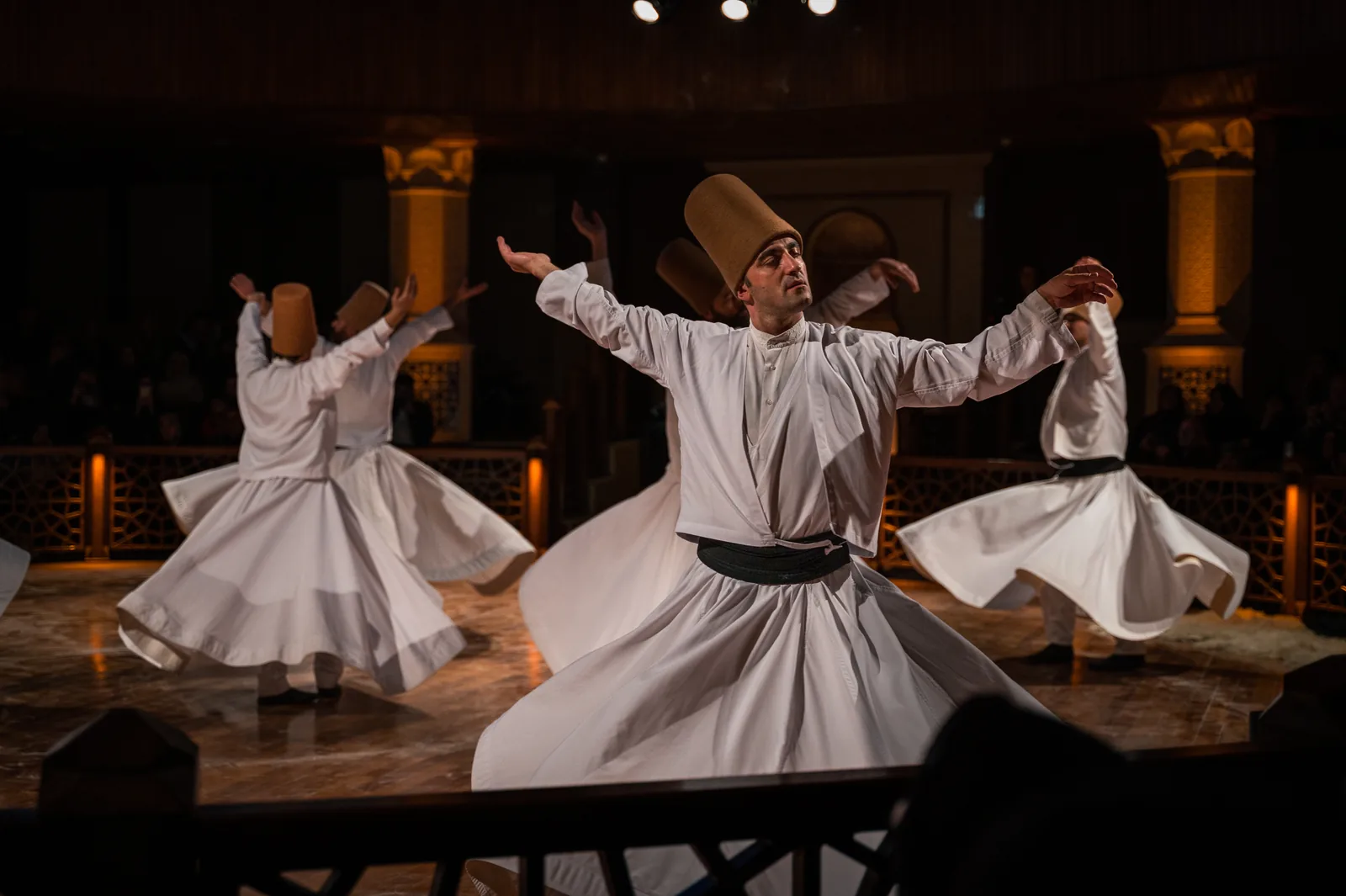
Why is Rumi’s death called a wedding night?
Rumi’s death on 17 December 1273 is remembered as Şeb-i Arus, the “wedding night,” meaning reunion with the divine beloved. The Turkish Presidency’s Directorate of Communications confirmed Konya’s commemorations for 7 to 17 December 2024 in its announcement of 6 December that year. Official announcement, 2024
Where is Rumi buried, and which manuscripts survive?
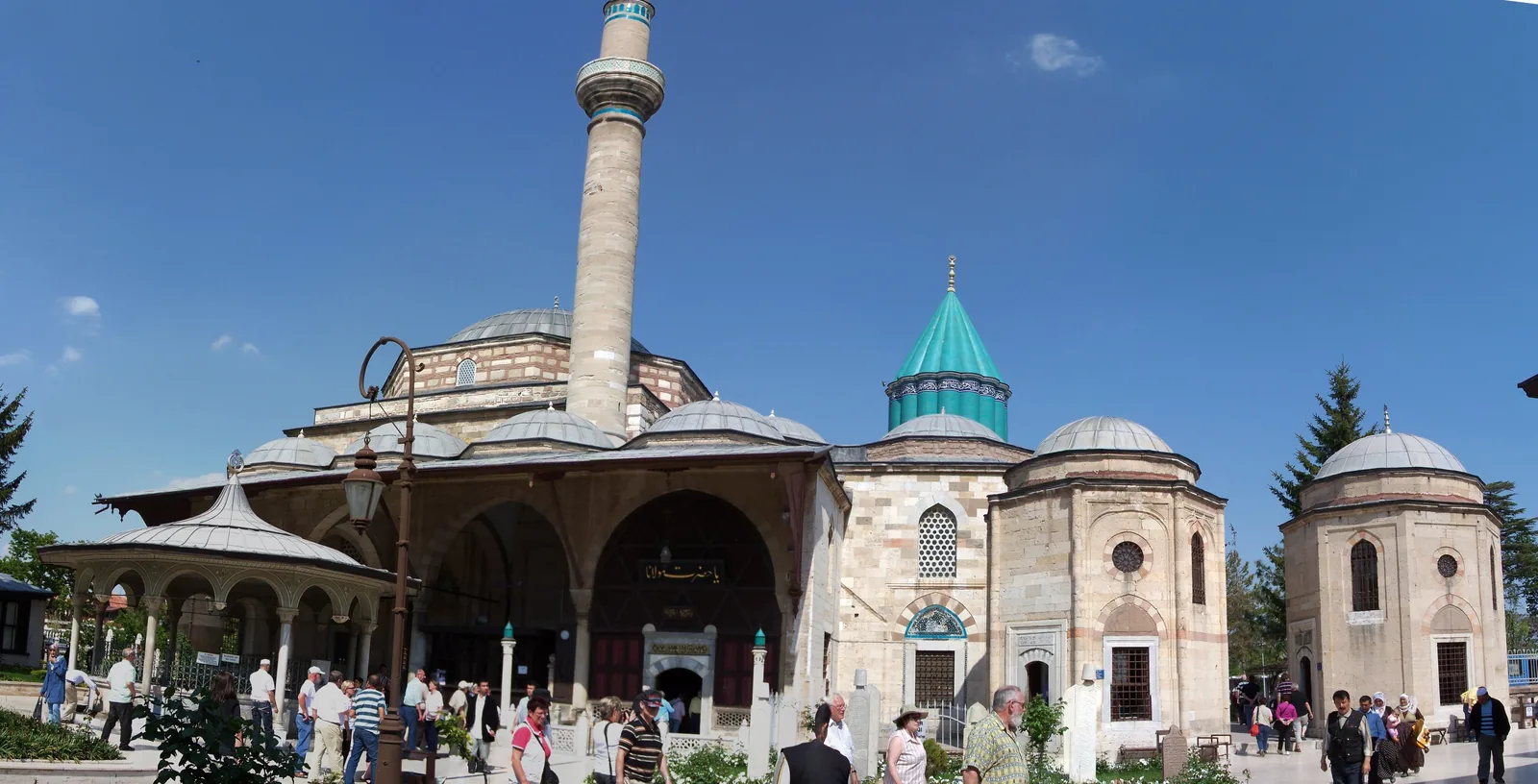
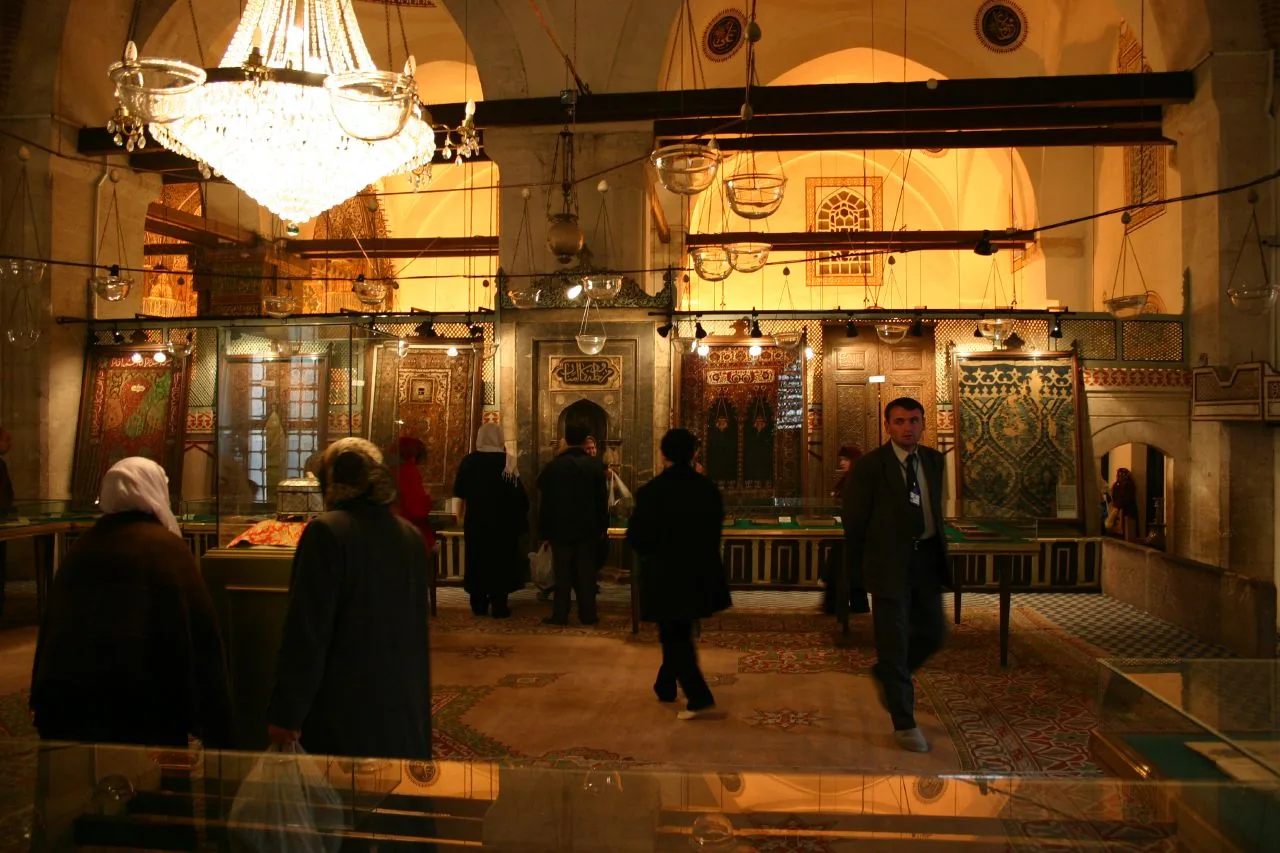
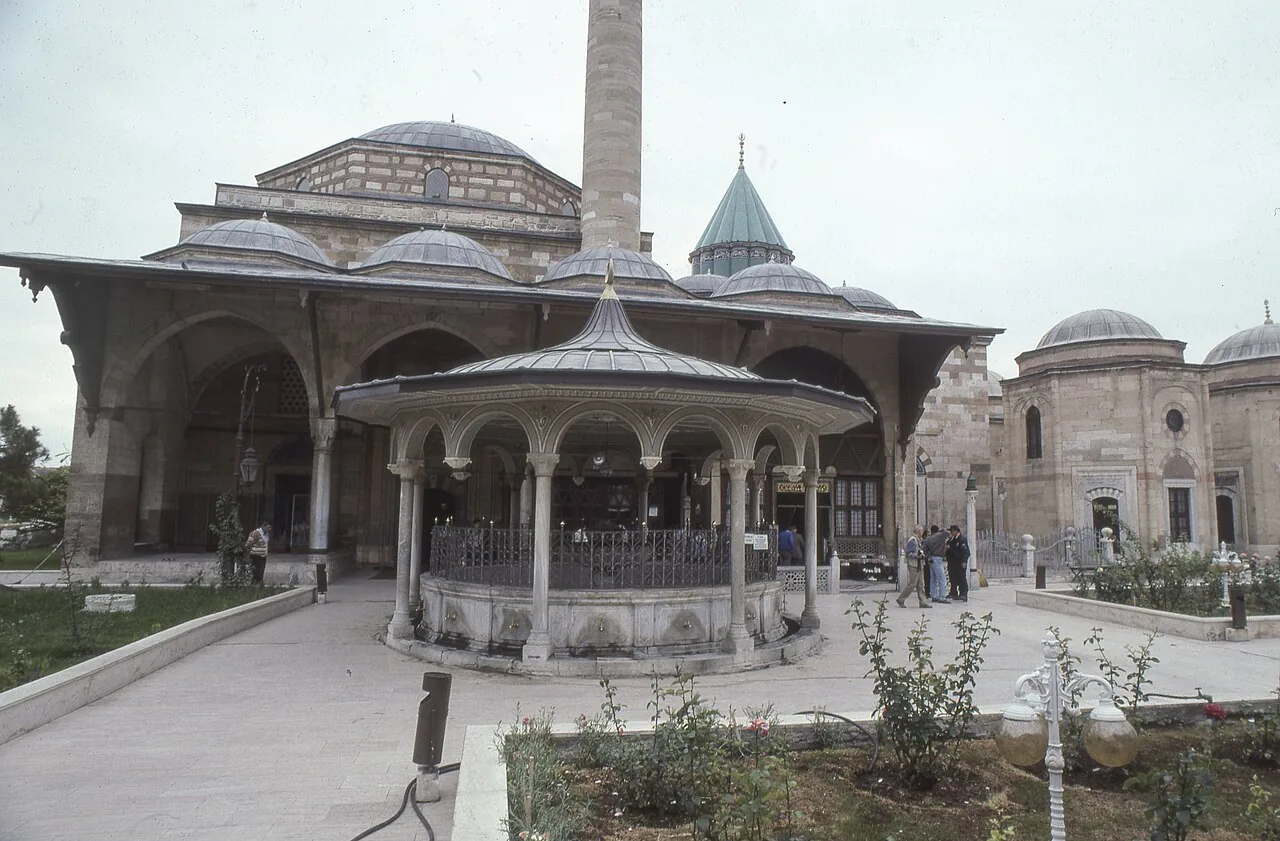
Rumi is buried beside his father in the Mevlana Museum complex in Konya, which includes a mosque, sema hall and former dervish living quarters. Its buildings and decoration developed over centuries. Academy of American Poets; Museum collection and building records
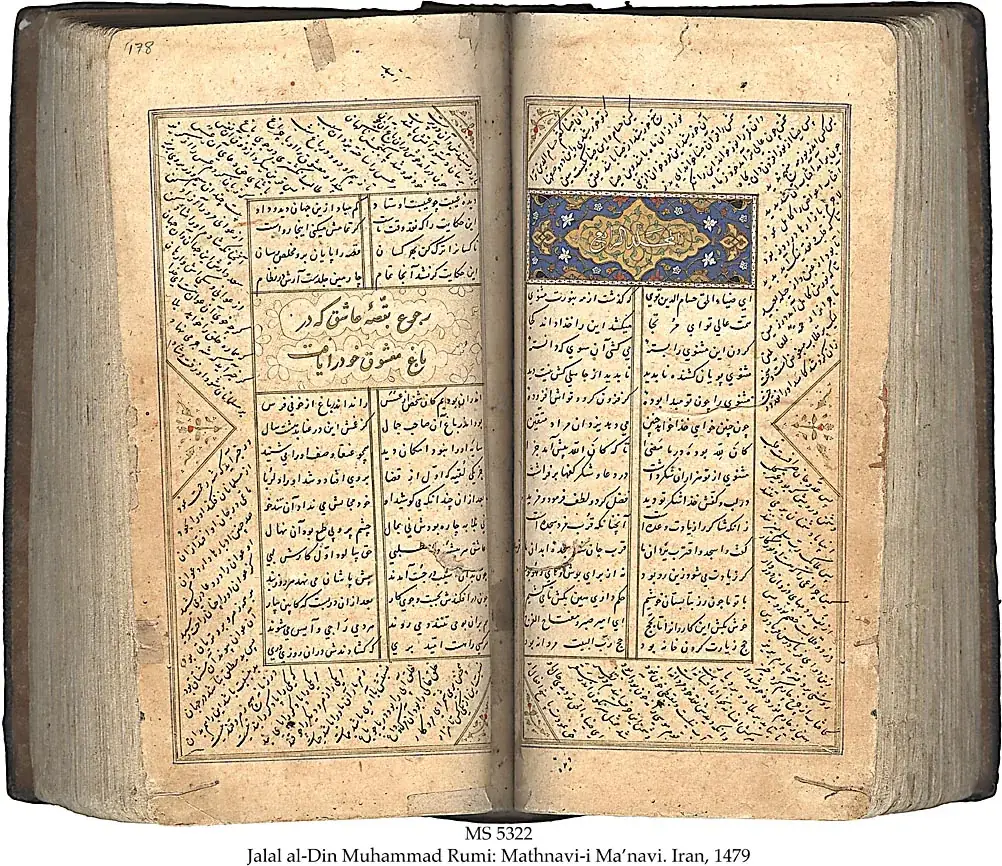
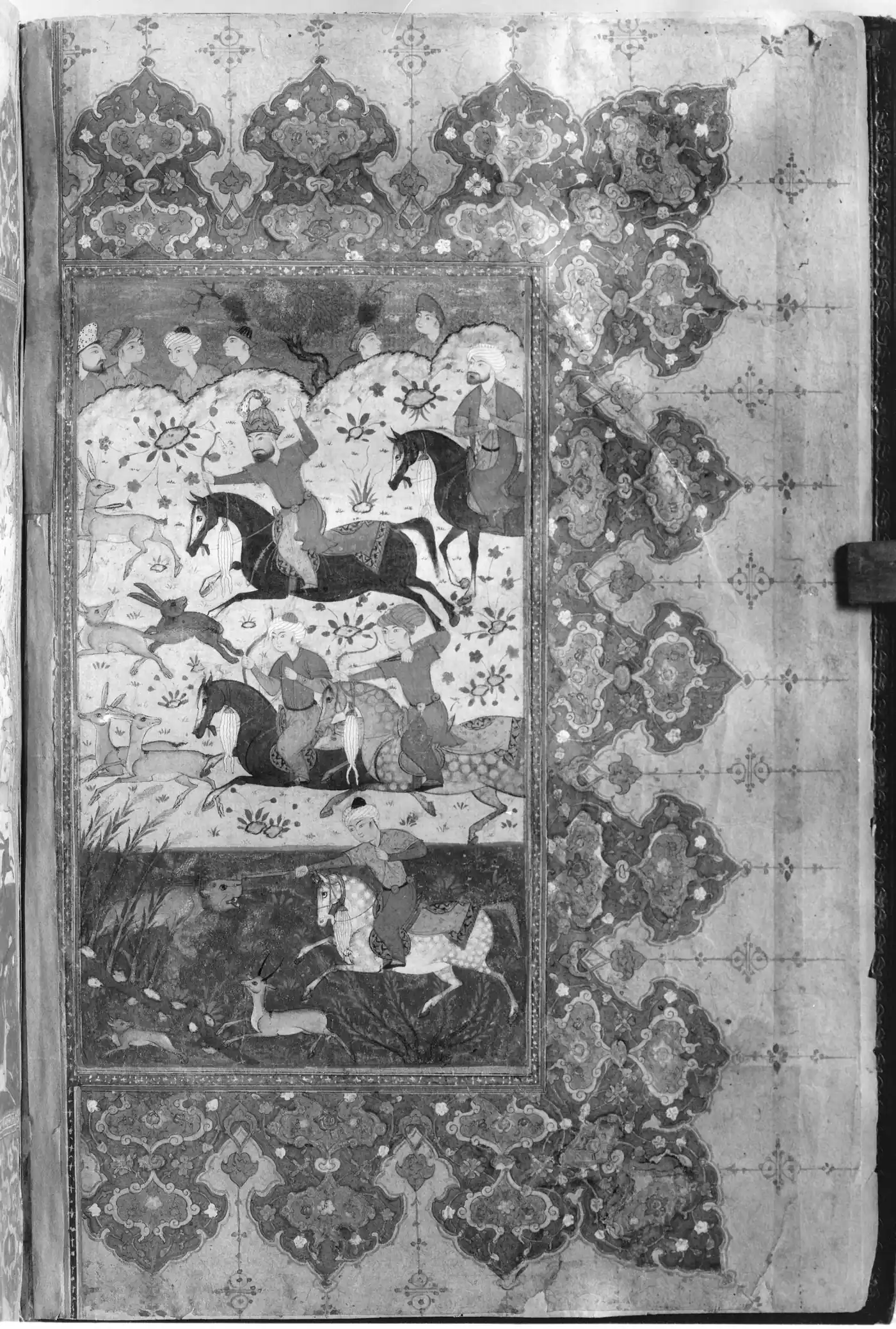
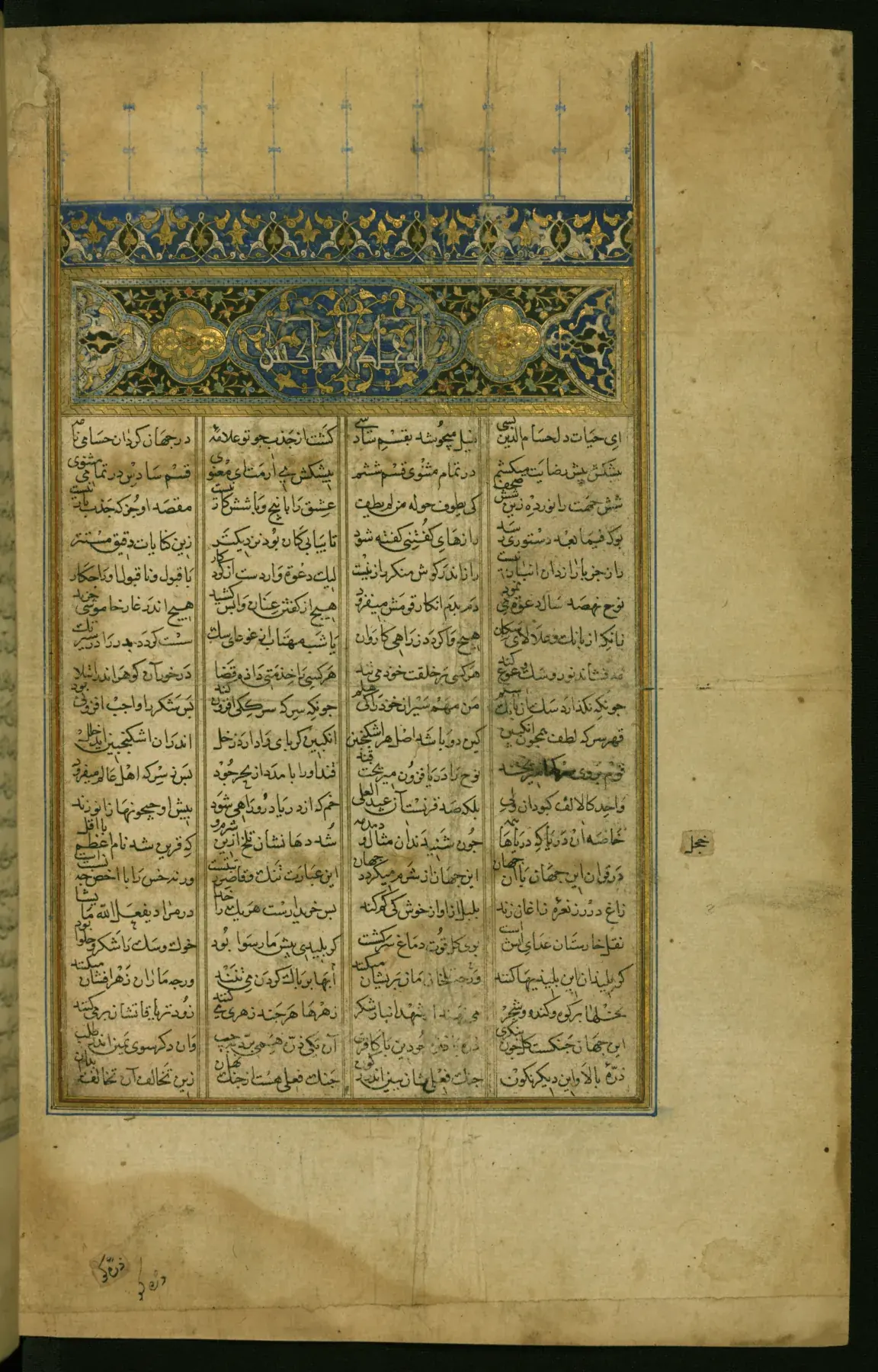
Rumi’s Masnavi survives in illuminated manuscripts held by the Walters Art Museum, the Metropolitan Museum of Art and the Schøyen Collection. The Met notes that some folios in its copy were added later, showing how transmission could include supplementation. Metropolitan Museum, 13.228.12; Shiraz credit; Walters credit
How do scholars, critics and readers around the world see Rumi?
Rumi is read as a Persian poet, Muslim teacher, Mevlevi inspiration and source for modern literary adaptation. The dated examples below document particular voices and editions; they do not measure national opinion or establish a worldwide sales ranking.
How do Persianate and South Asian readers place Rumi?
Rumi guides Muhammad Iqbal through a visionary journey in the Persian Javid Nama (1932), becoming a voice in a later poet’s philosophical project. David Matthews describes that role in his 2008 Iranica study, updated in 2012. Ganjoor’s Persian text, recitations and reader commentary offer a contemporary setting for close reading. Matthews, 2008/2012; Ganjoor, accessed October 2026
Iranian translation scholar Abolfazl Horri argues that Barks’s domestication and insufficient familiarity with Persian culture create an altered Molana for American readers. His article’s abstract was published on 11 March 2011. Horri, abstract
How do Chinese editions present Rumi?
Rumi appears as 莫拉维 and 鲁米 in the Commercial Press record for Bai Zhisuo’s six-volume 玛斯纳维全集 (June 2019). The publisher presents the work as Sufi narrative poetry connecting love, Quranic references, parables, reason, faith, soul and body. Mu Hongyan’s Beijing Foreign Studies University profile also records her Molavi selections in Selected Persian Poems, dated 1 December 2022. Commercial Press, 2019; BFSU publication record
How do Japanese scholars and translators read Rumi?
Rumi’s prose reached Japanese readers through Toshihiko Izutsu’s ルーミー語録, represented in volume eleven of his collected works (June 1993). Tosei Sano identifies it as a translation of Fihi ma fihi; his own June 2020 study examines Rumi’s encounters with Christians and his treatment of Jesus. National Diet Library, 1993 edition; Sano, 2020, p. 10
What do Spanish and Latin American readers hear in Rumi?
Rumi’s Rubayat in Clara Janés and Ahmad Taherí’s Spanish translation is introduced through love, unity and Sufism’s Islamic setting. Alianza’s excerpt identifies the 2015 edition and 2024 reprint. Janés’s introduction
Brazilian poet Marco Lucchesi describes translating from Foruzanfar’s Persian edition with Rafi Mussavi, balancing formal freedom and metrical discipline, in a Unisinos interview of 4 June 2007. Chilean writer Sergio Missana’s Rumi revisitado, published on 8 May 2026, examines Barks’s mediation and how fragments both invite rereading and fit brief modern attention. Lucchesi, 2007; Missana, 2026
How is Rumi read in North Africa?
Rumi featured in Moroccan anthropologist Faouzi Skali’s discussion of Sufi culture at Dar al-Founoun in Rabat, reported in Arabic by Abdessalam Chamakh on 13 April 2022. Skali described spiritual formation as cultural, social and communal, requiring more than words alone. Hespress report
Why do English-language readers argue about Rumi?
Rumi’s English adaptations attract both gratitude for their accessibility and criticism of lost cultural detail. Abeer Piracha’s Delos abstract of 1 November 2024 asks whether Americanised versions dilute religious nuances. The Rumi Forum’s account of 13 November 2024 instead foregrounds healing, compassion and community: different purposes produce different modern Rumis. Piracha, abstract; Rumi Forum
Which dates mark Rumi’s writing and its later transmission?
Rumi’s writing, its preservation and the institutions around it developed in distinct stages:
- Approximately 1258 to 1273: Conventional period of Masnavi composition. Sano, 2020, p. 15
- Around 1262 and 1263 to 1264: Book One is completed; composition pauses after Husam al-Din’s wife dies, then resumes. Estelami, 2004/2017
- 1291: Sultan Walad writes the Walad-nama, an important source for Rumi and his circle. Waley, 1988/2017
- 1318 to 1353: Aflaki develops his hagiographical account, commissioned by Rumi’s grandson; its stories require comparison with earlier testimony. Gamard, p. 2
- 1925: Türkiye closes Mevlevi lodges. UNESCO
- 1950s: Public sema performances resume. UNESCO
- 2005 and 2008: UNESCO proclaims the Mevlevi Sema ceremony, then inscribes it on the Representative List of the Intangible Cultural Heritage of Humanity. UNESCO inscription record
What else do readers ask about Rumi?
Did Rumi meet Attar as a child?
Rumi’s supposed childhood meeting with Attar is a later tradition. Gamard dates the claim to the fifteenth century, long after both poets, so it should not be presented as a documented encounter. Gamard, p. 3
Was Rumi’s father a disciple of Najm al-Din Kubra?
Rumi’s father is linked to Kubra in later accounts, but Gamard, drawing on Franklin Lewis, regards the claim as unsubstantiated. A spiritual genealogy needs evidence for each teaching relationship. Gamard, p. 3
Where are Shams of Tabriz’s own words preserved?
Rumi’s companion Shams speaks through the Maqalat-e Shams-e Tabrizi, discourses recorded by disciples. They provide evidence about his teaching beyond stories in later Rumi biographies. Gamard, p. 4
Which legal school did Shams follow?
Rumi’s companion Shams followed the Shafi‘i school of Sunni law. Gamard also notes his Arabic education and work teaching boys to memorise the Quran, challenging the image of an uneducated wanderer. Gamard, p. 4
Does masnavi name a poetic form as well as Rumi’s book?
Rumi’s title uses the name of a verse form: each couplet has its own rhyme, commonly represented aa, bb, cc. That flexibility suits long narrative and teaching poems. Elwell-Sutton, 1986/2017
What is the difference between a ghazal and a rubai?
Rumi’s ghazals are lyrics built from couplets sharing a recurring rhyme; a rubai is a quatrain, commonly rhyming aaba or aaaa. English free-verse versions can conceal these formal differences. Elwell-Sutton, 1986/2017
What did Rumi say prayer should do in daily life?
Rumi’s Discourse 45 says the state cultivated in prayer should continue while sleeping, waking, writing or reading. Remembrance of God should extend through daily activity. Discourses, comparison of Discourse 45
Why does Rumi compare the heart to a polished mirror?
Rumi’s Greek and Chinese painters compete: one group paints, the other polishes a surface that reflects the painting. The polished heart represents spiritual receptivity cleared of self-importance. Masnavi I, Story XIV, Whinfield, 1898
Where does Rumi’s Guest House poem come from?
Rumi’s guest-house metaphor comes from Masnavi V. Barks combined verses 3644 to 3646, 3676 to 3681 and 3693 to 3695 into his modern poem, according to Gamard’s 1999 comparison with Nicholson’s translation. Gamard, Rumi and Self-Discovery
Is there an authentic seventh book of Rumi’s Masnavi?
Rumi’s accepted Masnavi ends with Book Six. Whinfield’s 1898 note distinguishes later continuations and the apocryphal Book Seven printed in the Bulaq edition from the authentic work. Whinfield, note on apocryphal supplements
Sources and image credits
Research updated on 30 October 2026. Primary poetry, scholarly interpretation, publisher records and modern reception are identified separately. Horri and Piracha are cited from abstracts only.
- Poetry Foundation, Jalal al-Din Rumi. Undated biography; consulted in the supplied research, 30 October 2026.
- Ibrahim Gamard, The Life and Works of Mawlānā Jalāl Al-Dīn Balkhī-Rūmī. Undated scholarly overview, hosted copy; opened 30 October 2026. Distinguishes early evidence from later traditions.
- Jawid Mojaddedi, Rumi’s Teachings, Encyclopaedia Iranica. 8 September 2014; updated 14 August 2017.
- William C. Chittick, Rumi: Philosophy, Encyclopaedia Iranica. 11 August 2017; updated 14 August 2017.
- Rumi, Masnavi I, E. H. Whinfield’s abridged translation. 1898, public-domain text. Story headings and translation are Whinfield’s.
- Rumi, Masnavi II, E. H. Whinfield’s abridged translation. 1898, public-domain text; especially Moses and the Shepherd.
- Rumi, Masnavi III, E. H. Whinfield’s abridged translation. 1898, public-domain text; especially the elephant in the dark room.
- Ibrahim Gamard, The Song of the Reed, Masnavi I:1-3. 17 February 2000; Persian transliteration, translation and textual notes.
- Ibrahim Gamard, The Discourses. Undated; notes on the compilation, editions, Arberry and Thackston translations.
- Oxford University Press, The Masnavi, Book Six, translated by Jawid Mojaddedi. 15 October 2025 edition; completion of the Oxford World’s Classics series.
- I.B. Tauris / Bloomsbury, The Masnavi of Rumi, Book One, translated by Alan Williams. 20 February 2020; bilingual edition with notes and an analytical index.
- Poetry Foundation, Coleman Barks. Undated profile; consulted in the supplied research.
- UVA Religion Lab, When Verse Goes Viral, with Muhammad Ali Mojaradi. Undated episode transcript; opened 30 October 2026. Source for the comparison of faith/disbelief with wrongdoing/rightdoing.
- Ibrahim Gamard, Corrections of Popular Versions. Undated, revised specialist resource; poem locators and comparisons. Used as a textual guide, not a verdict on every online saying.
- Abolfazl Horri, Domestication: The Problem of Barks’ Translating Rumi into American English. Iranian Journal of Translation Studies, 11 March 2011; abstract opened.
- Abeer Piracha, Orientalizing the East: The West’s Misrepresentation of Rumi’s Poetry. Delos, 1 November 2024; abstract opened, full article not consulted.
- UNESCO, Mevlevi Sema ceremony. Proclaimed 2005; inscribed 2008. Ritual, transmission, lodge closures and safeguarding.
- The Metropolitan Museum of Art, Masnavi of Jalal al-Din Rumi, 13.228.12. Object record: dated 1488 to 1489, materials, dimensions, folios and frontispiece.
- The Commercial Press, 玛斯纳维全集, translated by Bai Zhisuo. June 2019; publisher’s record and Chinese editorial description of the six-volume translation.
- National Diet Library, 井筒俊彦著作集 11: ルーミー語録. June 1993; Japanese edition in Toshihiko Izutsu’s collected works.
- Tosei Sano, Rūmī and Christianity: From His View on Jesus and Christians (1). Ryukoku University, Society and Culture 22, June 2020, pp. 9 to 28.
- Clara Janés and Ahmad Taherí, Rubayat, Alianza editorial excerpt. Edition first published 2015; fourth reprint 2024. Title pages and Janés’s introduction.
- Marco Lucchesi, interview with IHU On-Line, Unisinos, Brazil. 4 June 2007. Metaphor, religious context and translating Persian with Rafi Mussavi.
- Sergio Missana, Rumi revisitado, Revista Santiago, Chile. 8 May 2026. Review and criticism of Rumi’s modern circulation and translation.
- Abdessalam Chamakh, reporting Faouzi Skali’s Rabat talk, Hespress. 13 April 2022. Arabic report of a French-language discussion of Rumi and Sufi cultural transmission.
- David Matthews, Jāvid-nāma, Encyclopaedia Iranica. 15 December 2008; updated 13 April 2012. Iqbal’s 1932 poem and Rumi’s role as guide.
- Rumi Forum, About Rumi. Page dated 13 November 2024. A contemporary interfaith organisation’s reading of Rumi.
- Ibrahim Gamard, concordance of Rumi quatrains and earlier attributions. February 2008 version. Includes a list of quatrains found before Rumi’s time, including the familiar invitation to return.
- University of Chicago Press, Mystical Poems of Rumi, translated by A. J. Arberry. Combined and corrected edition, April 2009; prepared by Hasan Javadi with a foreword by Franklin D. Lewis.
- Dar al-Masnavi, Masnavi reading and listening resources. Undated resource index, opened 30 October 2026.
- Ibrahim Gamard, The Grammarian and the Boatman, Masnavi I:2829 to 2847. 7 November 1999; translation and Persian transliteration with explanatory notes.
- Beijing Foreign Studies University, Mu Hongyan: Molavi selections in Selected Persian Poems. Faculty publication record dated 1 December 2022, opened 30 October 2026. Bibliographic evidence, not a review or a statement of translation method.
- Ganjoor, Rumi, Masnavi, Book One, opening. Persian primary text, undated digital edition, opened 30 October 2026. The page includes recitation links.
- Academy of American Poets, About Jalal al-Din Rumi. Undated biography; opened 30 October 2026. Source for the 147 letters and mediation.
- Ibrahim Gamard, About Rumi’s Arabic Poetry. Undated specialist discussion; opened 30 October 2026. Counts refer to Foruzanfar’s edition.
- Nick Nicholas, How are Rumi’s poems in Greek?. 12 January 2017. Linguistic discussion with links to edited Greek passages.
- Reşat Öngören, Mevlânâ Celâleddîn-i Rûmî, TDV İslâm Ansiklopedisi. 2004, vol. 29, pp. 441 to 448. Turkish scholarly account, including sermons and letters.
- Mohammad Estelami, Hosam-al-Din Chalabi, Encyclopaedia Iranica. 15 December 2004; updated 1 March 2017. Composition of the Masnavi and succession.
- Muhammad Isa Waley, Baha-al-Din Soltan Walad, Encyclopaedia Iranica. 15 December 1988; updated 8 February 2017. Organisation of the Mevlevi order and the Walad-nama.
- Oxford University Press, The Masnavi, Book One, translated by Jawid Mojaddedi. ISBN 9780199552313, 2008 paperback. Direct link to the recommended first book.
- Ibrahim Gamard, On a most likely fake quote, Dar-al-Masnavi discussion group. 2 September 2021. Specific response about the wound and light wording and its Masnavi source.
- Ibrahim Gamard, Your task is not to seek for love, Dar-al-Masnavi discussion group. 3 December 2015. Identifies A Course in Miracles as the source.
- Rebecca Joy Stanborough, What Does “What You Seek Is Seeking You” Mean?, Healthline. 18 February 2022. Witness to circulation and interpretation, without a Persian work and passage locator.
- Ramona Wis, The Conductor as Yogi: A Rumi Moment, ChoralNet. 13 April 2021. Witness to circulation of the ecstatic-motion wording, without a Persian poem locator.
- Türkiye Presidency, Directorate of Communications, Şeb-i Arus press-centre announcement. 6 December 2024. Confirms commemorations in Konya on 7 to 17 December 2024.
- Laurence Paul Elwell-Sutton, Aruz, Encyclopaedia Iranica. 15 December 1986; updated 14 June 2017. Persian verse forms and rhyme schemes.
- Ibrahim Gamard, Rumi and Self-Discovery. Talk given April 1999; hosted copy. Compares The Guest House with Nicholson’s translation.
- Wikimedia Commons, Mevlana Museum collection. Building and collection records; individual image licences are listed below.
- Rumi, Masnavi VI, E. H. Whinfield’s abridged translation. 1898, public-domain text; note on apocryphal supplements.
Where do the images of Rumi and his legacy come from?
The eight numbered images have file-level Commons credits below. All are WebP conversions; images were resized where needed, without cropping. Share-alike photographs retain their stated licences. The header and portrait were made for this site and are © Piet Baudoin.
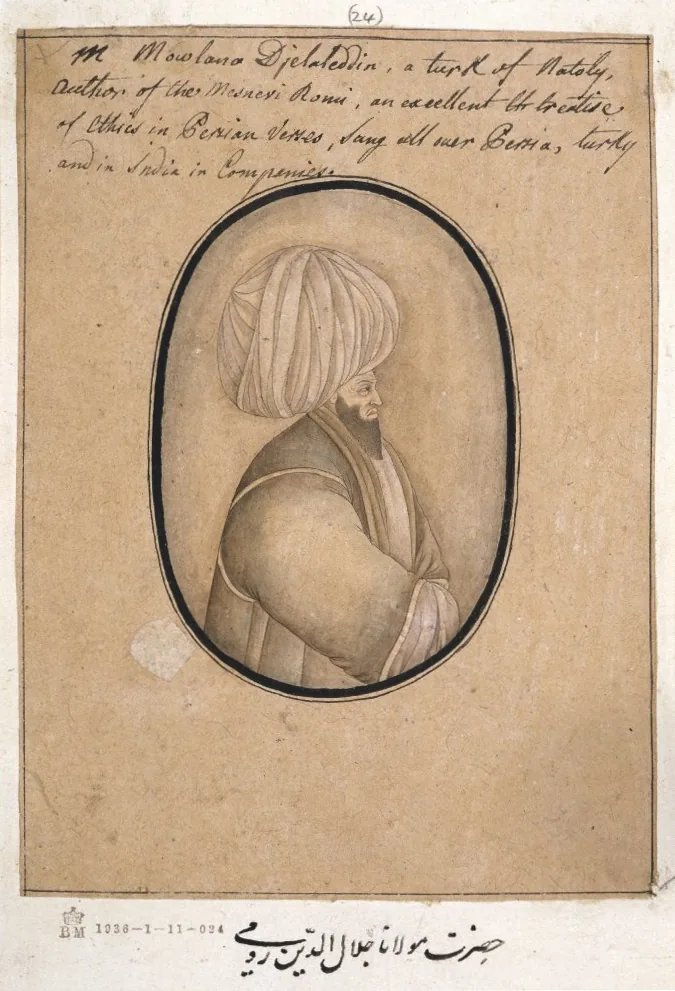
- Image 01: Posthumous portrait of Rumi, Mughal India, early nineteenth century. Unknown artist; British Museum. A later imagined likeness, not a portrait from life. Commons file record; Public domain.
- Image 02: The Mevlana Museum and mausoleum complex in Konya. Photograph: Niels Elgaard Larsen, 15 May 2009. Commons file record; CC BY-SA 3.0.
- Image 03: Masnavi copied in Shiraz in 1479 by Hussain ibn Shaikh Ali; Schøyen Collection, MS 5322. Reproduction dated May 2008 in the Commons record; photographer not named. Commons file record; Public domain.
- Image 04: Frontispiece from a Masnavi manuscript dated 1488 to 1489. Unnamed manuscript artists; Metropolitan Museum of Art, 13.228.12; image supplied by the museum. Commons file record; CC0 1.0.
- Image 05: Opening of Masnavi Book Six, Iran, 1461. Scribe Ahmad ibn Hajji Abi Bakr al-Katib; illuminator not identified. Walters Art Museum, W.625.257B; museum digital reproduction. Commons file record; Public domain.
- Image 06: Courtyard fountain and the Mevlana Museum’s central building, Konya. Photograph: Dosseman, 22 August 2018. Commons file record; CC BY-SA 4.0.
- Image 07: Rumi’s tomb at the Mevlana mausoleum, Konya. Photograph: Lilianbennett, 15 December 2005 according to the image metadata; Flickr listing dated January 2006. Commons file record; CC BY-SA 2.5.
- Image 08: Mevlevi sema ceremony in Konya. Photograph: Baltazar Faunbäck, 20 November 2022. Commons file record; CC BY-SA 4.0.
- Header image, with an 800-pixel version: generated for this page in 2026, a free interpretation rather than a work by Rumi. © Piet Baudoin.
- Portrait: a painting made for this site, not a historical image. © Piet Baudoin.