Artists / No. 015
Who was Robert Motherwell, and what is his art about?
Robert Motherwell (1915 to 1991) was an American Abstract Expressionist painter and printmaker, a founder of the New York School and its most prolific writer. His art is about feeling held in a few large shapes: above all the Elegies to the Spanish Republic, more than one hundred paintings begun around 1948 in which black ovals and upright bars press against white and ochre, an “extended abstract meditation on life and death” that grew out of the Spanish Civil War and modern poetry. [1] [2]
This page answers the questions people ask about Motherwell in one place: his life, what the Elegies mean, how to look at one, his other series, the works to know, why he wrote so much, what his paintings cost, and how Spain, France, Germany, Austria and the United States read him. Every fact carries a source you can open. His paintings remain in copyright, so they are linked to museum records rather than reproduced.
Who was Robert Motherwell?
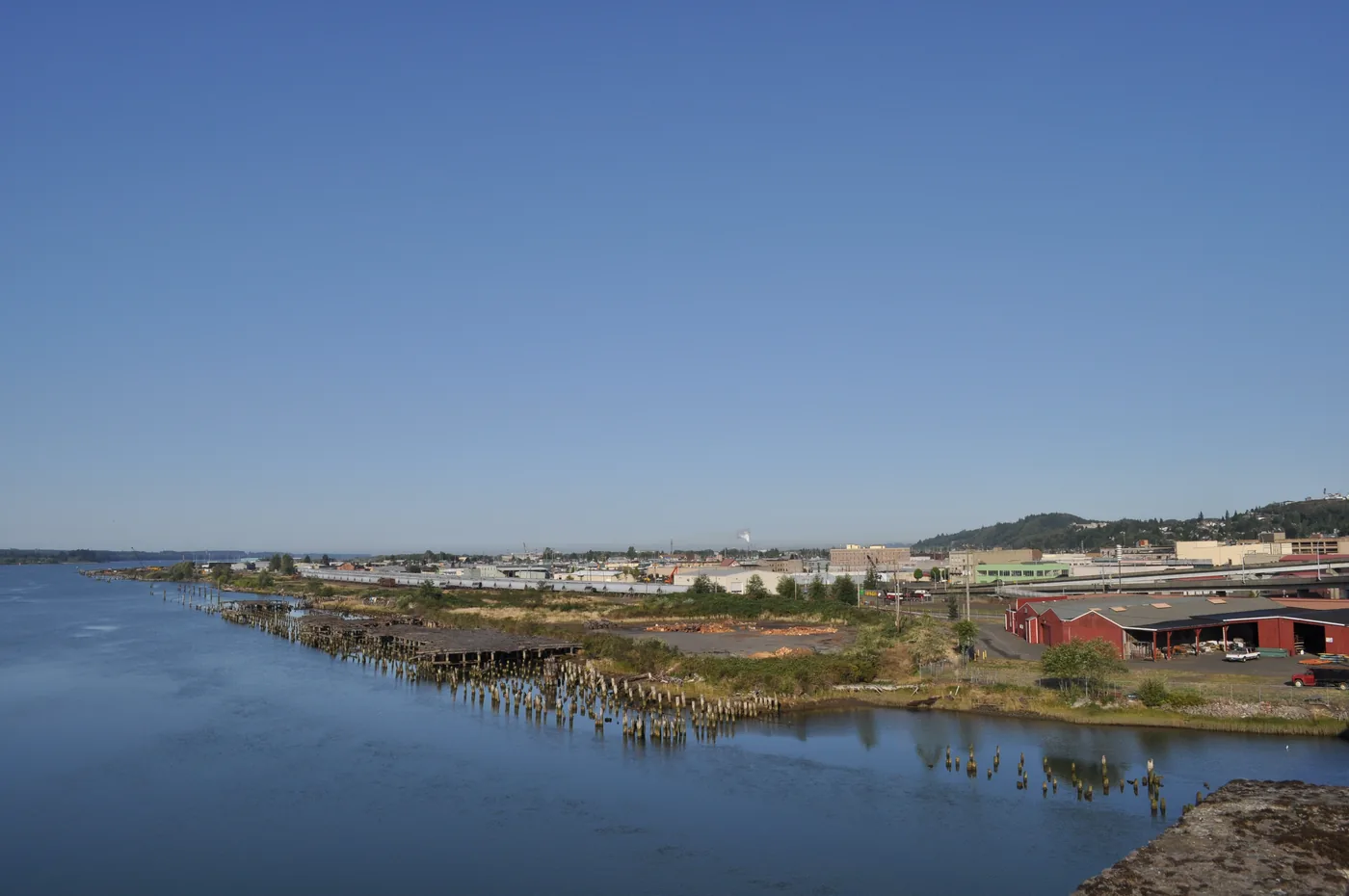
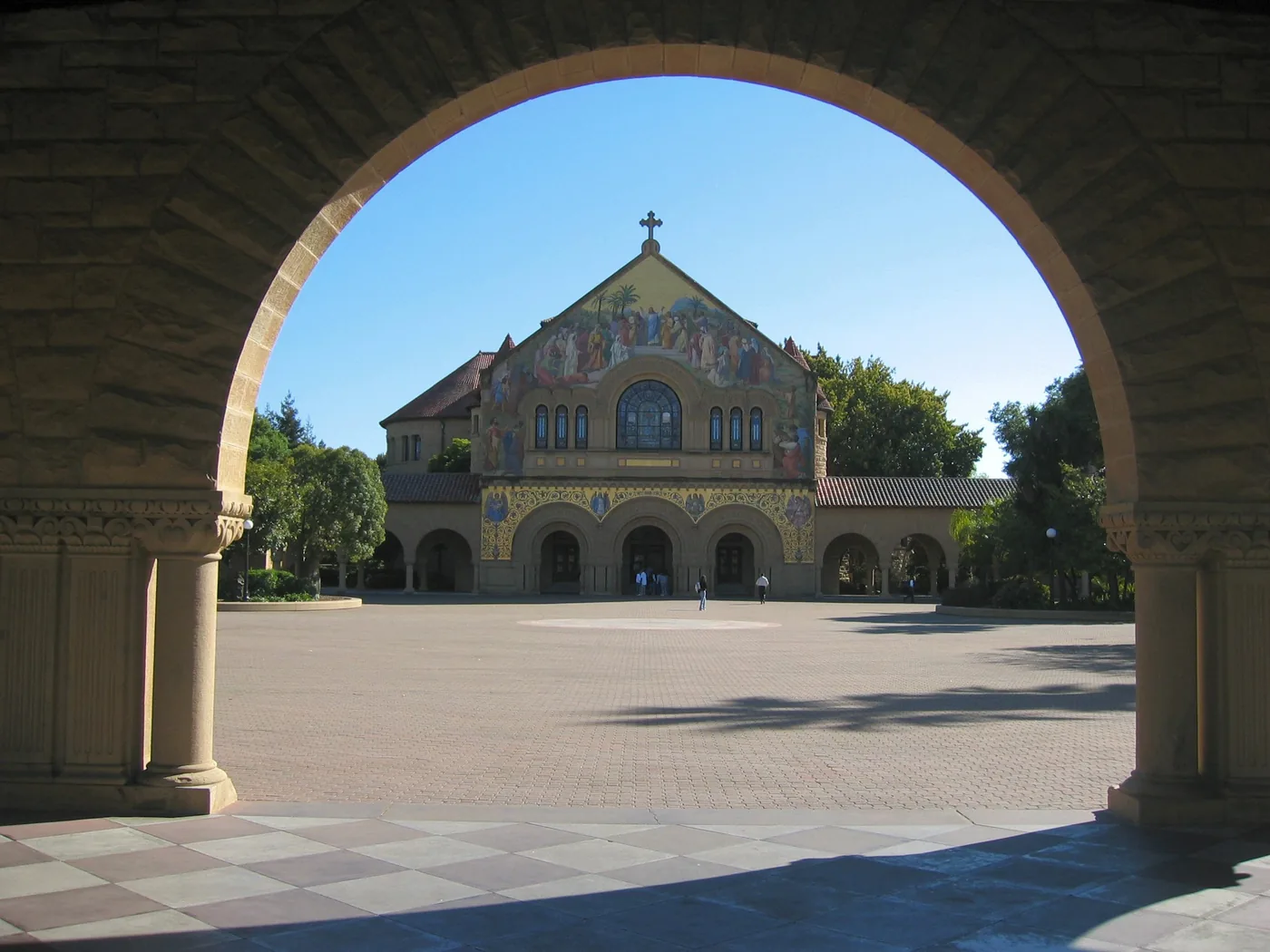
Robert Motherwell was born on 24 January 1915 in Aberdeen, Washington, on the Pacific coast, and died on 16 July 1991 in Provincetown, Massachusetts. Between 1932 and 1937 he briefly studied painting at the California School of Fine Arts in San Francisco and took a BA in philosophy at Stanford, where reading Mallarmé, Joyce, Poe and Octavio Paz introduced him to modernism; that literary passion stayed with him for life and became a theme of his painting. [1]
He went on to Harvard. By his own account his father wanted a secure career and offered, after “months of really a cold war”, fifty dollars a week for life if he first earned a PhD so that he could always teach. In 1940 he moved to New York to study at Columbia, where the art historian Meyer Schapiro urged him to paint rather than write about painting and introduced him to the exiled Parisian Surrealists, Max Ernst, Duchamp and Masson among them, arranging lessons with Kurt Seligmann. [1]
In 1941 he travelled to Mexico with the Chilean Surrealist Roberto Matta, who introduced him to automatic drawing, the Surrealists’ way of tapping the unconscious; meeting Wolfgang Paalen kept him there for months. In 1942 he began exhibiting in New York, and in 1944 Peggy Guggenheim’s Art of This Century gallery gave him his first one-man show; the same year the Museum of Modern Art became the first museum to buy his work. From the mid-1940s, Wikipedia records, he “became the leading spokesman for avant-garde art in America”. In 1948 he founded the Subjects of the Artist School with Baziotes, Newman, Hare and Rothko, and made the drawing that grew into the Elegies. [1]
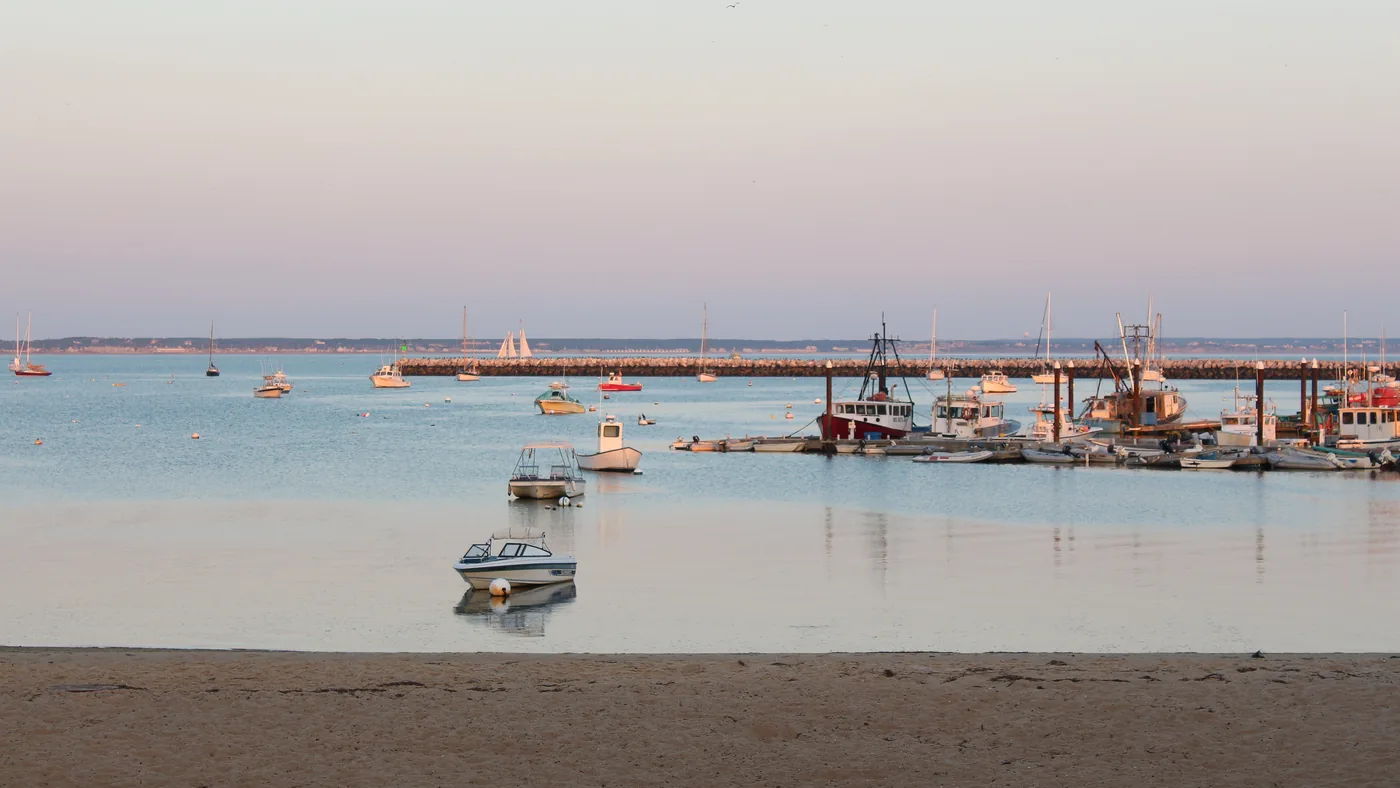
In 1958 he married the painter Helen Frankenthaler; they divorced in 1971. In 1965 the Museum of Modern Art gave him a retrospective that travelled to Amsterdam, London, Brussels, Essen and Turin. From 1971 he lived in Greenwich, Connecticut, marrying the artist-photographer Renate Ponsold in 1972; he died in Provincetown. In 1981 he set up the Dedalus Foundation to foster understanding of modern art; it still administers his legacy and catalogues raisonnés. [1] [4] [18]
What are the Elegies to the Spanish Republic about?
The Elegies to the Spanish Republic are Robert Motherwell’s memorial to the Spanish Republic defeated in 1939, painted from 1948 until his death as more than one hundred variations on black ovals and bars against light fields. The Met, which owns Elegy to the Spanish Republic No. 70 of 1961, puts it this way: “Beginning about 1948, Motherwell began making oil sketches and paintings that evolved into a series of more than one hundred variations on a theme he called Elegies to the Spanish Republic. Initially inspired by the Spanish Civil War (1936–39) and contemporary poetry, his Elegies constitute an extended abstract meditation on life and death.” [2]
The germ was small. During 1947 and 1948 Motherwell edited the review Possibilities with the critic Harold Rosenberg, and in 1948 made an image to accompany Rosenberg’s poem “The Bird for Every Bird”. A year later he reworked the sketch as a painting called At Five in the Afternoon, after the refrain of Federico García Lorca’s Lament for Ignacio Sánchez Mejías, a poem on a matador fatally gored in 1934; the hour is when bullfights traditionally begin. The Art Story counts the series at more than 140 works. [1] [3] [9]
Motherwell’s own phrase for the series, quoted in the Bay Area Reporter’s review of the de Young’s Between Life and Death exhibition, was “a funeral song for something one cared about”. The same review traces the subject to 1937, when as a Stanford student he heard André Malraux speak in San Francisco on the Spanish Civil War, and places the Elegies in a line from Goya and Picasso’s Guernica; the poets he transmuted were Lorca, Octavio Paz and Rafael Alberti, whose poem “El negro” appears in a book containing Motherwell’s 1983 lithograph Elegy Black Black. [6]
The Pennsylvania Academy of the Fine Arts calls the Elegies Motherwell’s “definitive series of works memorializing the Spanish Civil War of the 1930s”. Two things follow for a viewer. First, the paintings are not pictures of events; they are abstract shapes carrying grief. Second, the series is a theme with variations, like music: each Elegy is a new weighing of the same few elements. [10]
How do you look at a Robert Motherwell painting?
A Robert Motherwell painting is best read as a few shapes pressing on each other. Count the black forms, follow the edges where black meets white, notice where the ochre or blue sits, then step back until the picture reads as one chord. His writing, collected by The Art Story, insists that abstraction is not decoration: “Without ethical consciousness, a painter is only a decorator.” The sequence below is our looking exercise, not a code. [3]
- Count. How many black shapes are there, and are they ovals, bars or both? In most Elegies two or three verticals hold ovals between them.
- Press. Where does a black oval touch a bar, and where does white squeeze between them? The pressure at those joins is where the painting’s feeling lives.
- Edge. Follow one contour. Is it brushed softly, dragged, or hard? Motherwell let drips and ragged edges stand; they record speed and hesitation.
- Colour. Find the one note that is not black or white, often ochre, sometimes blue or red. Ask what it does to the mood of the black.
- Scale. Step back until the shapes read as one gesture. The Reina Sofía’s Elegy CIII measures 175.2 by 233.6 centimetres: the ovals are the size of a body. [7]
- Return. Compare two Elegies online. The series was made to be seen as variations; the differences are the content.
Phillips’ catalogue essay on At Five in the Afternoon (1971) adds the personal register: as the Elegies “point beyond our collective destiny to the fate of an individual”, those titled after Lorca’s matador turn his death into an emblem of the death Motherwell, in moments of despair, hoped for himself. That is a reading, not a rule; the shapes will carry whatever grief you bring. [9]
What else did Motherwell paint?
Besides the Elegies, Robert Motherwell painted the Open series from 1967, the Lyric Suite of 1965, and a large body of collages and prints. The Opens began with a chance juxtaposition of a large and a small canvas and occupied him for nearly two decades: limited planes of colour broken by minimally rendered lines in loosely rectangular configurations, growing more painterly as the series went on. If the Elegies are grief, the Opens are a window: a field of one colour and a drawn frame that may be a door, a canvas or nothing at all. [1]
The Lyric Suite, named after Alban Berg’s string quartet, came from an accident of shopping. Motherwell recalled: “I went to a Japanese store to buy a toy for a friend’s kid, and I saw this beautiful Japanese paper and I bought a thousand sheets. And I made up my mind, this was in the beginning of April 1965, that I would do the thousand sheets without correction.” The result is a flood of sheets in which the automatism he learned from Matta in 1941 runs free. [1]
Wikipedia describes him as painter and printmaker; the French Wikipedia adds engraver and publisher (“peintre, graveur et éditeur américain”), a reminder that his prints, lithographs and collages are a body of work in their own right. The Modern Art Museum of Fort Worth alone holds over fifty works by him in a variety of media. [1] [15] [12]
Which Motherwell paintings should you know?
Six works, linked to museum and auction records checked on 30 October 2026, give the span of the Elegies. The paintings remain in copyright, so they are linked rather than reproduced. [2] [16]
- Elegy to the Spanish Republic No. 35, The Metropolitan Museum of Art, New York. An early numbered Elegy in the Met’s collection. [16]
- Elegy to the Spanish Republic No. 70, 1961, The Metropolitan Museum of Art. The Met’s own text on the series is quoted above. [2]
- Elegy to the Spanish Republic CIII, 1965, oil on canvas, 175.2 × 233.6 cm, Museo Nacional Centro de Arte Reina Sofía, Madrid. An Elegy in the country it mourns. [7]
- Barcelona Elegy for the Spanish Republic, Pennsylvania Academy of the Fine Arts, Philadelphia. [10]
- At Five in the Afternoon, 1971, sold at Phillips New York on 17 May 2018; the title that began the series in 1949, taken up again two decades later. [8] [9]
- Elegy to the Spanish Republic No. 110, discussed by The Art Story as part of a series of more than 140 paintings that functioned as the artist’s memorial to the Spanish Civil War. [3]
Why is Motherwell called the writer of the New York School?
Robert Motherwell studied philosophy at Stanford and Harvard and art history at Columbia before he painted full time, edited Possibilities with Harold Rosenberg, co-founded the Subjects of the Artist School in 1948, where Arp, Cage and Reinhardt lectured, and wrote and lectured throughout his life, which is why Wikipedia names him the leading spokesman for avant-garde art in America from the mid-1940s. [1]
He was also an editor of books. Wikipedia records that “in addition to directing the influential Documents of Modern Art Series, he edited The Dada Painters and Poets: An Anthology, which was published in 1951.” Château Mouton Rothschild, which commissioned him for a label, puts the same career in one sentence: “In 1948 he published a monograph on Max Ernst and was until 1952 editorial director of "Documents of Modern Art", which brought together Dadaist paintings, drawings and manuscripts.” [1] [13]
Two sentences from his writing, as The Art Story quotes them, explain his position. “Every intelligent painter carries the whole culture of modern painting in his head. It is his real subject, of which everything he paints in both an homage and a critique, and everything he says is a gloss.” And: “Without ethical consciousness, a painter is only a decorator.” The Art Story reads his thought through Existentialism: abstraction as a personal journey out of a personal crisis, with the conditions of modern society bearing directly on the painting. [3]
The Brooklyn Rail published a verbatim selection from his writings under the title Interrelations in 2017, and in 2021 profiled the Dedalus Foundation, which supports research, education, publications and exhibitions.[19] [18]
How does the world see Robert Motherwell?
Spain reads Robert Motherwell politically, France and Germany place him in their own art-historical frames, and the museums of Austria and Texas have recently argued that he is overdue for a second look. Clement Greenberg, champion of the New York School, said at his death that “although he is underrated today, in my opinion he was one of the very best of the abstract expressionist painters”. [1]
Spain
The Museo Reina Sofía in Madrid holds Elegy to the Spanish Republic CIII and includes the Elegies in its Repensar Guernica project, which maps the afterlife of Picasso’s painting. Writing in The Art Newspaper for the centenary in 2016, Gregory Gilbert argued that the politics have been undersold: “Motherwell’s Elegies in particular have political dimension, which has yet to be fully studied.” From the 1960s through the 1980s Motherwell supported the Spanish Refugee Aid Committee and was close to Spanish artists like José Guerrero, dissident exiles from Francoist Spain; through Meyer Schapiro he had met figures around Partisan Review who supported the Republicans. [7] [17] [5]
France
Château Mouton Rothschild commissioned Motherwell for its 1974 label and presents him as “one of the most representative spirits of the New York School”. The French Wikipedia describes him as “peintre, graveur et éditeur américain associé à l’expressionnisme abstrait”: painter, engraver and publisher, the publishing a nod to his editorial work. [13] [15]
Germany and Austria
The German Wikipedia files him as “US-amerikanischer Maler des Surrealismus und Abstrakten Expressionismus”, giving Surrealism equal billing, which is faithful to his Matta years. In Vienna, the Bank Austria Kunstforum staged from 12 October 2023 to 14 January 2024 what it called the “first retrospective in Europe for 25 years dedicated to the American painter Robert Motherwell (1915–1991), a leading figure of Abstract Expressionism”, around forty works with loans from MoMA, the Art Institute of Chicago, the Guggenheim Bilbao, the Reina Sofía and Tate. [14] [11]
United States
The Modern Art Museum of Fort Worth’s Robert Motherwell: Pure Painting (4 June to 17 September 2023) called itself the “first presentation in more than a quarter century to fully examine the mastery of Robert Motherwell (1915–1991), a major figure who shaped postwar art”; the museum hosted the last retrospective organised in his lifetime, in 1991. In San Francisco, the de Young’s Between Life and Death gathered thirteen Elegies from Bay Area collections. The recurring American critique, as Gilbert summarises it, is repetition: critics “have regularly accused the artist of being repetitious and formulaic with extended series like the Elegies (1951-1991), but the artist’s continued reconsiderations push back against these criticisms.” [12] [6] [5]
Beyond Europe and America
Our search for Japanese, Chinese and Arabic readings of Motherwell on 30 October 2026 found the Japanese version of the Mouton Rothschild page but no substantive criticism we could verify. We record the gap rather than invent a voice, and will add sources as we find them. [13]
Among his peers on this site
Motherwell is the writer of the generation whose painters fill the Abstract Expressionism page: set his Elegies beside Clyfford Still, who refused all explanation, and Mark Rothko, who shared the Subjects of the Artist School with him. Helen Frankenthaler, his wife from 1958 to 1971, took colour the other way, into the canvas. Gerhard Richter, a generation younger, asked in Birkenau the question the Elegies ask: whether abstraction can mourn. Published with this page: the Buddha, a teacher who also began from suffering.
What do Motherwell paintings sell for?
Robert Motherwell’s auction record is At Five in the Afternoon of 1971, sold at Phillips New York on 17 May 2018 for $12,690,000, a result Phillips says “shattered the artist’s previous auction record”. Most Elegies hang in museums and do not come to market; the Dedalus Foundation’s catalogues raisonnés are the reference for what exists. Prices include buyer’s premium as reported by the house. [8] [9] [4]
Timeline
- 1915 Born 24 January in Aberdeen, Washington. [1]
- 1932 to 1937 California School of Fine Arts briefly; BA in philosophy, Stanford; hears Malraux on Spain in San Francisco in 1937. [1] [6]
- 1940 Columbia University with Meyer Schapiro; meets the exiled Surrealists. [1]
- 1941 Mexico with Matta; automatism; Wolfgang Paalen. [1]
- 1944 First one-man show at Art of This Century; MoMA buys a work. [1]
- 1947 to 1948 Possibilities with Rosenberg; Subjects of the Artist School; the first Elegy image. [1]
- 1949 At Five in the Afternoon, the first painted Elegy. [1]
- 1958 Marries Helen Frankenthaler. [1]
- 1961 Elegy to the Spanish Republic No. 70, now at the Met. [2]
- 1965 MoMA retrospective, travelling to Amsterdam, London, Brussels, Essen and Turin; Lyric Suite; Elegy CIII. [1] [7]
- 1967 The Open series begins. [1]
- 1971 to 1972 Divorce; moves to Greenwich, Connecticut; marries Renate Ponsold. [1]
- 1974 Label for Château Mouton Rothschild. [13]
- 1981 Founds the Dedalus Foundation. [1]
- 1991 Last lifetime retrospective, Fort Worth; dies 16 July in Provincetown. [12] [1]
- 2018 Auction record at Phillips New York, 17 May. [8]
- 2023 Surveys in Fort Worth and Vienna. [12] [11]
Sources
Every source below was opened on 30 October 2026. Quotations are verbatim from the page cited.
- Wikipedia, Robert Motherwell. Biography, education, series, marriages, Greenberg quotation and the Dedalus Foundation; consulted 30 October 2026.
- The Metropolitan Museum of Art, Elegy to the Spanish Republic No. 70, 1961. Collection record and interpretive text.
- The Art Story, Robert Motherwell. Quotations, Elegy No. 110, series count and philosophical context; undated page.
- The Dedalus Foundation, Robert Motherwell, Biography and catalogues raisonnés. Official estate site.
- Gregory Gilbert, Robert Motherwell at 100, The Art Newspaper, 2 April 2016. Repetition critique, politics, Spanish Refugee Aid Committee, José Guerrero.
- Bay Area Reporter, review of Between Life and Death: Robert Motherwell’s Elegies in Bay Area Collections, de Young Museum, San Francisco. Malraux 1937, “a funeral song for something one cared about”, Goya, Guernica, Lorca, Paz, Alberti; accessed 30 October 2026.
- Museo Nacional Centro de Arte Reina Sofía, Elegy to the Spanish Republic CIII, 1965, oil on canvas, 175.2 × 233.6 cm. Collection record.
- Phillips, Basquiat’s Flexible Leads $132 Million Evening Sale in New York, May 2018. Motherwell result of $12,690,000 and record.
- Phillips, lot 8, Robert Motherwell, At Five in the Afternoon, 1971, evening sale, New York, 17 May 2018. Catalogue essay on Lorca and the title.
- Pennsylvania Academy of the Fine Arts, Barcelona Elegy for the Spanish Republic. Collection record.
- Bank Austria Kunstforum Wien, Robert Motherwell, 12 October 2023 to 14 January 2024, exhibition text as published on showonshow.com. First European retrospective in 25 years; around forty works and lenders.
- Modern Art Museum of Fort Worth, Robert Motherwell: Pure Painting, 4 June to 17 September 2023. First presentation in more than a quarter century; over fifty works held; 1991 retrospective.
- Château Mouton Rothschild, Label Art, Robert Motherwell, 1974 vintage. English and Japanese versions consulted.
- Wikipedia (German), Robert Motherwell. German framing; consulted 30 October 2026.
- Wikipédia (French), Robert Motherwell. French framing as painter, engraver and publisher; consulted 30 October 2026.
- The Metropolitan Museum of Art, Elegy to the Spanish Republic No. 35. Collection record.
- Museo Reina Sofía, Repensar Guernica, document: Elegy to the Spanish Republic. Place of the Elegies in the afterlife of Guernica.
- The Brooklyn Rail, The Dedalus Foundation, December 2021. Profile of the foundation and its work.
- The Brooklyn Rail, Verbatim: Robert Motherwell, Interrelations, July–August 2017. Selection from his writings.
- Joe Mabel, Aberdeen, WA, Downtown and Chehalis River from Rt 101, 27 August 2009. CC BY-SA 3.0.
- Jawed Karim, Stanford University Quad, Memorial Church, 4 May 2005. CC BY-SA 3.0.
- Robert Linsdell, Provincetown Harbour, Massachusetts, 2 October 2013. CC BY 2.0.


