Artists / No. 016
Who is Gerhard Richter, and what is his abstract art about?
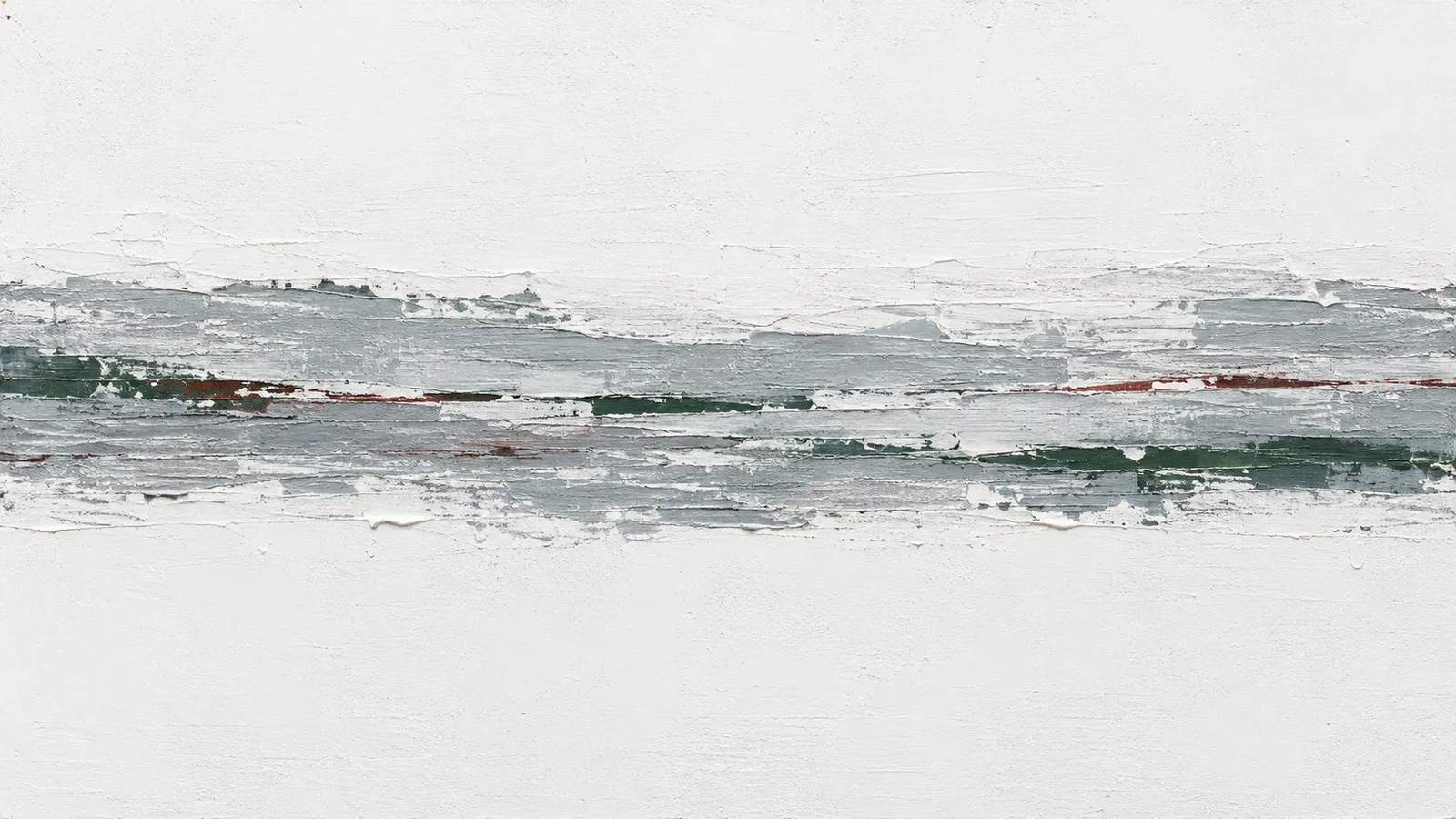
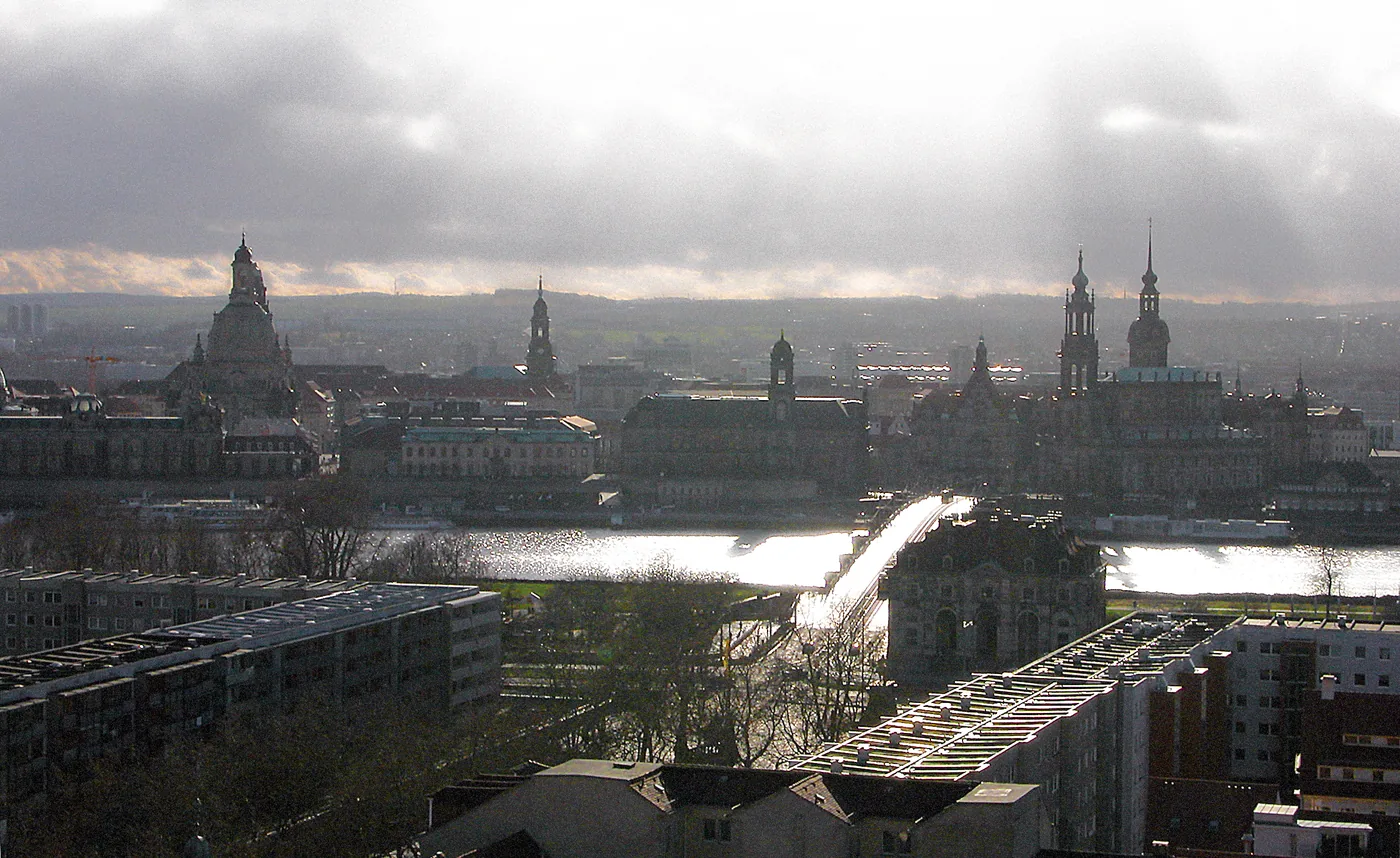
Gerhard Richter, born in Dresden on 9 February 1932, is a German painter who has moved between photographic realism and abstraction for six decades. Since 1976 he has titled canvases Abstract Painting, and from the mid-1980s he has built them by dragging and scraping layers of wet paint with a large squeegee, so that chance produces images which he then eliminates, permits or emphasises. The paintings are about seeing itself: how an image appears, what can be shown, and what a painting can still say after photography and after history. [1] [7] [13]
This page is about the abstract paintings, with the life and the photo-paintings as context. It answers how an Abstract Painting is made, what Richter says it is about, how to look at one, what the Birkenau cycle and the Cologne window are, which works to know, what they cost, and how Japan, Spain, Argentina, Germany and China read him. Every fact carries a source you can open. His paintings remain in copyright and are linked rather than reproduced; the Cologne window is shown from the street.
Who is Gerhard Richter?
Gerhard Richter was born in Dresden on 9 February 1932 and grew up in the Upper Lusatian countryside, in Reichenau and Waltersdorf, where his father Horst worked as a village teacher; his sister Gisela was born in 1936. From 1957 to 1961 he worked as a master trainee at the Dresden academy and painted murals and commissions for the East German state. Two months before the Berlin Wall went up in 1961 he and his wife Marianne escaped to the West; his murals in Dresden were painted over for ideological reasons. [1]
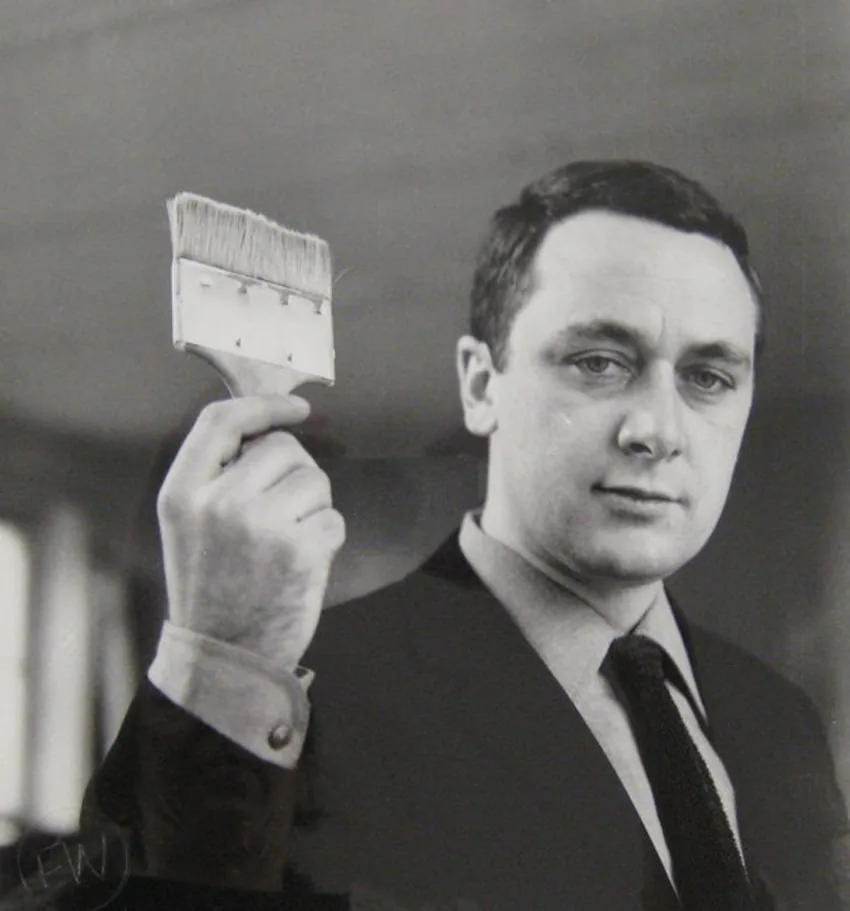
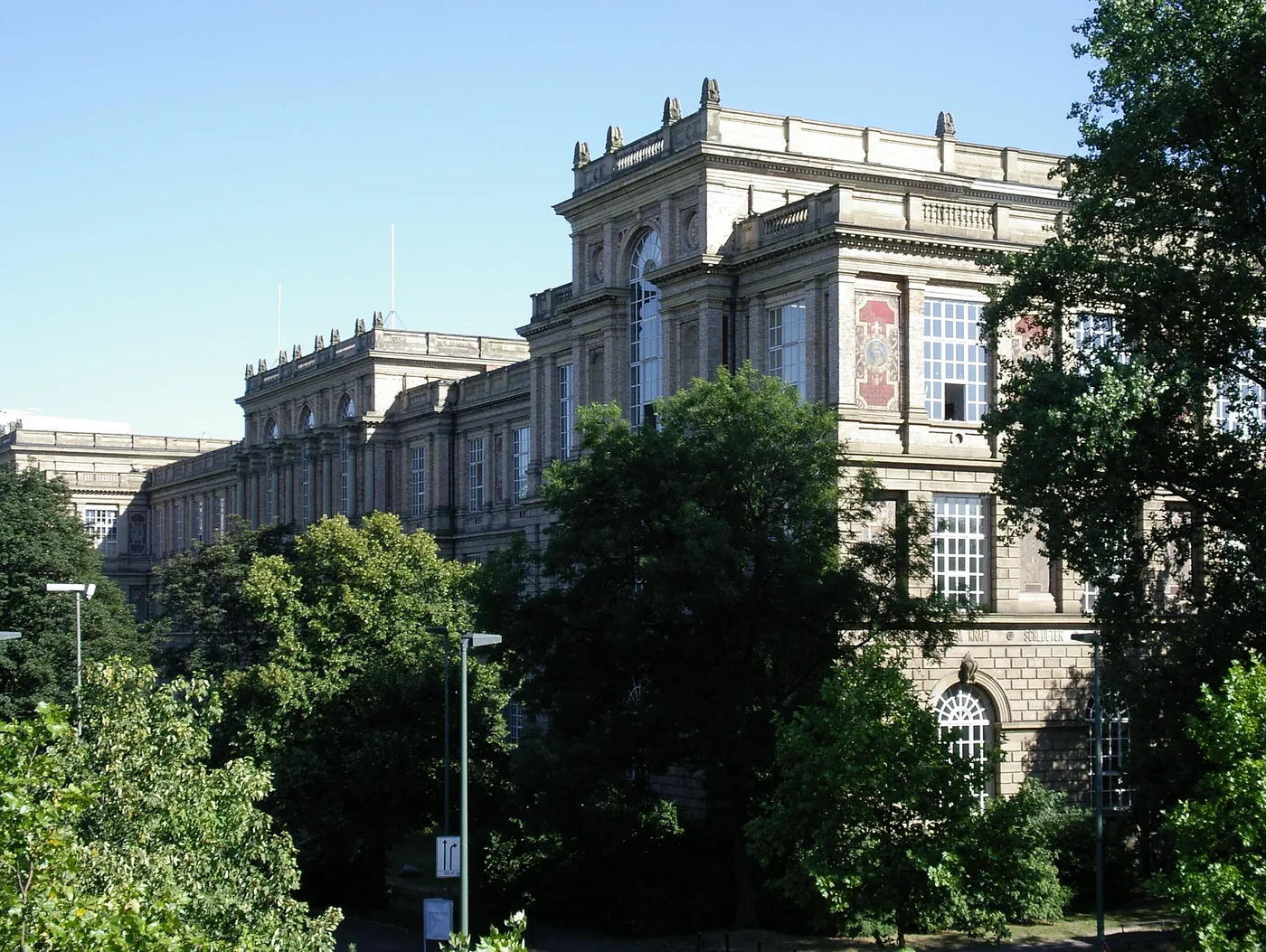
In Düsseldorf he began exhibiting in 1963 and had his first gallery show at Galerie Schmela in 1964. The Reina Sofía, which gave him a retrospective in 1994, describes him as “one of the founders of Capitalist realism, a satirical take on American Pop Art through the use of photographs to create images”. He attended a John Cage performance at the Festum Fluxorum Fluxus in Düsseldorf in 1963, a meeting whose consequences the meaning section returns to. From 1971 to 1994 he taught at the Kunstakademie Düsseldorf; the Chinese Wikipedia lists his students, among them Thomas Schütte, Thomas Struth, Katrin Kneffel and his second wife Isa Genzken. [1] [19] [7] [17]
The abstract work grew out of a long argument with the photograph. Since the 1960s Richter has gathered the source photographs, reproductions and cut-outs behind his paintings in the Atlas, about 4,000 images on some 600 panels. In 1972 he went alone to Greenland to record the arctic landscape; four large Seascape paintings followed in 1976, the year he first gave a work the title Abstract Painting. Euronews, reviewing the 2018 Barberini survey, adds the origin: his earliest abstracts were inspired by Jackson Pollock, whose works he saw at documenta in 1959. [1] [18]
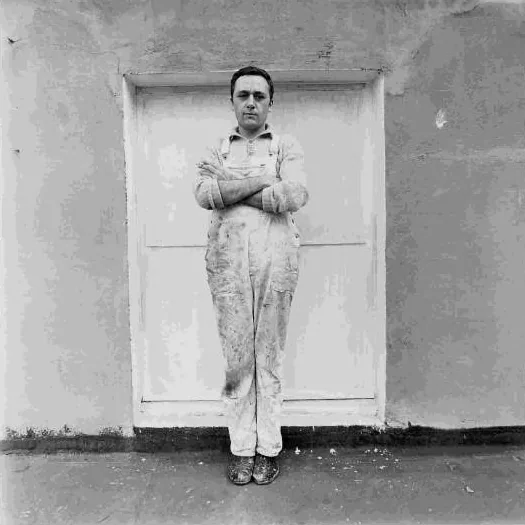
How does Richter make an Abstract Painting?
Gerhard Richter paints an Abstract Painting in stages: an underpainting, thick oil paint laid over it, then layers dragged, scraped and smeared with a squeegee, sometimes through dozens of states. Tate describes the tool: “The squeegee usually comprises a length of flexible Perspex fitted with a wooden handle. The edge of the Perspex is used to etch, scrap or smear the paint across the surface of the work.” SFMOMA’s curator Rachel Jans, speaking about an Abstraktes Bild of 1987, calls it “a large squeegee- that he can pull across the painting, or down the painting so it actually moves layers of paint.” Wikipedia dates the tool: “From the mid-1980s, Richter began to use a homemade squeegee to rub and scrape the paint that he had applied in large bands across his canvases”, and in the 1990s he “began to run his squeegee up and down the canvas in an ordered fashion to produce vertical columns that take on the look of a wall of planks.” [32] [8] [1]
The Haus der Kunst in Munich, which showed the abstract pictures in 2009, describes the depth of the process: “Some of Richter’s abstract paintings pass through more than thirty stages of which nothing more than a hint remains at the end, and, yet, these are a significant part of the finished work.” Phillips’ essay on Abstraktes Bild (714-1) finds the precedent early: the squeegee technique of the 1980s has a forerunner in “the haptic swirls of paint that canceled out the photorealistic images in his early work, such as (Tisch) Table, 1962.” Cancelling an image is the constant; abstraction is what remains when the image is gone. [9] [10]
Wikipedia records what the first untitled abstraction of 1976 meant to him: by presenting a painting without words to name and explain it, he felt he was “letting a thing come, rather than creating it.” The Grey Pictures of the late 1960s and early 1970s were his first step out of the photograph; asked by Benjamin Buchloh in 1986 about their relation to the monochromes of Yves Klein and Ellsworth Kelly, he answered that “The Grey Pictures were done at a time when there were monochrome paintings everywhere. I painted them nonetheless.” Readers who know Minimalism and Color Field painting on this site will see what he was refusing: a grey that is not a statement about purity but a way of not deciding. [1]
What are Richter’s abstract paintings about?
Richter’s abstract paintings are about chance worked into form and about what it means to see. In a 2021 interview published by Gagosian Quarterly he put the first half plainly, speaking of the Color Charts and the Cologne window: “these chance results are only useful because they’ve been worked out – that means either eliminated or permitted or emphasized; in short, brought into a particular form that’s skillful and artistic.” The same conversation traces his use of chance to the Cage performance of 1963, noting that Cage, who composed with the I Ching, set up his chance events with care; there was nothing random about them. [7]
The second half comes from Tokyo. Masuda Tomohiro, the curator of the 2022 retrospective at the National Museum of Modern Art, was asked why Richter is so highly valued and, allowing that he was forcing it into one sentence, said the work asks “見るとはどういうことか、イメージが表われるとはどういうことか。その認識の根源自体を問いかける”: what is it to see, what is it for an image to appear; it questions the very root of recognition. The Argentine newspaper Diario de Cuyo, announcing his Sinopsis exhibition in San Juan, reached the same conclusion from the other side of the world: “El único gran tema de los diferentes y polifacéticos motivos, posturas estilísticas y citas históricas de Richter, siempre es la pintura misma”, the one great subject of all his motifs and styles is always painting itself. [13] [20]
Richter himself distrusts the label. Euronews reported from the Barberini in 2018 that although the show was called Abstraktion, he does not identify his work with the noun: “El término abstracción no es totalmente satisfactorio”, the term abstraction is not entirely satisfactory. Unlike the Abstract Expressionists whose work he saw at documenta, he does not claim that the gesture expresses the self; the squeegee puts a tool between hand and canvas, and what you meet on the surface is the record of that tool at work, not a confession. [18]
How do you look at a Richter abstract?
Look at a Richter abstract in layers, then in two distances. The method above tells you what to look for: the last pass of the squeegee on top, the tears where earlier colours break through, and the direction of travel. The sequence below is our looking exercise, not a code. [8] [1]
- Find the top. Which colour was dragged last? Follow its direction, horizontal or, after 1990, often vertical.
- Find the tears. Where the top layer skipped or was scraped away, older colours show as streaks and pits. Count how many layers you can see; the Haus der Kunst says there may be thirty you cannot. [9]
- Step back. At three or four metres a Richter often turns into a landscape, a sunset through rain, a window. Notice that this is your doing.
- Step in. At arm’s length it is only paint, dried in ridges. The painting lives in the switch between the two readings.
- Ask what was removed. Richter’s own account of chance is not “anything goes” but eliminated, permitted, emphasised. Imagine the states that were scraped off. [7]
- Compare across the room. The Japanese reviewer Sugie Ako wrote that the 2022 Tokyo show tested, from start to finish, how you look at the work in front of you; the glass pieces in the same rooms reflected the viewers and the paintings around them. An abstract reads differently next to a mirror than next to another abstract. [14]
For a painter who worked the other way round, with the hand as direct as possible, see Cy Twombly on this site; for colour and scale without the squeegee, Mark Rothko.
What are the Birkenau paintings?
Birkenau (2014) is a cycle of four abstract paintings, each 260 by 200 centimetres, based on four photographs taken secretly in the Auschwitz-Birkenau death camp. The Met, which showed the cycle in 2020, explains: “The Birkenau paintings are based on four photographs secretly taken in the death camp of Auschwitz-Birkenau. After a yearlong attempt to render the photographic images, Richter gradually veiled his initial figurative drawings with color, scouring each coat of paint with a squeegee to produce layered, ruptured surfaces.” In the four paintings, the museum writes, he “confronts the question of whether – and how – art is able to address the history of the Holocaust.” In October 2021 he made the cycle permanently available to the International Auschwitz Committee. [4] [14] [1]
In Japan, where the cycle was the centre of the 2022 Tokyo retrospective, Sugie Ako wrote for artscape that the show as a whole felt like a challenge thrown at the viewer, and that Birkenau above all demanded attention: at first sight abstract paintings, yet, as the title says, something else. The readers of Bijutsu Techō who voted the show the exhibition of 2022 put it this way in one comment: “ビルケナウの展示だけでも現代社会に一石を投じ”, the Birkenau display alone threw a stone into contemporary society. [14] [15]
What is the Cologne Cathedral window?
The Cologne Cathedral window is Richter’s abstraction in glass: 113 square metres of 11,500 pixel-like squares in 72 colours, arranged by computer with some symmetry, unveiled in August 2007 after the commission of 2002. Wikipedia notes that it recalls his 1974 painting 4096 Colours and that he waived any fee. In the Gagosian interview he names the window, with the Colour Charts, as the clearest case of chance “worked out” into form. [1] [7]
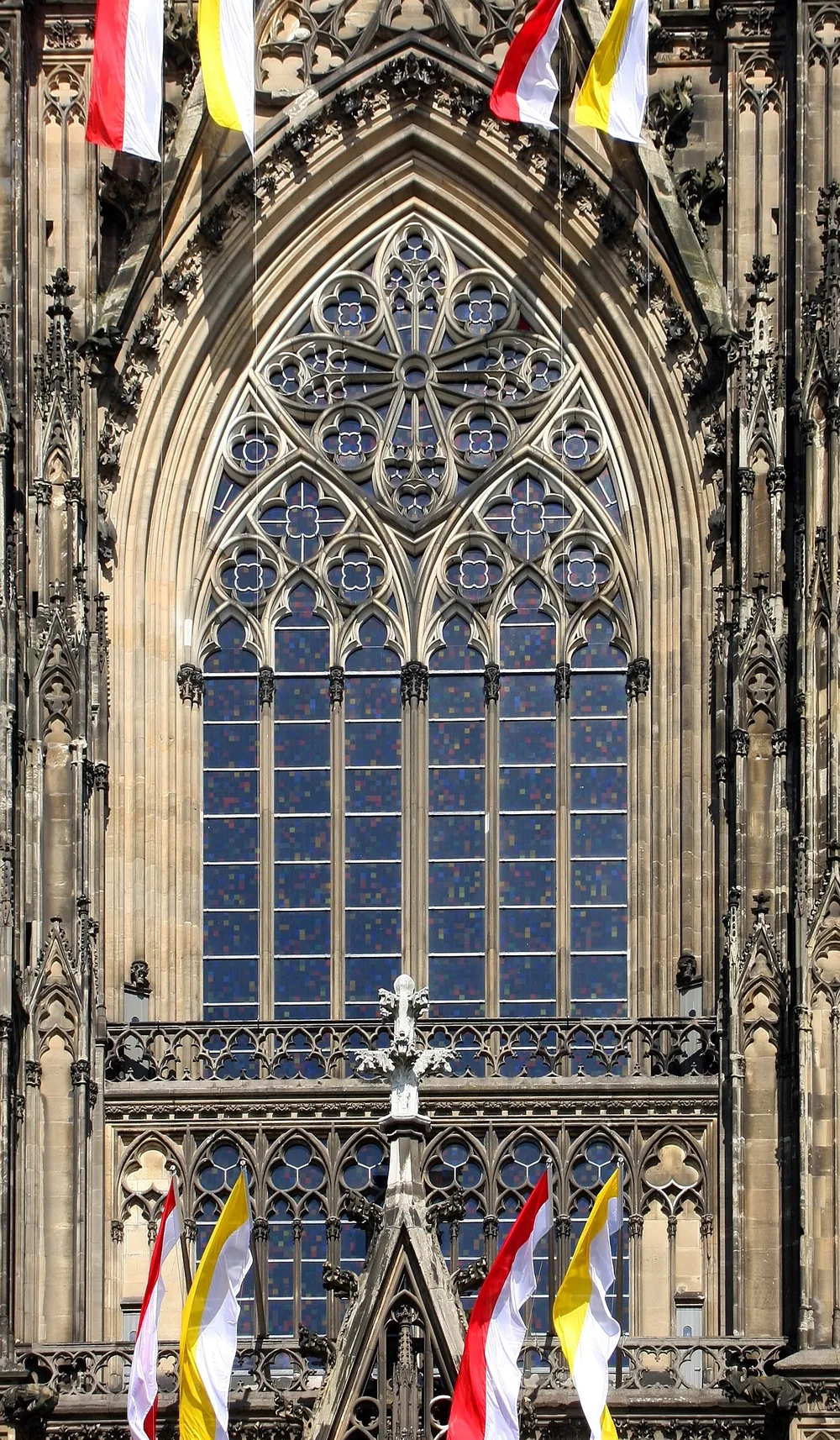
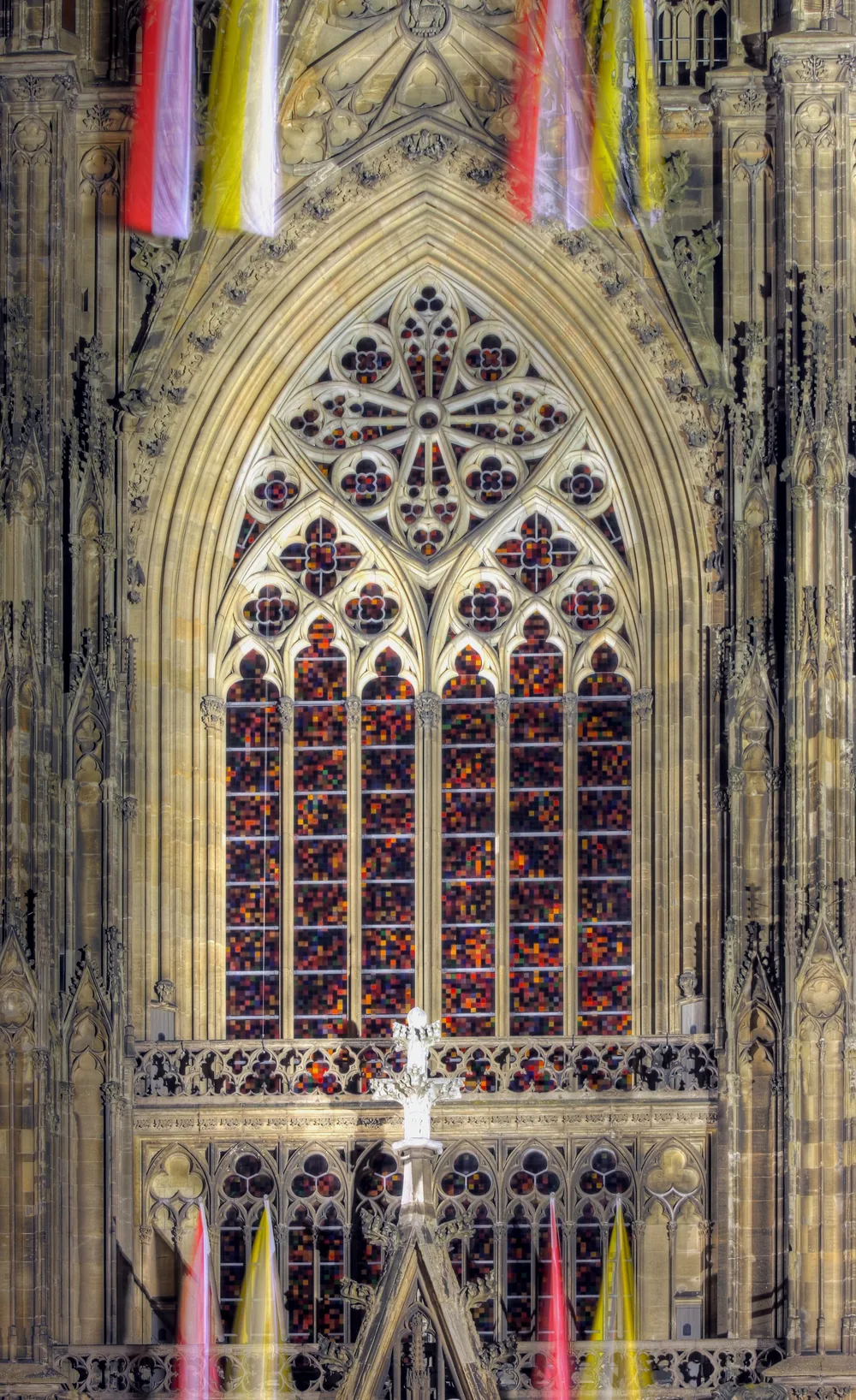
In September 2020 Richter unveiled three stained-glass windows for Tholey Abbey, one of the oldest monasteries in Germany, each about thirty feet tall. He called them his last major work and said he would focus on drawings and sketches from then on. [1]
Which Richter works should you know?
Seven works, linked to museum, gallery and press records checked on 30 October 2026, give the span of the abstract work. Paintings remain in copyright and are linked rather than reproduced. Richter’s own website, gerhard-richter.com, was unavailable on the day we checked. [5]
- Abstract Painting (726), 1990, Tate. A squeegee abstract from the year he withdrew to his studio “so as to have a whole year to ‘evolve’ something without commitments”, as he wrote in his journal on 16 August 1990. [5] [10]
- Abstraktes Bild (599), 1986, sold at Sotheby’s London in February 2015 for £30.4 million, the record for an abstract. [1]
- The Cage paintings, 2006, six large works named after John Cage, built from intersecting fields and lines. [1] [7]
- Birkenau, 2014, four paintings, Gerhard Richter Foundation, shown at the Met in 2020 and in Tokyo in 2022. [4] [14]
- The Cologne Cathedral window, 2007, pictured above. [1]
- The Tholey Abbey windows, 2020, his declared last major work. [1]
- Abstract Painting, 2017: Tokyo Art Beat records that after this work Richter declared he would make no more paintings. [13]
For the photo-paintings, the Met’s 2020 exhibition guide and primer are the best short introductions, and David Zwirner, his gallery, keeps an overview of the work. [2] [3] [11]
How does the world see Gerhard Richter?
Japan calls Richter the highest peak of German painting, Argentina its foremost living exponent, and two British papers have called him the Picasso of the twenty-first century: the Guardian, as the Haus der Kunst records, and the Telegraph, as Arquitectura Viva records. The question that recurs everywhere is whether abstraction can carry history, and Birkenau is the test case. [12] [20] [9] [21]
Japan
The Japanese Wikipedia introduces him as “ドイツの抽象画家”, a German abstract painter, “one of the most noted important artists in the world”, who “is called ‘ドイツ最高峰の画家’”, the highest peak of German painting. The 2022 retrospective at the National Museum of Modern Art, Tokyo, 7 June to 2 October, then at the Toyota Municipal Museum of Art, brought 122 works; Tokyo Art Beat’s Nagata Akiko reported that it was the first large solo show in Tokyo, the first in Japan in sixteen years, and that Richter, at ninety, designed the layout himself. Bijutsu Techō’s readers voted it the exhibition of the year, some adding that as a retrospective it left them wanting more, but that Birkenau alone justified it. [12] [13] [16] [15]
Spain and Latin America
The Spanish Wikipedia opens simply, “es un artista alemán”. The Reina Sofía’s 1994 retrospective, covering 1962 to 1992, introduced him to Madrid as a founder of Capitalist Realism. Arquitectura Viva, reviewing the eightieth-birthday Panorama in Berlin, called him “el ‘Picasso del siglo XXI’, según el diario británico The Telegraph”, and counted “más de 3.000 obras catalogadas”, more than three thousand catalogued works. In Argentina, Diario de Cuyo announced Sinopsis, twenty-seven works toured by the Goethe-Institut, describing him as “consagrado por la crítica como el máximo exponente de la pintura alemana de la actualidad”, consecrated by critics as the foremost exponent of German painting today. [22] [19] [21] [20]
Germany and Britain
The Haus der Kunst summarised the press in 2009: “The British Guardian considers Gerhard Richter a ‘Picasso of the 21st century’, the Frankfurter Allgemeine Newspaper sees him as ‘the master of all genres’.” The Panorama retrospective, at Tate Modern in 2011 and the Centre Pompidou and the Neue Nationalgalerie in 2012, fixed that reputation in Britain. [9] [1] [21]
China
The Chinese Wikipedia reads him through influence: it lists the students who studied under him at the Kunstakademie Düsseldorf from 1971 to 1994, Ludger Gerdes, Hans-Jörg Holubitschka, Bernard Lokai, Thomas Schütte, Thomas Struth, Katrin Kneffel, Michael van Ofen and Isa Genzken, and notes that his influence is widely acknowledged. Sotheby’s published its London 2013 catalogue entry for Abstraktes Bild (742-1), 1991, in Chinese as well, with an estimate of £2.5 to 3.5 million. [17] [23]

Among his peers on this site
Richter is the one painter here who began after Abstract Expressionism and kept its scale while refusing its faith in the gesture. Set him beside Jackson Pollock, whom he saw at documenta in 1959, Robert Motherwell, whose Elegies also ask whether abstraction can mourn, and Clyfford Still, with whom he shared the headline at Sotheby’s New York on 9 November 2011, when Still’s record and eight paintings by Richter sold in one evening. Published with this page: the Buddha, whose first teaching, like Birkenau, begins from suffering. [18] [33]
What do Richter paintings sell for?
Gerhard Richter’s auction record for an abstract is Abstraktes Bild (599) of 1986, sold in London at Sotheby’s Contemporary Evening Sale in February 2015 for $44.52 million (£30.4 million), which Wikipedia records as the highest auction price for a work of contemporary art at the time, after Cathedral Square, Milan of 1968 made $37.1 million (£24.4 million) in New York in May 2013. Prices include buyer’s premium as reported. Phillips’ essay on Abstraktes Bild (714-1) explains why that period leads the market: “Painted in 1990, it dates from the finest period of Richter's abstractions to date and celebrates his mastery of the squeegee technique”, and the years around “the turn of 1980s” were, in the essay’s words, a transformational chapter in his work and his reception. [1] [10]
Timeline
- 1932 Born 9 February in Dresden. [1]
- 1957 to 1961 Master trainee at the Dresden academy; murals for the East German state. [1]
- 1959 Sees Jackson Pollock at documenta. [18]
- 1961 Escapes to West Germany with Marianne, two months before the Wall. [1]
- 1962 Tisch (Table): paint cancels a photographic image. [10]
- 1963 to 1964 Capitalist Realism; Cage at Festum Fluxorum Fluxus; first gallery show at Schmela, Düsseldorf. [19] [7] [1]
- 1966 to 1974 Color Charts. [7]
- 1971 to 1994 Professor at the Kunstakademie Düsseldorf. [17]
- 1976 First work titled Abstract Painting; Seascape paintings after Greenland. [1]
- Mid-1980s The homemade squeegee. [1]
- 1990 A year in the studio “to ‘evolve’ something”; Abstract Painting (726). [10] [5]
- 1994 Reina Sofía retrospective, Madrid. [19]
- 2002 to 2007 Cologne Cathedral window commissioned and unveiled. [1]
- 2006 The Cage paintings. [1]
- 2009 Abstract Pictures, Haus der Kunst, Munich. [9]
- 2011 to 2012 Panorama, Tate Modern, Centre Pompidou, Neue Nationalgalerie. [1] [21]
- 2013 and 2015 Auction records in New York and London. [1]
- 2014 Birkenau. [4]
- 2017 Last Abstract Painting; declares an end to painting. [13]
- 2018 Abstraktion, Museum Barberini, Potsdam, 94 works. [18]
- 2020 Painting After All, The Met; Tholey Abbey windows. [3] [1]
- 2021 Birkenau to the International Auschwitz Committee. [1]
- 2022 Retrospective in Tokyo and Toyota. [13] [16]
Sources
Every source below was opened on 30 October 2026. Quotations are verbatim from the page cited; translations from Japanese and Spanish are ours and follow the original.
- Wikipedia, Gerhard Richter. Biography, 1961 escape, Abstract Painting 1976, squeegee, Grey Pictures and Buchloh interview, Cage paintings, Cologne window, Birkenau, Tholey, auction results; consulted 30 October 2026.
- The Metropolitan Museum of Art, Gerhard Richter: a primer. The Atlas and the photographic image.
- The Metropolitan Museum of Art, Gerhard Richter: Painting After All, exhibition guide, 2020.
- The Metropolitan Museum of Art, Birkenau: Gerhard Richter, 2020. Exhibition text on the four paintings.
- Tate, Gerhard Richter, Abstract Painting (726), 1990, T06600. Collection record.
- Tate, Gerhard Richter, born 1932. Artist page; Panorama exhibition record at tate.org.uk/whats-on/tate-modern/gerhard-richter-panorama.
- Gagosian Quarterly, interview with Gerhard Richter, 22 February 2021. Chance, Cage, the Color Charts and the cathedral window.
- San Francisco Museum of Modern Art, Gerhard Richter, Abstraktes Bild (Abstract Picture), 1987, FC.238. Audio transcript with curator Rachel Jans on the squeegee.
- Haus der Kunst, Munich, Gerhard Richter: Abstract Pictures, 2009. Exhibition text with the Guardian and FAZ characterisations and the thirty stages.
- Phillips, Gerhard Richter: Master of Abstraction, essay on Abstraktes Bild (714-1), 1990. Journal entry of 16 August 1990 and Tisch, 1962.
- David Zwirner, Gerhard Richter. Gallery artist page.
- ウィキペディア (Japanese Wikipedia), ゲルハルト・リヒター. Opening characterisation; consulted 30 October 2026.
- Nagata Akiko (永田晶子), Tokyo Art Beat, report on the Gerhard Richter exhibition at the National Museum of Modern Art, Tokyo, 9 June 2022. 122 works, Masuda Tomohiro’s remark, the 2017 Abstract Painting.
- Sugie Ako (杉江あこ), artscape review of the Gerhard Richter exhibition, Tokyo, 2022. Birkenau dimensions and the show as challenge.
- Bijutsu Techō, readers’ best exhibitions of 2022, with reader comments. Japanese original.
- Toyota Municipal Museum of Art, Gerhard Richter, 2022 to 2023. Exhibition page.
- 维基百科 (Chinese Wikipedia), 格哈德·里希特. Students at the Kunstakademie Düsseldorf 1971 to 1994; consulted 30 October 2026.
- Euronews (Spanish), Un repaso por la obra de Gerhard Richter, 2 July 2018. Barberini exhibition, 94 works, the remark on abstraction, Pollock at documenta 1959.
- Museo Nacional Centro de Arte Reina Sofía, Gerhard Richter, 7 June to 22 August 1994. Exhibition record.
- Diario de Cuyo, San Juan, Argentina, Sinopsis. Announcement of the Goethe-Institut touring exhibition of 27 works; Spanish original.
- David Moriente, Gerhard Richter en Panorama, Arquitectura Viva. Review of the Neue Nationalgalerie retrospective; Spanish original.
- Wikipedia (Spanish), Gerhard Richter. Opening line; consulted 30 October 2026.
- Sotheby’s, Chinese-language catalogue, Contemporary Art Evening Auction, London, 2013, lot 23, Abstraktes Bild (742-1), 1991, estimate £2,500,000 to 3,500,000.
- Erhard Wehrmann, Gerhard Richter, 1967. CC BY-SA 3.0 de.
- Lothar Wolleh, Gerhard Richter, circa 1970. CC BY-SA 3.0.
- Hps-poll, Gerhard Richter at K20, Düsseldorf, 11 February 2005. CC BY-SA 3.0.
- Jindřich Nosek (NoJin), Gerhard Richter, Prague, 25 April 2017. CC BY-SA 4.0.
- Raimond Spekking, Richter-Fenster von aussen, Kölner Dom, 26 September 2008. CC BY-SA 4.0.
- Raimond Spekking, Kölner Dom, Richterfenster an der Südseite bei Nacht, 22 September 2010. CC BY-SA 4.0.
- Jörg Blobelt, Dresden, Panorama der Altstadt im Gegenlicht, 21 January 2007. CC BY-SA 4.0.
- Ilion / Sir James, Kunstakademie Düsseldorf, 2009. CC BY-SA 3.0.
- Tate, How did Richter Make his Paintings? Conservator’s account of the Perspex squeegee.
- Artnet Magazine, Still & Richter Star at Sotheby’s Contemporary Art Auction, 10 November 2011. Eight Richter paintings in the sale, Abstraktes Bild (849-3) at $20,802,500; read in the Internet Archive copy of 15 December 2015.


