Unity / No. 001
Statue of Unity
The Statue of Unity is the 182-metre (597-foot) bronze-clad monument to Sardar Vallabhbhai Patel (1875 to 1950), independent India’s first deputy prime minister and home minister. It stands on Sadhu Bet beside the Narmada River near Kevadia, now Ekta Nagar, in Gujarat, India, facing Sardar Sarovar Dam about 100 kilometres southeast of Vadodara. Including its 58-metre base, the monument reaches 240 metres. Inaugurated by Prime Minister Narendra Modi on 31 October 2018, the world’s tallest statue commemorates Patel’s role in integrating princely states into independent India. Wikipedia, Statue of Unity; Prime Minister’s Office, 30 October 2018
The monument is a likeness, a building and a public argument. This guide connects its scale and construction with Patel’s history, the funding records, practical visiting choices and the perspectives of people who celebrate or question the project. Historical facts, dated operating information and our own interpretations are identified separately.
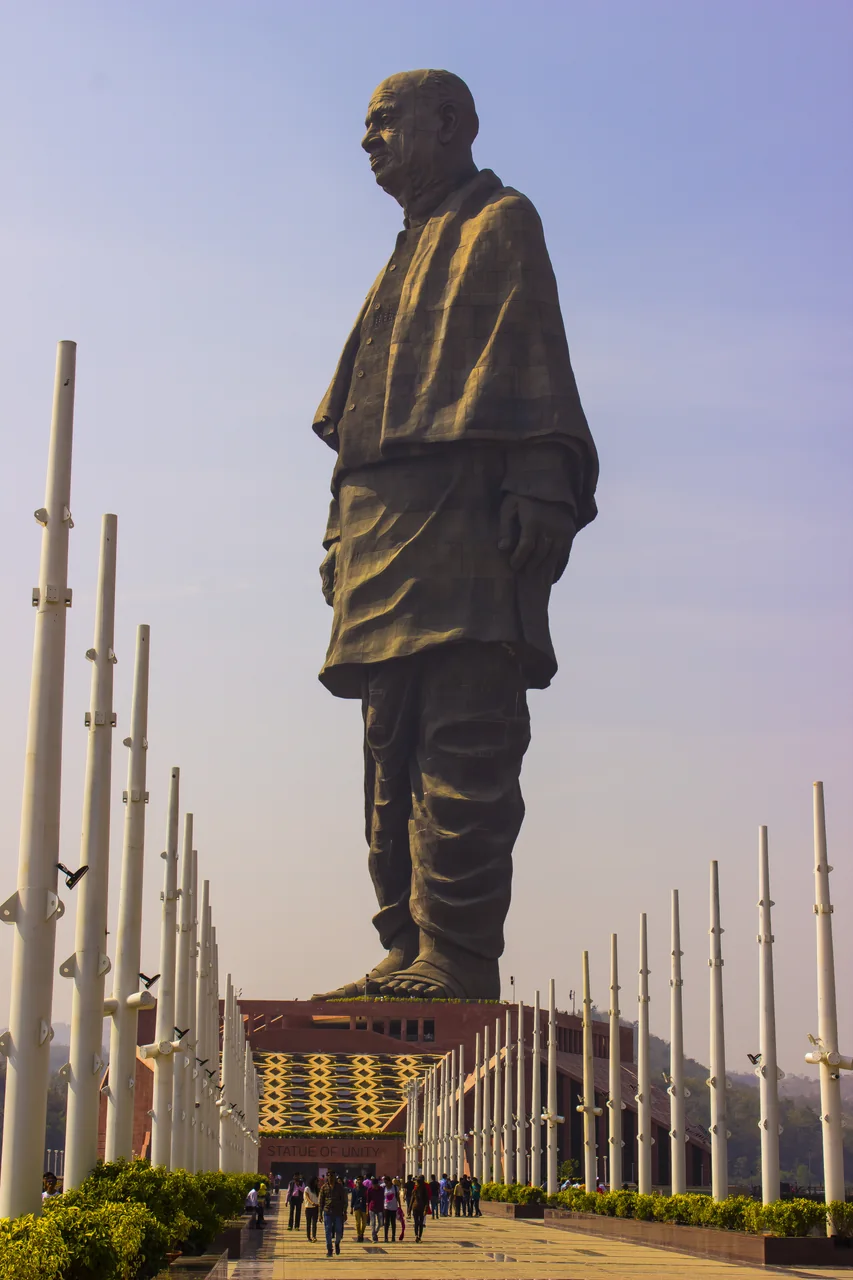
How tall is the Statue of Unity compared with other statues?
The Statue of Unity is 182 metres (597 feet) high; the frequently quoted 240 metres includes its 58-metre base. These are different measurements of the same monument. Hindi Wikipedia
The figure’s 182-metre height also corresponds to the number of seats in Gujarat’s Legislative Assembly. Incredible India, Ministry of Tourism
- Statue of Unity, India: 182 metres for the statue; 240 metres including the base. Hindi Wikipedia
- Spring Temple Buddha, China: 128 metres for the figure. The Statue of Unity is 54 metres taller on that comparison. El Economista, BBC News Mundo, 5 September 2018
- Statue of Liberty, United States: 46.05 metres from the top of the base to the torch, 33.86 metres from heel to head, and 92.99 metres from the ground to the torch. The raised arm makes the measuring point especially important. US National Park Service, Statue of Liberty statistics
- Christ the Redeemer, Brazil: 30 metres for the figure; 38 metres including the pedestal. Wikipedia, Statue of Unity
The familiar claim that the Statue of Unity is “twice the Statue of Liberty” compares the Indian figure with the American monument including its pedestal. It conveys scale, but is not a like-for-like comparison of two sculpted bodies. A useful comparison always tells you where the measurement begins and ends. US National Park Service, Statue of Liberty statistics; Hindi Wikipedia
Why does the Statue of Unity honour Sardar Patel?
The Statue of Unity honours Vallabhbhai Patel for his central role in bringing princely states into independent India. Patel (1875 to 1950) was a lawyer, an independence organiser, a senior Indian National Congress leader and independent India’s first deputy prime minister and home minister. The title Sardar means leader or chief; his association with the Bardoli farmers’ campaign of 1928 is part of that reputation. Patel biography
Independence in 1947 did not automatically turn the subcontinent into a single administration. British provinces and princely states had different relationships with the Crown. Patel and the civil servant V. P. Menon used accession agreements, negotiation and subsequent administrative mergers to integrate most princely territories into India. Sources count the states differently; “more than 500” avoids pretending that one total describes every stage of the process. Political integration of India
Integration was not uniformly peaceful. Junagadh, Hyderabad and Kashmir followed different, contested paths. India’s military intervention in Hyderabad in September 1948 and the violence surrounding its incorporation complicate a story told only as harmonious persuasion. Recognising Patel’s achievement does not require erasing the coercion or the people harmed during state formation. Political integration of India
The monument’s “unity” therefore begins with a specific political task: building a functioning union after empire and Partition. Patel was working alongside Gandhi, Nehru, Menon and many others. Treating the national map as one man’s solitary creation misses both the collaborative work and the unresolved arguments within it. Patel biography; Political integration of India
Who designed and built the Statue of Unity, and what is it made of?
Indian sculptor Ram V. Sutar designed Patel’s likeness, and Larsen & Toubro built the Statue of Unity for the Gujarat state project. Tata Consulting Engineers and Egis India provided proof consultancy, reviewing structural, wind and seismic work. Their project account describes around 250 engineers and 3,400 labourers working on a 33-month construction programme. Tata Consulting Engineers, project account
Michael Graves Architecture & Design was the design architect for the wider destination, including the visitor centre, memorial garden, hotel, convention centre and approach. Turner International managed the project; Meinhardt’s engineering work and other specialist contributions are credited by Engineering News-Record. The sculptor, architect, builder and engineering consultants had different responsibilities. Michael Graves Architecture & Design, 22 April 2016; Engineering News-Record, 25 September 2019
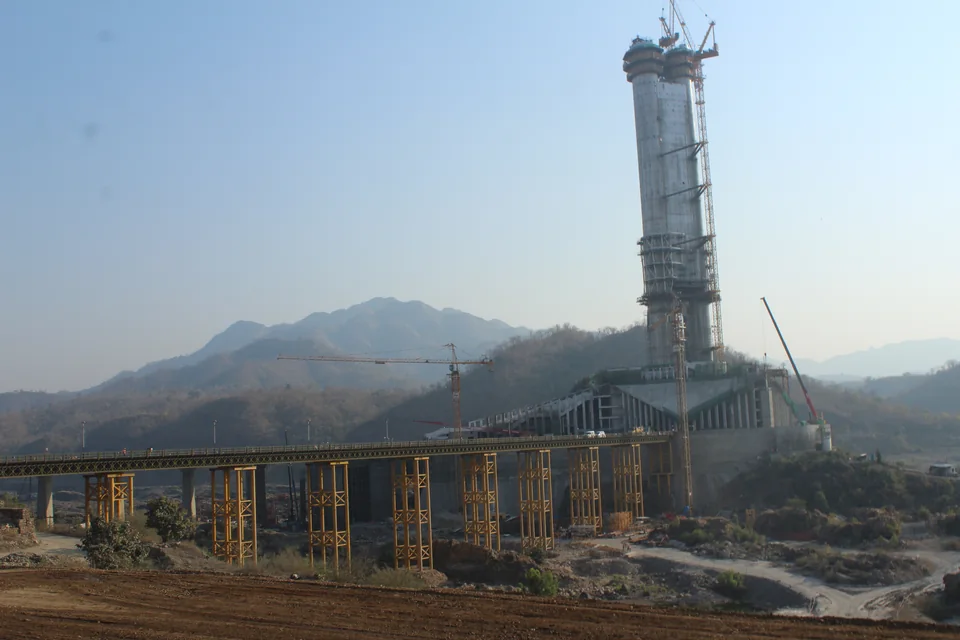
How does a walking figure stand up?
The Statue of Unity’s structure uses two reinforced-concrete cores, steel framing and a bronze outer skin. The separated legs and narrow ankles make the walking pose a structural challenge: the broad upper body must transfer its loads through a relatively slender support. Engineering News-Record describes the concrete cores, rock-founded podium and tuned mass damping used to stabilise the structure. Engineering News-Record, 25 September 2019
SSMB’s construction account lists 6,500 tonnes of structural steel, 18,500 tonnes of reinforcement steel, 210,000 cubic metres of concrete and about 1,700 tonnes of bronze cladding. The bronze skin is described as 8 mm thick. These are project quantities, not the weight of a solid bronze figure. The skin is supported by a hierarchy of steel frames connected to the concrete cores. SSMB, 22 September 2021
The Statue of Unity was engineered for wind speeds up to 112 miles per hour, approximately 180 kilometres per hour, according to Engineering News-Record, 25 September 2019. SSMB gives a design life of 100 years and describes hot-dip galvanised steel for corrosion protection. A design life is a planning assumption supported by maintenance, not a guarantee of a maintenance-free century. SSMB, design criteria and construction, 22 September 2021
The bronze panels were cast in China from the approved sculptural design and assembled on the Indian structure. That makes “entirely made of donated Indian iron” an inaccurate description. About 109 tonnes of processed scrap iron from donated agricultural implements were used in the statue’s foundation, not its bronze skin. These donations do not describe the complete construction supply chain. Wikipedia, Statue of Unity
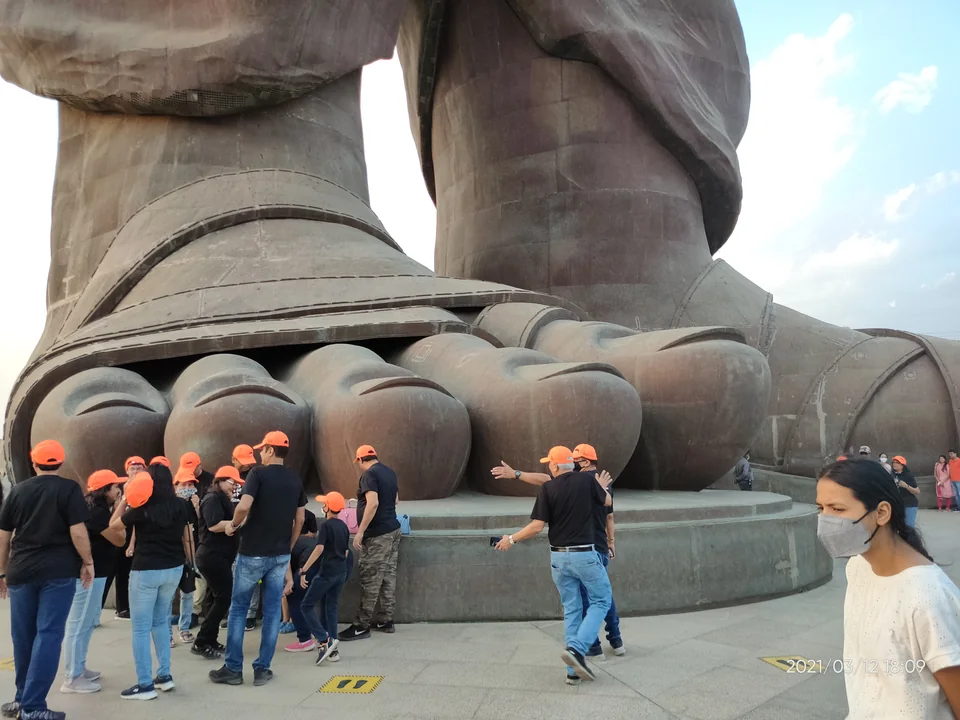
What happened between the announcement and the opening?
- 2010: the project was first proposed while Narendra Modi was Gujarat’s chief minister. Contested Histories, case study 79
- 31 October 2013: the foundation-stone ceremony took place on Patel’s birthday. Hindi Wikipedia
- October 2014: the construction contract was awarded to L&T. CAG, Report 18 of 2018, p. 75
- 31 October 2018: Prime Minister Modi inaugurated the completed monument on Patel’s 143rd birth anniversary. Prime Minister’s Office, 30 October 2018; Tata Consulting Engineers, project account
The 2013 ceremony, the 2014 contract and the 33-month construction programme are separate milestones. Confusing them produces contradictory claims about when construction “started” or how long the entire project took. A dated sequence is more useful than one duration detached from its starting point. Ministry of Culture, parliamentary reply, 30 November 2016; Tata Consulting Engineers, project account
How do people move inside, and how is the statue lit?
Otis identifies two SkyRise lifts operating at 4 metres per second, installed within a demanding 28-day programme. The lifts make an enormous sculptural body into a visitor destination. The manufacturer’s account is evidence of its own installation, rather than an independent assessment of visitor queues or operating reliability. Otis, project account
dpa lighting describes carefully directed LED projectors, concealed equipment and a warm 2700 K scheme intended to bring out the bronze. The designers say they avoided blue-spectrum light to reduce ecological effects. That is a documented design intention; it does not establish that the complete tourism development has no environmental impact. dpa lighting, project account
How much did the Statue of Unity cost, and who paid?
The Statue of Unity’s widely reported ₹2,989 crore contract covered more than the statue alone, and included long-term operation and maintenance. One crore is ten million rupees, so ₹2,989 crore is ₹29.89 billion. A dollar conversion changes with the exchange rate and date; the rupee amount is the clearer historical reference. CAG, Report 18 of 2018, p. 75; Ministry of Culture, parliamentary reply, 30 November 2016
A parliamentary reply on 30 November 2016 gave a wider expected project cost of ₹3,060.88 crore: ₹2,332 crore for construction, ₹657 crore for 15 years of operation and maintenance, ₹55.63 crore for project management and ₹16.25 crore for proof consultancy. The same reply identifies SSNNL, a Gujarat government undertaking, as implementing agency, and records ₹300 crore already provided by the central government. Ministry of Culture, parliamentary reply, 30 November 2016
A later parliamentary answer reported ₹2,361.29 crore incurred on construction up to 31 December 2019. An incurred construction figure, a construction-and-maintenance contract and an earlier whole-project estimate need not match. None should be presented as the price of bronze alone. Rajya Sabha, question 2717, 17 March 2020
Public funding was central, alongside corporate contributions. India’s Comptroller and Auditor General recorded ₹146.83 crore contributed by five state-owned oil companies: ONGC ₹50 crore, Indian Oil ₹21.83 crore, and BPCL, HPCL and Oil India ₹25 crore each. The auditor objected that this contribution did not qualify under the heritage category of corporate social responsibility because the new monument was not a heritage asset. CAG, Report 18 of 2018, p. 75
The Ministry of Corporate Affairs’ December 2018 reply said it had no proposal for a committee investigation. The audit finding and the ministry’s response are distinct records. Neither justifies inventing a complete donor ledger or assuming that every company contribution had the same accounting status. Lok Sabha, question 1947, 21 December 2018
How do you visit the Statue of Unity from Ekta Nagar?
Visit the Statue of Unity through Ekta Nagar, also known as Kevadia. Choose a gallery ticket to reach the viewpoint inside Patel’s chest, advertised at 153 metres by the official ticket portal. Engineering News-Record, 25 September 2019, and Otis, project account, give the gallery height as 135 metres. Check the official portal for your admission category, date and time slot.
Which ticket includes the viewing gallery?
A Gujarat government tariff published in 2025 lists standard entry at ₹150 adult and ₹90 child, viewing-gallery admission at ₹380 adult and ₹230 child, express entry at ₹1,030, and foreigner viewing-gallery admission at ₹1,530 adult and ₹830 child. These are dated reference prices. Confirm the live price and the correct nationality and age category before payment. Gujarat government, 2025 attraction tariff; Official ticket portal
Standard entry and gallery admission are different products. The official attraction listing describes the entry product as including the exhibition, landscaped areas, Valley of Flowers and dam viewpoint; the gallery product adds the elevated viewpoint. Verify the actual inclusions on the booking screen because a destination package can contain separately ticketed attractions. Official ticket portal
When is the statue open?
The Ministry of Tourism lists the Statue of Unity’s monument hours as 08:00 to 18:00, closed on Mondays. The wider Ekta Nagar portal lists a longer destination day, 08:00 to 22:00, Tuesday to Sunday. Evening attractions and the monument’s daytime gallery are not the same timetable. Use the booked gallery slot and the current show listing rather than assuming you can enter the statue until the destination closes. Incredible India, Ministry of Tourism; Ekta Nagar visitor portal
Which railway station and airport should you use?
Ekta Nagar railway station is the local rail gateway; older pages call it Kevadia. The 2021 rail programme connected the destination with Ahmedabad, Mumbai, Delhi, Varanasi, Chennai, Rewa and Pratapnagar. Check current train schedules before booking. Prime Minister’s Office, January 2021 rail connections; The New Indian Express, station name, February 2022
Vadodara is the nearest major airport commonly used for the visit. India Cine Hub, Ministry of Information and Broadcasting
The local accommodation operator gives approximate road distances of 91 km from Vadodara, 198 km from Ahmedabad and 156 km from Surat. Allow for traffic, transfers and the final movement within the tourism zone. Narmada Tent City, visitor facilities FAQ
Private cars are parked outside the internal visitor circuit. Buses, electric rickshaws and other local transport connect attractions. The accommodation operator distinguishes transport included in monument admission from other circular services and station transfers. Check the route, last service and fare before boarding, particularly if you stay for an evening event. Narmada Tent City, transport FAQ
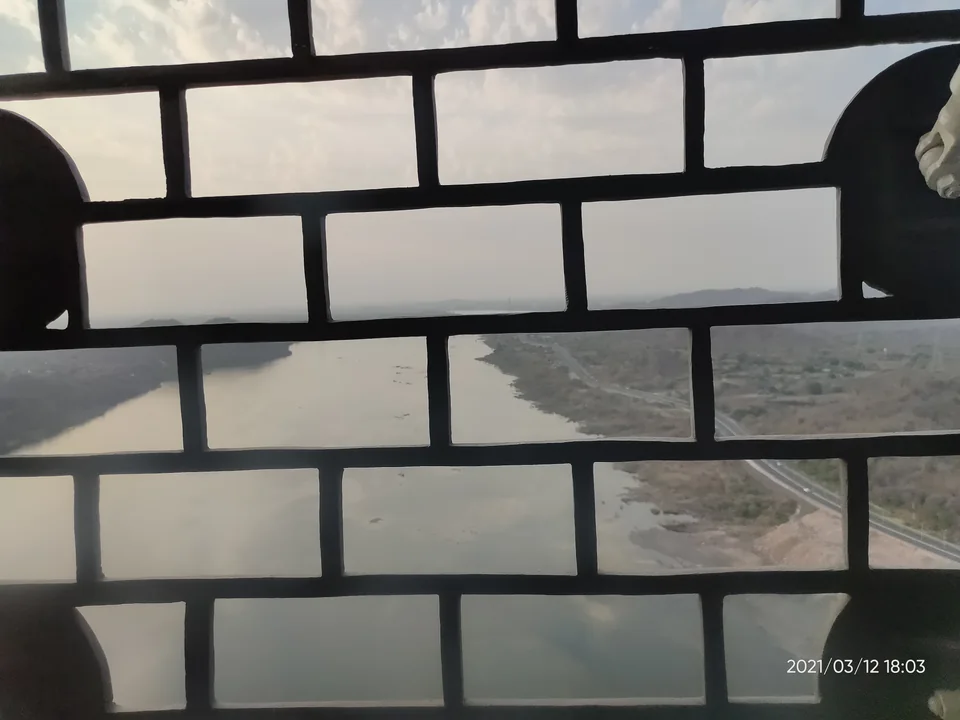
What is the best time, and is the visit accessible?
Our planning recommendation is a cooler-season morning, broadly October to March, with winter usually more comfortable for extended outdoor walking. This is a practical inference from the Ministry of Tourism’s climate information, which shows markedly hotter conditions in late spring and summer. Carry water and sun protection, and leave flexibility for rain or weather-related restrictions. Incredible India, Ministry of Tourism
The Narmada Tent City visitor FAQ reports wheelchairs available on request at the SOU gate, accessible toilets, drinking water, seating and lockers. Ask the operator about availability, assistance and the precise route before travelling with particular mobility needs; the existence of lifts does not establish that every garden, transfer and queue is equally convenient. Narmada Tent City, visitor facilities FAQ
Our suggested first visit: start with the museum, walk the approach, take the gallery slot and look towards the dam. The PMO describes space for up to 200 gallery visitors and views of the reservoir and hill ranges. Prime Minister’s Office, 30 October 2018
Why is the Statue of Unity controversial?
The Statue of Unity is contested over public expenditure, political ownership of Patel’s memory, Adivasi land rights and the environmental effects of surrounding development. Each dispute needs its own evidence. Contested Histories, case study 79
What do Adivasi communities say?
Down To Earth’s report of 31 October 2018 describes villages observing mourning by leaving cooking fires unlit, alongside protests over land acquisition and unfulfilled rehabilitation commitments. Adivasi leader Praful Vasava distinguished respect for the statue from opposition to development that threatened local existence. The report also records activist Mudita Vidrohi’s account of detention before the inauguration. These are attributed local testimonies, not a survey of every Adivasi resident. Down To Earth, 31 October 2018
BBC Hindi’s inauguration-day reporting preserved conflicting official accounts: the district collector denied detentions, while a police officer said 16 activists had been detained; tribal leaders alleged a larger number. Keeping those statements separate is more informative than choosing the most dramatic total. The Hindi report also described an open letter from surrounding villages opposing the visit. BBC Hindi, republished by Oneindia, 31 October 2018
How is the Sardar Sarovar Dam connected?
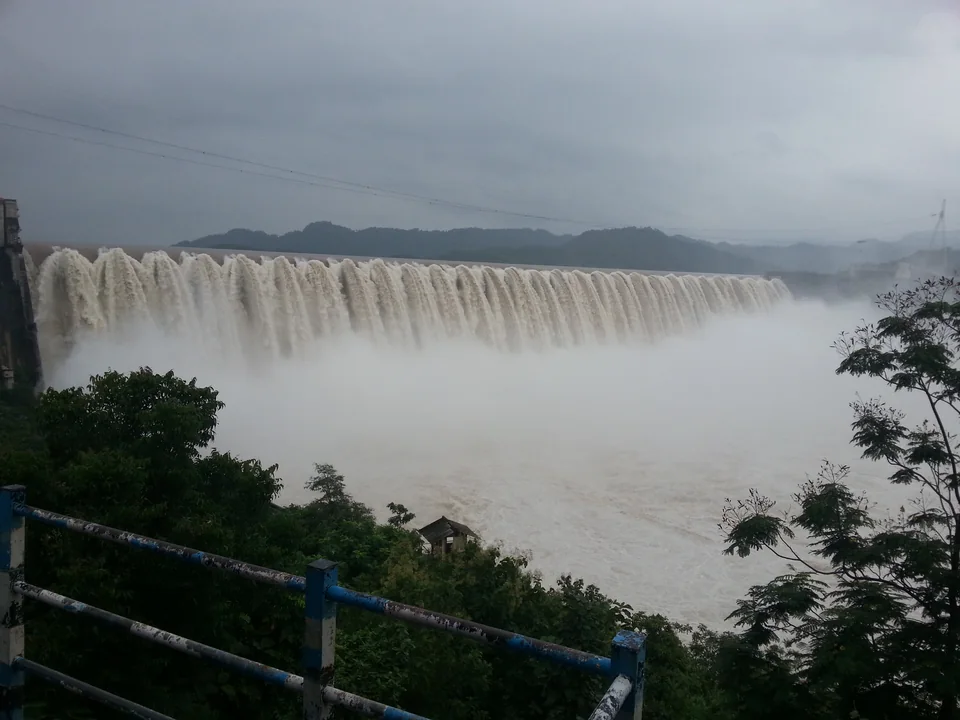
The Statue of Unity faces Sardar Sarovar Dam across the Narmada landscape, but the dam, the statue, the Garudeshwar weir and the tourism zone are separate interventions with overlapping histories. Contested Histories traces arguments about river ecology, land acquired for the dam and subsequent visitor infrastructure. Displacement totals need a project boundary and a date; a figure for the entire dam basin must not be relabelled as people displaced solely by the statue. Contested Histories, case study 79
Does tourism resolve the criticism?
Tourism can create income while leaving disputes over consent, land and distribution unresolved. Our reading is that evidence of a driver’s new livelihood and evidence of another household’s loss deserve to be examined together. One account does not cancel the other. The local testimonies and later employment reporting provide the evidence for that distinction. Down To Earth, 31 October 2018; The New Indian Express, 20 February 2022; updated 21 February
How many people visit, and what is the economic effect?
The Statue of Unity attracted a reported 58.25 lakh visitors in 2024, or 5.825 million visits, according to DeshGujarat’s report of 3 January 2025. That is an annual figure, not the total since opening. The article gives 27.45 lakh for 2019, 12.81 lakh for pandemic-affected 2020, 34.29 lakh for 2021, 41.32 lakh for 2022 and 51.20 lakh for 2023. DeshGujarat, 3 January 2025
Those figures describe reported visits, not independently verified unique people. We retain the source’s year and units: a lakh is 100,000; a crore is ten million. DeshGujarat, annual visitor figures
A Tourism Ministry reply on 17 March 2020 reported ₹116.31 crore in ticket and parking income from November 2018 through February 2020. Revenue is money received, not profit. Comparing this early gross income directly with a capital cost cannot establish a payback period without operating costs, later receipts, maintenance and a consistent accounting boundary. Rajya Sabha, question 2717, 17 March 2020
PFC’s impact assessment reports 1,770 direct and 6,950 indirect jobs across the wider Statue of Unity destination. Based on data supplied by the area authority, SOUADTGA, it describes 56.63 square kilometres encompassing 19 notified villages. These are wider-area employment figures, not jobs inside the statue alone. Power Finance Corporation, impact assessment, executive summary, p. 5
The economic story also has individual voices. The New Indian Express interviewed local women driving electric rickshaws in 2022. Pratima Kumari described daily take-home earnings after vehicle rent, while Jyoti Kumari Tarvi spoke about running both her vehicle and household. These dated interviews document particular opportunities; they are not a current wage schedule or evidence that benefits are evenly shared. The New Indian Express, 20 February 2022; updated 21 February
The useful question is who gains, who bears costs and over what period. Our assessment is that a tourism destination can succeed in attracting visitors while still needing scrutiny of household compensation, public subsidy and ecological effects. Footfall, employment, public accounts and land-rights testimony measure different parts of that outcome. Power Finance Corporation, impact assessment, executive summary, p. 5; Rajya Sabha, question 2717, 17 March 2020; Contested Histories, case study 79
How the world sees the Statue of Unity
The Statue of Unity has been read as an engineering achievement, a national tribute, an electoral symbol and a challenge to the meaning of inclusion. The dated voices below are a selection of identifiable positions, not an opinion poll. English summaries of Hindi, Arabic and Japanese coverage are paraphrases, not quotations.
Indian voices: pride, craft, land and livelihood
- Government and ceremony, India, 30 October 2018: the Prime Minister’s Office presented the dedication as a national occasion on Patel’s birthday. Its programme brought together soil, Narmada water, the Wall of Unity, a museum visit and the viewing gallery. The public ritual connects a state-building history with a shared physical place. Prime Minister’s Office, 30 October 2018
- Ram V. Sutar, Indian sculptor, 26 October 2018: speaking to The Times of India shortly before inauguration, Sutar said, “I feel the dreams have come true.” His account placed the work within a long sculptural career and the challenge of receiving the monumental commission. This is the maker’s pride, not an outside judgement of the project’s social effects. Shafaque Alam, The Times of India, 26 October 2018
- Praful Vasava and local protesters, India, 31 October 2018: Down To Earth foregrounded Adivasi concerns about land, rehabilitation and survival. Vasava’s distinction between the statue and the effects of development matters: criticism of the project need not mean hostility to Patel. Down To Earth, 31 October 2018
- Hindi reporting and local officials, India, 31 October 2018: BBC Hindi, carried by Oneindia, recorded the boycott and contradictory statements on detentions. The article gives local claims space alongside official denials. Its value lies partly in preserving disagreement rather than converting a celebratory opening into an uncontested event. BBC Hindi, republished by Oneindia, 31 October 2018
- Jyoti Kumari Tarvi and Pratima Kumari, local women drivers, India, February 2022: their accounts in The New Indian Express make employment visible through the daily work of driving, paying vehicle rent and supporting a household. They supply a form of public reception that a visitor total cannot capture. The New Indian Express, 20 February 2022; updated 21 February
- DeshGujarat, Indian English-language press, 3 January 2025: its attendance report celebrates the creation of a major new destination and links growth to connectivity and additional attractions. The approving editorial frame is explicit; the annual numbers should still be read with their stated years. DeshGujarat, 3 January 2025
Chinese, Arabic, Japanese and Latin American coverage
- Xinhua, China, 31 October 2018: the Chinese news agency emphasised the height record, inauguration and Patel’s role in independence and farmers’ welfare. It also described the national agricultural-tool collection campaign. This is a largely descriptive, affirmative news frame, distinct from arguments over outsourcing. Xinhua, 31 October 2018
- Al Jazeera Mubasher, Qatar, Arabic, 31 October 2018: the report combined the engineering scale and funding with the political effort to bring supposedly neglected independence leaders back into public attention. It placed the monument within contemporary struggles over national memory, rather than treating the record height as the whole story. Al Jazeera Mubasher, Arabic, 31 October 2018
- Shoji Mutsuji, Japanese political scholar, 12 November 2018: his Newsweek Japan column argued that coverage of economic achievement must also confront minority exclusion and Hindu nationalist politics. That is his critical political interpretation, not a consensus among Japanese viewers or a neutral description of Patel’s complete historical record. Shoji Mutsuji, Newsweek Japan, 12 November 2018
- El Economista, El Salvador, 5 September 2018: the outlet carried BBC News Mundo’s Spanish preview linking the planned monument to Modi’s political project, tourism hopes and its remote setting. This documents circulation in Latin America, not an independently authored Latin American verdict. El Economista, BBC News Mundo, 5 September 2018
Architectural and engineering reception
Michael Graves Architecture & Design, United States, 22 April 2016, described the design as a naturalistic representation and explained the master plan around it. The practice’s account looks beyond the figure to the visitor’s route and the surrounding buildings. As a project participant, the firm is a primary witness with an obvious stake in its success. Michael Graves Architecture & Design, 22 April 2016
Engineering News-Record, United States, 25 September 2019, gave the project a cultural Award of Merit. Its judges praised the subject and international cooperation. This recognises execution and collaboration; an engineering award does not answer a land-rights complaint. The world can admire how a monument was built while disagreeing about what building it accomplished. Engineering News-Record, 25 September 2019
The Chinese-cast bronze panels make the international dimension especially concrete. Our interpretation is that a monument to national integration also records practical interdependence: sculptural design, fabrication, construction and specialist knowledge crossed borders. That observation does not dissolve the political dispute over outsourcing. Wikipedia, Statue of Unity
What can the Statue of Unity mean beyond India?
The Statue of Unity can invite a wider reflection on connectedness, provided that reflection begins with its Indian history and the people living around it. National integration is the monument’s documented subject. Extending the question to all humanity is our reading, not a claim that Patel commissioned or articulated this later monument’s global programme.
The Statue of Liberty offers a useful comparison because its official history follows changing meanings as well as designers and builders. A monument’s public life continues after dedication; later viewers bring different hopes and disputes to the same material object. We compare this process of interpretation, not a proven design influence on the Statue of Unity. US National Park Service, history and culture
Hiroshima Peace Memorial offers another, very different connection. UNESCO describes the preserved Genbaku Dome as expressing hope for world peace and the elimination of nuclear weapons. Here a damaged structure carries a shared human appeal. The comparison shows how a particular place can address people beyond its national borders without erasing the event that gave it meaning. UNESCO, Hiroshima Peace Memorial
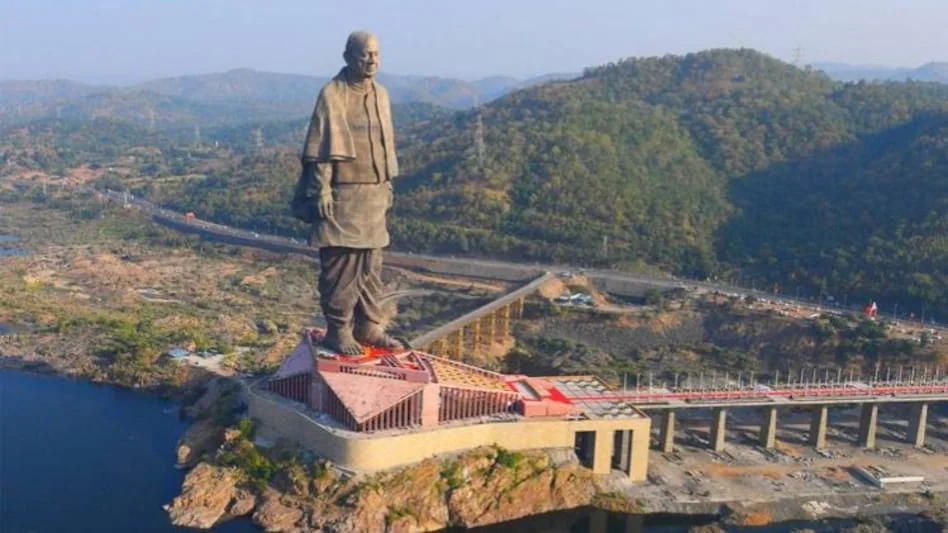
Our looking exercise is simple. First notice the figure’s scale. Then look at the joints, the route, the workers, the water and the settlements around it. Ask whose cooperation made the monument possible, whose story the museum tells and whose account you would still need to hear. This is an invitation to attention, rather than a historical claim about the sculptor’s intention.
A monument can name unity; the viewer still has to decide what that word asks of daily life. Our answer is to make room for people whose experience differs from our own, including people who admire the statue and people who question it. Connectedness becomes more substantial when admiration can coexist with listening.
What else do visitors ask about the Statue of Unity?
What is the Statue of Unity?
The Statue of Unity is the 182-metre monument to Sardar Vallabhbhai Patel on the Narmada near Ekta Nagar, Gujarat, inaugurated on 31 October 2018. It commemorates his role in India’s political integration. Tata Consulting Engineers, project account; Prime Minister’s Office, 30 October 2018
Is the Statue of Unity 182 or 240 metres tall?
The Statue of Unity is 182 metres high; 240 metres includes the 58-metre base. State the measurement before comparing it with other monuments. Hindi Wikipedia
Why is the statue called Unity?
The name refers to Patel’s role in integrating princely states into India after independence. The process involved V. P. Menon and many others, and included contested episodes as well as negotiated accession. Political integration of India
Who designed and built the Statue of Unity?
Ram V. Sutar designed the likeness; Larsen & Toubro built the project. Architects, engineers and specialist consultants contributed to the wider complex and structure. Tata Consulting Engineers, project account
How much did the Statue of Unity cost?
The commonly cited contract was ₹2,989 crore including maintenance. Construction expenditure and wider project estimates use different accounting boundaries, so the figure needs its scope. CAG, Report 18 of 2018, p. 75; Ministry of Culture, parliamentary reply, 30 November 2016
Can you go inside the Statue of Unity?
Yes. Choose admission including the viewing gallery, advertised at 153 metres by the official ticket portal; Engineering News-Record and Otis give 135 metres. Standard entry does not mean gallery admission; check the booked product and time slot. Official ticket portal; Engineering News-Record, 25 September 2019; Otis, project account
Is the Statue of Unity open on Monday?
The monument is normally closed on Mondays. Check the official booking calendar for your intended date and any special operating arrangements. Incredible India, Ministry of Tourism; Official ticket portal
Why do some people oppose the Statue of Unity?
Objections include public spending, land and rehabilitation claims, ecological effects and the political use of Patel’s memory. Local residents have expressed both criticism and support for new opportunities. Contested Histories, case study 79; The New Indian Express, 20 February 2022; updated 21 February
How many tourists visit the Statue of Unity?
DeshGujarat reported 58.25 lakh visits in 2024, equivalent to 5.825 million. This is one year’s reported footfall, not the cumulative total or a count of unique people. DeshGujarat, 3 January 2025
Sources and image credits
Sources consulted on 29 October 2026. Benchmark reading included English and Hindi Wikipedia, the official ticket portal, Engineering News-Record and Down To Earth. Britannica was attempted but could not be retrieved. Primary government records take precedence for the scope and date of expenditure. Makers’ accounts describe their own work; news and commentary are attributed to their authors or outlets.
Operating details can change. The 2025 government tariff is a historical reference; the official booking calendar governs a future visit. The domain statueofunity.in identifies itself as an independent visitor guide, so it is not treated here as the official operator. statueofunity.in, independent visitor guide
The nine core questions cover identity, height, Patel and integration, design and materials, cost and funding, visiting, controversy, economic effects and meaning. The international section preserves distinct viewpoints rather than implying a worldwide consensus. Our reflections and planning suggestions are labelled as such.
All six photographs come from Wikimedia Commons. Each caption identifies the photographer, date, file record, licence and conversion. Attribution-ShareAlike images retain the version identified in their captions; CC0 images retain their public-domain dedication. The government image is reused under GODL-India. No generated images or uncredited press photographs are used.
- Prime Minister’s Office, January 2021 rail connections
- India Cine Hub, Ministry of Information and Broadcasting
- Wikipedia, Statue of Unity
- Hindi Wikipedia
- Patel biography
- Political integration of India
- Michael Graves Architecture & Design, 22 April 2016
- Engineering News-Record, 25 September 2019
- SSMB, 22 September 2021
- Tata Consulting Engineers, project account
- Otis, project account
- dpa lighting, project account
- Ministry of Culture, parliamentary reply, 30 November 2016
- CAG, Report 18 of 2018, p. 75
- Lok Sabha, question 1947, 21 December 2018
- Rajya Sabha, question 2717, 17 March 2020
- Prime Minister’s Office, 30 October 2018
- Incredible India, Ministry of Tourism
- Official ticket portal
- Ekta Nagar visitor portal
- Gujarat government, 2025 attraction tariff
- Narmada Tent City, visitor facilities FAQ
- Narmada Tent City, transport FAQ
- Down To Earth, 31 October 2018
- BBC Hindi, republished by Oneindia, 31 October 2018
- Contested Histories, case study 79
- DeshGujarat, 3 January 2025
- Power Finance Corporation, impact assessment, executive summary, p. 5
- The New Indian Express, 20 February 2022; updated 21 February
- Shafaque Alam, The Times of India, 26 October 2018
- Xinhua, 31 October 2018
- Al Jazeera Mubasher, Arabic, 31 October 2018
- Shoji Mutsuji, Newsweek Japan, 12 November 2018
- El Economista, BBC News Mundo, 5 September 2018
- US National Park Service, Statue of Liberty statistics
- US National Park Service, history and culture
- UNESCO, Hiroshima Peace Memorial