Thinkers / No. 011
Ludwig Wittgenstein
Ludwig Wittgenstein (1889 to 1951) was an Austrian-born philosopher whose instruction to remain silent means that ethics, life's meaning and the mystical cannot be stated as factual descriptions, even though they may matter profoundly. Tractatus Logico-Philosophicus, 6.41 to 7; Ludwig Wittgenstein, life dates
His early book asks how language represents reality; his later work asks how words function within human activities. Read the silence alongside the language games: both challenge the urge to turn every important experience into a theory. His change of method also makes him an unusually searching critic of his own achievement. Ludwig Wittgenstein, Stanford Encyclopedia of Philosophy
Start with something words do
Our exercise: put a stone on a table. Say its weight, ask someone to move it, give it a title, then promise to keep it. The object remains; the jobs performed by the sentences change. Before asking what language essentially is, notice the differences between describing, requesting, naming and promising. This is our practical starting point, not a historical anecdote.
Wittgenstein's later examples begin equally close to ordinary action. In the opening of Philosophical Investigations, a builder calls for materials and an assistant brings them. Naming becomes intelligible within an activity. A word need not acquire its entire meaning by having an object attached to it. Section 23 widens the field to reporting, acting, joking, translating and praying. Philosophische Untersuchungen, sections 2, 7 and 23
A life repeatedly begun again
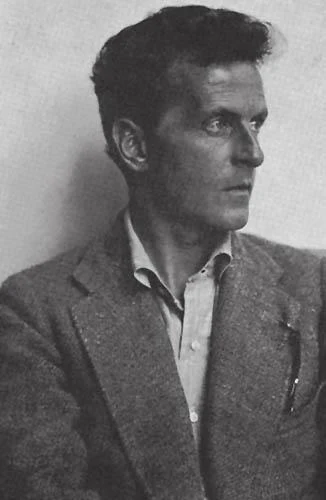
- 1889: Born in Vienna on 26 April, the youngest of eight children in a wealthy industrial family. Music was central to the household; three of his brothers died by suicide. Ludwig Wittgenstein, Internet Encyclopedia of Philosophy
- 1908 to 1913: Aeronautical research in Manchester leads towards mathematical foundations. Frege directs him to Russell; he arrives in Cambridge in 1911, joins Trinity in 1912 and later retreats to Skjolden, Norway. Ludwig Wittgenstein, biographical sketch; Wittgenstein, Trinity College archive biography
- 1914 to 1919: Volunteers for the Austrian army, develops the Tractatus during the war and becomes an Italian prisoner in 1918. After returning home, gives away his inherited fortune. Wittgenstein, Trinity College archive biography
- 1920 to 1928: Teaches in rural Austria. The Tractatus appears in German in 1921 and English in 1922. Teaching ends after he strikes a pupil in 1926; architectural work follows. Ludwig Wittgenstein, Stanford Encyclopedia of Philosophy; Ludwig Wittgenstein, life; Wittgenstein, Trinity College archive biography
- 1929 to 1947: Returns to Cambridge, submits the Tractatus for his doctorate and develops his later philosophy. Professor from 1939 to 1947, he also works in wartime hospitals and medical research. Wittgenstein, Trinity College archive biography
- 1951 and 1953: Dies in Cambridge on 29 April 1951. Philosophical Investigations appears posthumously in 1953. Ludwig Wittgenstein, Wikipedia; Ludwig Wittgenstein, Stanford Encyclopedia of Philosophy
The renunciation was concrete: in 1919 he divided his wealth among already wealthy siblings and insisted it not be held in trust for him. Trinity's archive connects the decision with the war's impact and his resolution to live simply. That supports an account of ethical self-examination; it cannot prove a single private motive. His later violence towards pupils also belongs in the life, alongside the discipline and generosity. Ludwig Wittgenstein, return to Vienna; Wittgenstein, Trinity College archive biography
From logical pictures to language games
What does the Tractatus say in plain words?
The Tractatus asks what makes a proposition capable of being true or false. Its world consists of facts: things arranged in particular ways. Names stand for objects; a meaningful proposition represents a possible arrangement. We compare that possibility with reality to determine truth. A false proposition still has sense, because it represents something that could have been the case. Tractatus Logico-Philosophicus, 1 to 4.06
A picture here need not resemble a photograph. A musical score and a performance have different materials but a corresponding structure. Likewise, a sentence pictures through the arrangement of its signs. The shared logical form makes representation possible; trying to describe that form as another fact misses its role as a condition of description. This is the distinction between saying and showing. Tractatus Logico-Philosophicus, 2.15 to 2.18, 4.014 and 4.12 to 4.1212
Compound propositions are constructed through truth operations on elementary propositions. Logical truths are tautologies: they hold irrespective of how things happen to stand. They do not describe extra logical objects or discoveries about the weather. Philosophy's task is clarification, not the production of another natural science. The book's seven main numbered propositions branch into subordinate remarks, joining technical logic to questions about the limits of expression. Tractatus Logico-Philosophicus, 4.111 to 4.112, 4.46 and 5 to 6.1
What changed between early and late Wittgenstein?
The later work abandons the demand that all meaningful language share one underlying representational pattern. Philosophical Investigations examines how expressions work across different circumstances. Its preface asks that the new thoughts be read against the old ones. The continuity is a wish to undo philosophical confusion; the change concerns how clarification proceeds. Instead of extracting a universal essence, the reader compares actual and imagined cases. Philosophische Untersuchungen, preface and sections 1 to 23
The transition also involved mathematics and colour. If a patch is wholly red, it cannot at the same time and place be wholly green; explaining such exclusions strains an account built from independent elementary propositions. Discussions with Frank Ramsey and Piero Sraffa mattered to his rethinking, as Wittgenstein acknowledges in the Investigations preface. The labels early and late help orientation, but leave out years of intermediate work. Tractatus Logico-Philosophicus, 6.3751; Philosophische Untersuchungen, preface; Ludwig Wittgenstein, the middle Wittgenstein
Language games, meaning and family resemblance
A language game joins words to activities: instructing, measuring, thanking, calculating or telling a story. Calling it a game does not make it frivolous. Section 43 explains meaning through use for a large class of cases, expressly stopping short of every case. It directs attention towards how expressions are learned, corrected and applied, rather than towards an invisible object accompanying every word. Philosophische Untersuchungen, sections 7, 23 and 43
Family resemblance answers a related temptation. Board games, ball games and patience need not share a single feature that defines them all. Their similarities overlap. A concept can function without a perfectly sharp boundary established in advance. Wittgenstein asks us to inspect the examples before insisting that there must be one property hidden beneath them. That is a method of comparison, not permission to use words arbitrarily. Philosophische Untersuchungen, sections 65 to 71
Rules and private experience
Following a rule cannot consist only in supplying another interpretation: that interpretation would itself need interpreting. The distinction between following and violating a rule belongs to a practice. In the imagined sensation diary of section 258, a purely private act of recognition supplies no independent distinction between correctness and seeming correct. The target is this proposed foundation for meaning; human pain is not being denied. Philosophische Untersuchungen, sections 198 to 202, 244 and 258
A secret code is therefore no counterexample: other people could in principle learn its rules. The philosophical difficulty concerns signs supposedly intelligible only through experiences inaccessible in principle to anyone else. Whether these passages form one unified private-language argument, and how they relate to rule-following, remain disputed. Private Language, Stanford Encyclopedia of Philosophy
Silence, religion and the mystical
The final proposition reads: “Whereof one cannot speak, thereof one must be silent.” It closes an argument about what can be expressed in propositions. It does not tell someone who lacks information to stop investigating. Nor does calling an ethical utterance nonsensical, in the book's technical sense, simply declare its subject worthless. Section 6.41 places value outside the world's contingent facts. Tractatus Logico-Philosophicus, 6.41 and 7, Ogden edition
At 6.44 Wittgenstein writes: “Not how the world is, is the mystical, but that it is.” Section 6.45 connects this with experiencing the world as a limited whole. At 6.522: “There is indeed the inexpressible. This shows itself; it is the mystical.” These remarks concern existence and the whole, rather than a newly discovered supernatural item inside the inventory of facts. Tractatus Logico-Philosophicus, 6.44 to 6.522, Ogden edition
Yet 6.54 tells the reader to recognise the book's own propositions as senseless and discard the ladder. Does its language lead towards something important that cannot be stated, or train us to relinquish the illusion of such statements altogether? Traditional and resolute readings disagree here. The mystical ending should be read with this self-cancellation, rather than isolated as a ready-made spiritual doctrine. Tractatus Logico-Philosophicus, 6.54; Ludwig Wittgenstein, interpretative problems
Religiously, Wittgenstein resists a neat label. Baptised and buried Catholic, he was not a practising Catholic throughout his adult life. Tolstoy's The Gospel in Brief deeply affected him during the war. His respect for religious seriousness coexisted with resistance to treating faith as a scientific hypothesis or a proof about an extra object. Religious preoccupation is well documented; straightforward doctrinal adherence is a different claim. Ludwig Wittgenstein, life and ethics and religion; Ludwig Wittgenstein, military service
The house in Vienna
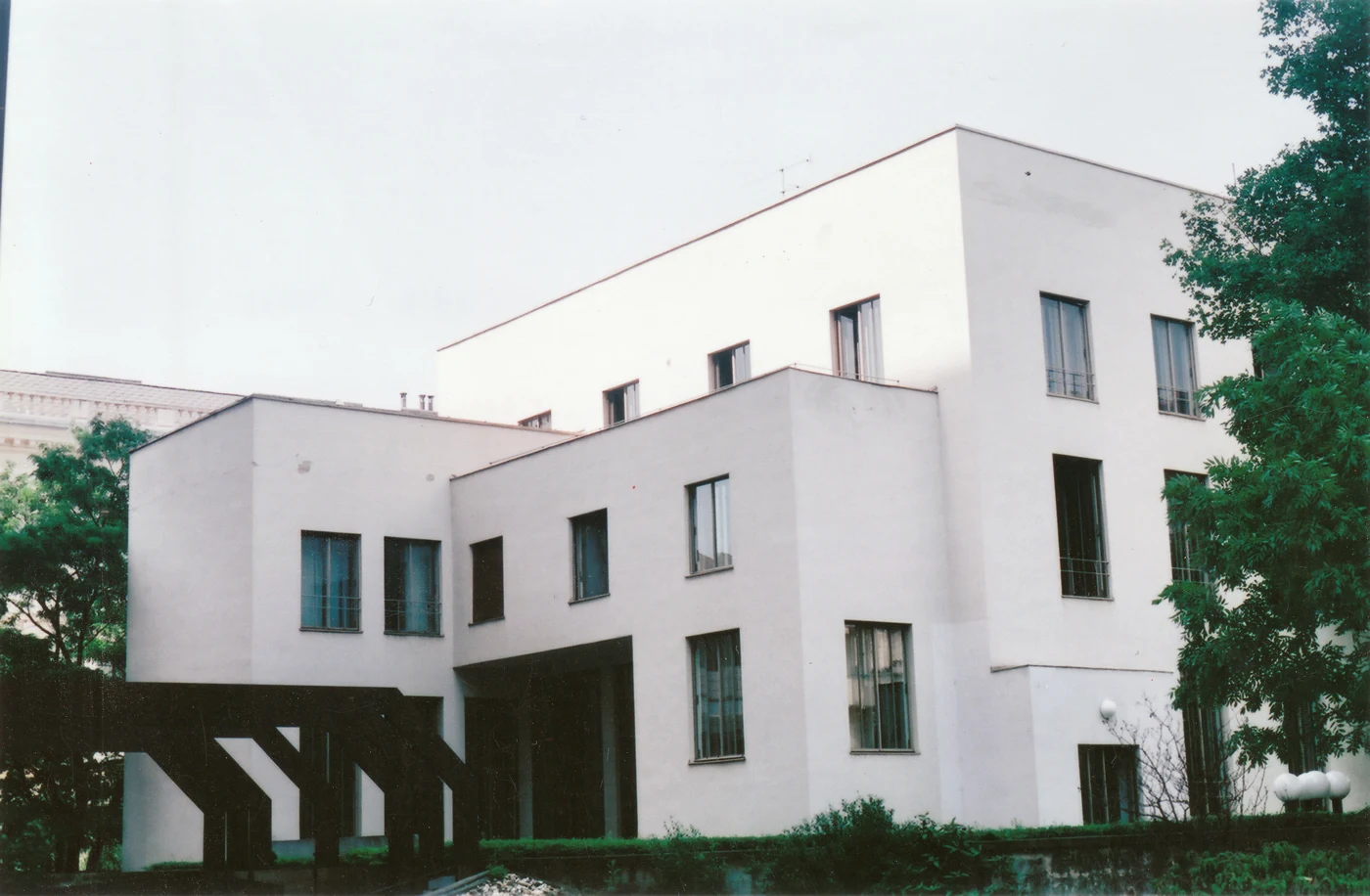
Haus Wittgenstein was designed for his sister Margaret Stonborough-Wittgenstein. Paul Engelmann began the commission; Wittgenstein became deeply involved in proportions and details, including windows, doors, handles and radiators. The building was completed in 1928. Its authorship should therefore name the architect alongside the philosopher, rather than treating it as the spontaneous construction of a solitary genius. Haus Wittgenstein, Iconic Houses; Haus Wittgenstein, design and construction
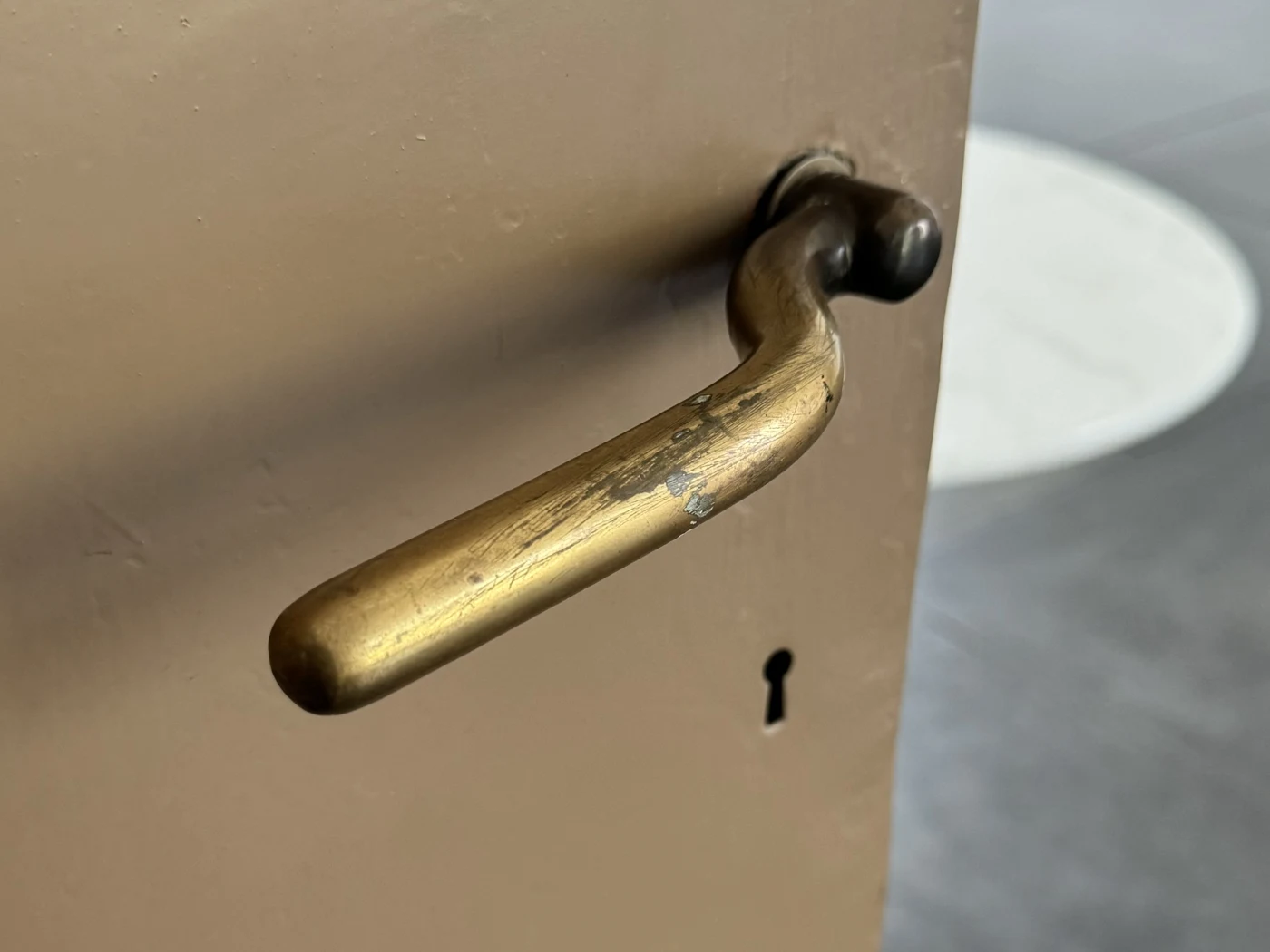
Our observation: a handle is a useful place to pause. It has a shape, but its intelligibility also involves a hand, a door and an expected movement. That gives an analogy for thinking about use. It does not establish that the house illustrates the later philosophy, or that architectural austerity is a proof of logical clarity.
What people say around the world
Britain, Austria and the United States: admiration and disagreement
Bertrand Russell's 1922 introduction calls the Tractatus “an important event in the philosophical world.” He explains its project through logical symbolism, but expresses discomfort with the mystical and considers whether a hierarchy of languages could evade its limits. This is an influential reading by Wittgenstein's former teacher, not an uncontested summary of the author's intention. Bertrand Russell, introduction to Tractatus Logico-Philosophicus, 1922
The Austrian Vienna Circle drew on the early book's logic and criticism of metaphysics. Wittgenstein discussed philosophy with members including Moritz Schlick and Friedrich Waismann, but was not a member. Their programme of logical empiricism should not be equated with his ethical and religious concerns. His position was both a stimulus and a source of friction. Ludwig Wittgenstein, biographical sketch; Ludwig Wittgenstein, the Vienna Circle
British philosopher G. E. M. Anscombe helped edit and translated the Investigations in 1953; her Introduction to Wittgenstein's Tractatus followed in 1959. Her contribution made close work on both periods available in English. Ray Monk's The Duty of Genius, first published in 1990, approaches the philosophical work through the demands and conflicts of the life. Penguin's record reproduces reviews praising precisely that interweaving. Gertrude Elizabeth Margaret Anscombe, bibliography; Ludwig Wittgenstein: The Duty of Genius, Vintage edition record; Ludwig Wittgenstein, bibliography
American philosopher Saul Kripke's Wittgenstein on Rules and Private Language (1982) develops a sceptical challenge: what fixes which rule someone meant, given that past applications can fit different continuations? His sceptical solution and emphasis on community judgement became major points of dispute. The figure is often discussed as Kripke's sceptical Wittgenstein, signalling that Kripke's reconstruction is not simply identical with Wittgenstein's text. Private Language, Kripke's sceptical Wittgenstein
China and Japan: translation and a test of the language
Chinese scholar Xue-guang Zhang's Wittgenstein in China, published online on 27 December 2014 and in a 2015 issue, records a Chinese Tractatus translation in 1927 to 1928. Early reception often positioned Wittgenstein under Russell or the Vienna Circle. Zhang describes renewed scholarship after 1979 through textual reading, contextual interpretation and philosophical application: a reception history with its own interruptions and priorities. Xue-guang Zhang, Wittgenstein in China
Yingjin Xu at Fudan and Ning Zong at the University of Tokyo ask What if Wittgenstein could speak Japanese? (23 March 2020). Their abstract argues that Japanese expressions for being and pain could strengthen his critique of private language by loosening assumptions embedded in subject-predicate grammar. This is their linguistic comparison, not a claim that every Japanese speaker escapes philosophical confusion. Yingjin Xu and Ning Zong, What if Wittgenstein could speak Japanese?, abstract
India and Mexico: silence is a disputed achievement
In India, Ramesh Chandra Pradhan's edited Philosophy of Wittgenstein: Indian Responses, second edition 2013, brings language, logic and emotions into conversation with Indian philosophy. The publisher describes essays comparing silence with Nyāya and approaches to civilisation with Gandhi. These are particular comparisons in a collective volume, not evidence that Wittgenstein subscribed to an Indian system. Philosophy of Wittgenstein: Indian Responses, publisher's description
Mexican philosopher Luis Villoro's Lo indecible en el Tractatus (1975) makes the closing ethical passages central to the entire work. He asks how apparently nonsensical expressions can orient the reader towards seeing the world as a limited whole. This shifts the emphasis from a defective appendix to the book's intended destination. Luis Villoro, Lo indecible en el Tractatus, 1975
Also in Mexico in 1975, Hugo Margáin answers with ¿Lo indecible dicho? Una invitación a la muerte. He challenges Villoro's account of mystical acceptance, objecting that it risks insulating claims from rational criticism and making happiness indifferent to suffering. The disagreement matters: reception outside Europe includes forceful criticism as well as affinity. Hugo Margáin, ¿Lo indecible dicho? Una invitación a la muerte, 1975
Artists and film: language becomes material
MoMA explicitly links American artist Bruce Nauman's language puzzles with his fascination for Wittgenstein's writings. From Hand to Mouth (1967) gives an idiom bodily form; his neon works make reading a spatial encounter. This is documented artistic reception, rather than resemblance inferred from an austere appearance. Bruce Nauman, MoMA collection essay
Derek Jarman's Wittgenstein (1993) turns the philosopher's life into cinema. The BFI credits Karl Johnson, Michael Gough and Tilda Swinton, and writers Jarman, Terry Eagleton and Ken Butler. The film is an artistic interpretation of a person and his thought, not a replacement for either philosophical book. Wittgenstein (1993), British Film Institute
Art and unity: our own reading
Our reading: Wittgenstein offers an artist two disciplines of attention. The early work asks us to distinguish a description of an object from the significance of encountering it. The later work encourages us to notice what a word, gesture or arrangement does in a situation. A sculpture can become clearer without acquiring an exhaustive verbal explanation. This is our application, not a rule he prescribed for sculpture.
For an experience of unity, we would begin with 6.45's attention to the world as a whole, then resist turning that experience into a claim that everything is one substance. Feeling a whole and proving a metaphysical system are different undertakings. Our proposal is simply to remain with the relationships between material, surrounding space and one's own movement before naming an ultimate explanation.
A practical experiment: show an abstract concrete form without its title, then with it. Notice whether the title changes what you see, what you expect or how you move around it. Treat the comparison as an observation, with room for disagreement. No reaction has to count as spiritual success, and no failure to find words has to become evidence of supernatural knowledge.
Books and a way into them
- Tractatus Logico-Philosophicus, 1921; English edition 1922. Follow the numbered structure and read the ending alongside the logical argument. The Ogden edition provides a stable reference for the quotations here. Tractatus Logico-Philosophicus, 1922 edition
- The Blue and Brown Books, dictated in 1933 to 1935 and published in 1958. A bridge into later questions about meaning and understanding. Ludwig Wittgenstein, works and the middle Wittgenstein
- Philosophical Investigations, 1953. Our preferred first philosophical book for a beginner: try sections 1 to 43, keeping the examples beside the conclusions. The German text allows direct comparison with translations. Philosophische Untersuchungen; Ludwig Wittgenstein, publication history
- On Certainty, published 1969 from final notebooks. Investigates how doubt depends on things that stand fast within inquiry. Our suggested next step after the Investigations. Über Gewißheit, sections 341 to 343; Gertrude Elizabeth Margaret Anscombe, translations
What remains unsettled
Wittgenstein's legacy includes questions about certainty, perception and colour, as well as meaning. His final notebooks ask what must stand fast for doubt to work. That inquiry does not require treating every personal impression as an incorrigible truth. Über Gewißheit, sections 341 to 343
The central disagreement concerns philosophy itself. Is Wittgenstein offering theories about meaning and knowledge, or exercises that release us from the demand for those theories? Even the division into two periods can conceal continuity and later developments. Readers should keep the numbered passages and the interpreter's claims separate. The work rewards precision precisely because its apparent simplicity invites slogans. Ludwig Wittgenstein, interpretative problems and later writings
Questions people ask about Wittgenstein
What does “whereof one cannot speak, thereof one must be silent” mean?
In the Tractatus, it means that what cannot be expressed as a meaningful proposition should not be presented as factual description. Ethics and life's meaning are central cases. The instruction concerns the limits of expression, not a ban on investigating things we do not yet know. Tractatus Logico-Philosophicus, 6.41 to 7
What does the Tractatus say in plain words?
A meaningful proposition pictures a possible arrangement of things and is true or false according to reality. Logic supplies the form of representation rather than another set of empirical facts. Philosophy clarifies these limits; the ending asks what happens when the book applies its test to itself. Tractatus Logico-Philosophicus, 2.1 to 4.12 and 6.54
What is the difference between early and late Wittgenstein?
The early work seeks the logical conditions that make representation possible. The later work examines the varied uses of language within human activities and rejects imposing one model on them all. Both pursue clarification, but their methods and assumptions differ. Philosophische Untersuchungen, preface and sections 1 to 23
What are language games, and does meaning equal use?
Language games are activities in which words and actions belong together, such as ordering, reporting or thanking. Section 43 explains meaning through use for a large class of cases, expressly not all cases. It is an invitation to examine applications rather than search for a hidden object behind every word. Philosophische Untersuchungen, sections 7, 23 and 43
What is the mystical in Tractatus 6.44 and 6.522?
Section 6.44 distinguishes how the world is from the fact that it exists. Section 6.522 says the inexpressible shows itself. These remarks should be read with 6.54, which asks the reader to discard the book's own propositions; their interpretation remains disputed. Tractatus Logico-Philosophicus, 6.44, 6.522 and 6.54
Was Wittgenstein religious?
Religion and ethical self-examination mattered deeply to Wittgenstein, but he was not a conventional practising Catholic in adult life. Tolstoy's Gospel in Brief affected him during the war. His religious seriousness should not be confused with assent to a complete set of church doctrines. Ludwig Wittgenstein, ethics and religion; Ludwig Wittgenstein, military service
Why did Wittgenstein give away his fortune?
After the First World War, Wittgenstein resolved to live simply and transferred his inherited wealth to siblings in 1919. He insisted that it not be held in trust for him. His ethical concerns and wartime experience give context, but do not establish one exclusive motive. Wittgenstein, Trinity College archive biography; Ludwig Wittgenstein, return to Vienna
Did Wittgenstein design a house in Vienna?
Yes. He worked with architect Paul Engelmann on Haus Wittgenstein for his sister Margaret Stonborough-Wittgenstein. Completed in 1928, it reflects his exacting attention to proportions and details. It was a collaboration, not a building he designed entirely alone. Haus Wittgenstein, Iconic Houses; Haus Wittgenstein
How was Wittgenstein related to Russell and the Vienna Circle?
Russell taught and encouraged Wittgenstein in Cambridge and supplied the 1922 Tractatus introduction. The Vienna Circle drew inspiration from that book, and Wittgenstein met some of its members. He did not join the Circle or simply adopt its programme of logical empiricism. Bertrand Russell, introduction to Tractatus Logico-Philosophicus; Ludwig Wittgenstein, biographical sketch
Which Wittgenstein book should I start with?
Our suggestion is Philosophical Investigations, sections 1 to 43, because its examples offer concrete points of entry. For the life, try Ray Monk's The Duty of Genius. Read the Tractatus next with its proposition numbers intact, resisting the temptation to treat its ending as a detached collection of quotations. Philosophische Untersuchungen; Ludwig Wittgenstein: The Duty of Genius
Sources and image credits
Read on 28 October 2026. Citations link to the specific texts, records or abstracts used. English Tractatus quotations follow the 1922 Ogden edition; explanations of the Investigations paraphrase the German original. The worldwide section distinguishes full articles from abstracts and publishers' descriptions. Image makers, licences and conversions are stated in the captions.
- Ludwig Wittgenstein, Tractatus Logico-Philosophicus, English text, 1922; 1922 edition with Bertrand Russell's introduction.
- Ludwig Wittgenstein, Philosophische Untersuchungen; Über Gewißheit.
- Anat Biletzki and Anat Matar, Ludwig Wittgenstein, Stanford Encyclopedia of Philosophy; Duncan Richter, Ludwig Wittgenstein, Internet Encyclopedia of Philosophy; Ludwig Wittgenstein, Wikipedia.
- Wittgenstein, Ludwig Josef Johann, Trinity College archive biography; Haus Wittgenstein, Iconic Houses; Haus Wittgenstein, Wikipedia.
- Gertrude Elizabeth Margaret Anscombe, Stanford Encyclopedia of Philosophy; Private Language, Stanford Encyclopedia of Philosophy; Ray Monk, Ludwig Wittgenstein: The Duty of Genius, Vintage edition record.
- Xue-guang Zhang, Wittgenstein in China, 2014 online / 2015 issue, abstract; Yingjin Xu and Ning Zong, What if Wittgenstein could speak Japanese?, 2020, abstract.
- Ramesh Chandra Pradhan, editor, Philosophy of Wittgenstein: Indian Responses, 2013 second edition, publisher's description.
- Luis Villoro, Lo indecible en el Tractatus, Crítica 7, issue 19, 1975; Hugo Margáin, ¿Lo indecible dicho? Una invitación a la muerte, Crítica 7, issue 20, 1975.
- Bruce Nauman, MoMA collection essay; Wittgenstein (1993), British Film Institute.