Artists / No. 004
Piet Mondriaan
Piet Mondriaan, internationally known as Piet Mondrian (1872 to 1944), was a Dutch painter who developed Neoplasticism, an abstract language of lines, primary colours and unequal fields seeking universal harmony. Wikipedia: Piet Mondrian
Why can a few lines and rectangles sustain a lifetime of painting? Start with their proportions, then follow the path from windmills and trees to Parisian abstraction and New York rhythm. The works and records below also distinguish easily confused titles and two different 1930 compositions.
How to look beyond the familiar grid
Our first exercise is to ignore the colour names and compare the intervals. In a mature composition, find the narrowest white rectangle and the largest. Follow the black lines separating them: are all equally thick, do they meet the edge and where do they stop? Then bring colour back into your attention. Does a small blue area counterbalance a much larger red one? This is our proposed way of looking, not a formula for calculating beauty. It makes the differences between two superficially similar grids visible.
Kunstsammlung Nordrhein-Westfalen stresses that Mondrian developed compositions by repeated alteration and overpainting. Geometry did not mean a finished diagram simply transferred to canvas. Its Evolution account also follows his experiments with double lines, changing formats and the rotation of a canvas into a diamond. The work's apparent inevitability can conceal a searching process. Look for choices about proportions and relationships before assuming that a ruler could have made the decisions. Kunstsammlung Nordrhein-Westfalen: Mondrian, Evolution
Our second exercise is to compare a tree painting with a grid. Do not insist that the later picture secretly depicts a tree. Instead ask what happens to branching, spacing, the distinction between solid forms and gaps, and the relation of vertical to horizontal. You may recognise a shared problem without recognising a shared object. That keeps the development open to observation rather than reducing the early work to a set of clues about an already predetermined destination.
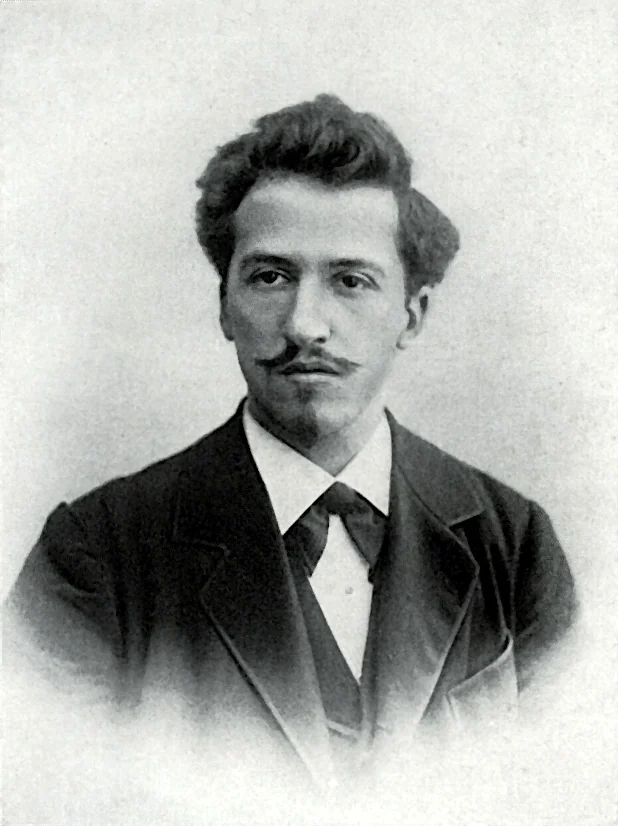
From Dutch landscape to New York rhythm
- 1872 to 1892. Born Pieter Cornelis Mondriaan in Amersfoort on 7 March 1872, he grew up in Winterswijk. Drawing instruction within the family preceded study at Amsterdam's Rijksakademie from 1892. Wikipedia: Piet Mondrian
- The 1890s to 1911. Landscapes, trees, windmills and flowers established a substantial figurative practice. Domburg's light and contact with modern French painting encouraged stronger colour and increasingly independent forms. Kunstsammlung Nordrhein-Westfalen: Mondrian, Evolution
- 1909. He joined the Dutch Theosophical Society. A search for order beyond visible appearances became part of his evolving account of abstraction. Wikipedia: Piet Mondrian
- 1911 to 1914. Encountering Cubism and moving to Paris transformed his paintings. The professional spelling Mondrian, with one a, accompanied his entry into this international context. Wikipedia: Piet Mondrian
- 1914 to 1919. The First World War kept him in the Netherlands after a visit. Encounters with Bart van der Leck and Theo van Doesburg fed the development of his language; he co-founded the journal De Stijl in 1917. Wikipedia: Piet Mondrian
- The 1920s and 1930s. Back in Paris, he developed Neoplasticism through primary colours, black, white and horizontal and vertical relations, while continuing to revise the system's possibilities. Kunstsammlung Nordrhein-Westfalen: Mondrian, Evolution
- 1938 to 1940. He left Paris for London and then New York as war changed the conditions of life in Europe. The American city and boogie-woogie became consequential encounters in his final years. Wikipedia: Piet Mondrian Centre Pompidou: New York City
- 1942 to 1944. New York City, Broadway Boogie Woogie and the unfinished Victory Boogie Woogie transformed the grid through coloured lines and pulsing small units. Mondrian died in New York on 1 February 1944. Centre Pompidou: New York City Kunstmuseum Den Haag: Victory Boogie Woogie
What did Mondrian think abstraction could do?
Neoplasticism: relations rather than depicted objects
Neoplasticism, his term for a new visual language, reduced painting's means so that relationships could become its principal subject. Horizontal and vertical directions, primary colours and neutral areas supported a search for a more general harmony than the likeness of one particular object. His writings appeared in De Stijl from 1917. The aim was both visual and philosophical: a proposed universal order, rather than a new decorative motif. That was the artist's ambition, not an experimentally demonstrated law of perception. Wikipedia: Piet Mondrian
Our reading is that reduction makes each remaining decision more exposed. A slight shift in a line changes the proportions on both sides. A small coloured field can alter the apparent weight of a much larger neutral one. Try describing a painting in terms of pressure, pause and unequal balance before calling it harmonious. If the word harmony is useful, it should follow those observations rather than replace them. A limited vocabulary can still produce very different arrangements.
The grid developed through nature
The Kunstmuseum Den Haag's Forms of Life exhibition placed his evolution beside Hilma af Klint's. It stressed the relevance of scientific discoveries and spiritual thought to a world no longer understood through the visible alone. Trees, piers, oceans and flowers were active sources of investigation. Mondrian's plant studies focused particularly on cultivated flowers, while af Klint studied wild plants. Their relationship was a curatorial comparison: the museum states that they never met, so similarity should not be mistaken for personal exchange. Kunstmuseum Den Haag: Forms of Life
The path was not a simple abandonment of everything naturalistic. Kunstsammlung's account notes representational commissions around 1916 and 1917 while abstraction remained his principal investigation. Our inference is that an artist can sustain several kinds of work for different purposes without one automatically invalidating another. A flower painting need not be an embarrassing exception to the grid, and a later figurative commission need not mean he had forgotten how to abstract. Kunstsammlung Nordrhein-Westfalen: Mondrian, Evolution
The system changed in New York
Centre Pompidou's New York City record describes the replacement of black divisions by coloured lines and connects the result with electrical light, urban movement and boogie-woogie. Brigitte Leal's catalogue account explains a preparatory process involving overlapping coloured paper strips. The painting's crossings can thus be examined as a kind of weaving rather than simply a collection of rectangular boxes. The structure remained orthogonal while its perceptual rhythm changed. Centre Pompidou: New York City
Our looking comparison is to put an earlier black-grid painting beside this late coloured network. Ask whether colour is contained by the divisions or carried by them. Then compare long, uninterrupted lines with smaller pulses. The question identifies an actual change of function within a restricted language. It also helps explain why the New York works are more than ordinary grids given a musical title after the fact.
What museums, dealers and critics say around the world
The Hague and Düsseldorf: development rather than a logo
Kunstmuseum Den Haag owns more than 300 Mondrian works and uses that range to make the path to abstraction visible. Its 2023 Forms of Life exhibition, developed with Tate Modern, reintegrated landscapes and flowers into that account. Germany's Kunstsammlung Nordrhein-Westfalen similarly emphasised experiments, revisions and the persistence of nature. Together the museums make a specific argument: knowing the black grid in advance is no reason to skip the work that complicates it. Kunstmuseum Den Haag: Forms of Life Kunstsammlung Nordrhein-Westfalen: Mondrian, Evolution
Paris: rhythm has material evidence
At Centre Pompidou, the interpretation of New York City joins the city's energy to an analysis of the picture's actual construction. The catalogue distinguishes this completed oil painting from related unfinished versions that retain coloured paper strips. That distinction matters because similar titles can conceal different objects and different states of completion. Our inference is to begin with the collection record and catalogue identity before repeating a story about a famous Mondrian image. Centre Pompidou: New York City
New York dealers: a record of process
Pace's archive records Piet Mondrian: The Process Works, held in New York from 11 April to 6 May 1970. The surviving exhibition page offers dates and a title rather than a detailed critical essay, so it should not be made to say more. Our reading of the title is limited but useful: a major dealer's historical presentation explicitly brought process into the frame. It provides another route beyond recognising a finished grid as a style. Pace: The Process Works
A British critic and the spiritual comparison
Reviewing Forms of Life in 2023, Laura Cumming admired Mondrian's transformations of nature and argued that his paintings exceeded their geometry. She was much less persuaded by some explicitly spiritual images and questioned the comparison with af Klint. Her concluding emphasis on “the evolution of art” belongs to a critical judgement, not an objective ranking of the two painters. The disagreement makes the exhibition's premise available for debate. Laura Cumming, The Guardian, 23 April 2023
Auction houses and an Asian collector
Composition No. II (1930) sold at Sotheby's New York on 14 November 2022 for US$51 million, including fees. Sotheby's reported an artist auction record and acquisition by a collector in Asia. The lot record specifies a 51 by 51 centimetre canvas in the artist's frame. This is a different object from the 46 by 46 centimetre Zurich painting reproduced below, despite their similar dates, palettes and titles. Sotheby's: November 2022 New York results Sotheby's: Composition No. II Wikimedia Commons

The Art Newspaper's contemporary report added a less celebratory market context: the US$51 million total followed a US$48 million hammer price, and the wider evening produced mixed results. Its account of bidding was far more restrained than a general story of limitless demand. This is why our reading separates a record from market breadth. One buyer's successful bid establishes a transaction; it does not establish what every collector would pay or how readily another work would sell. The Art Newspaper: Mondrian record and mixed auction results, 2022
Seven works that show what changed
Mill in Sunlight, 1908
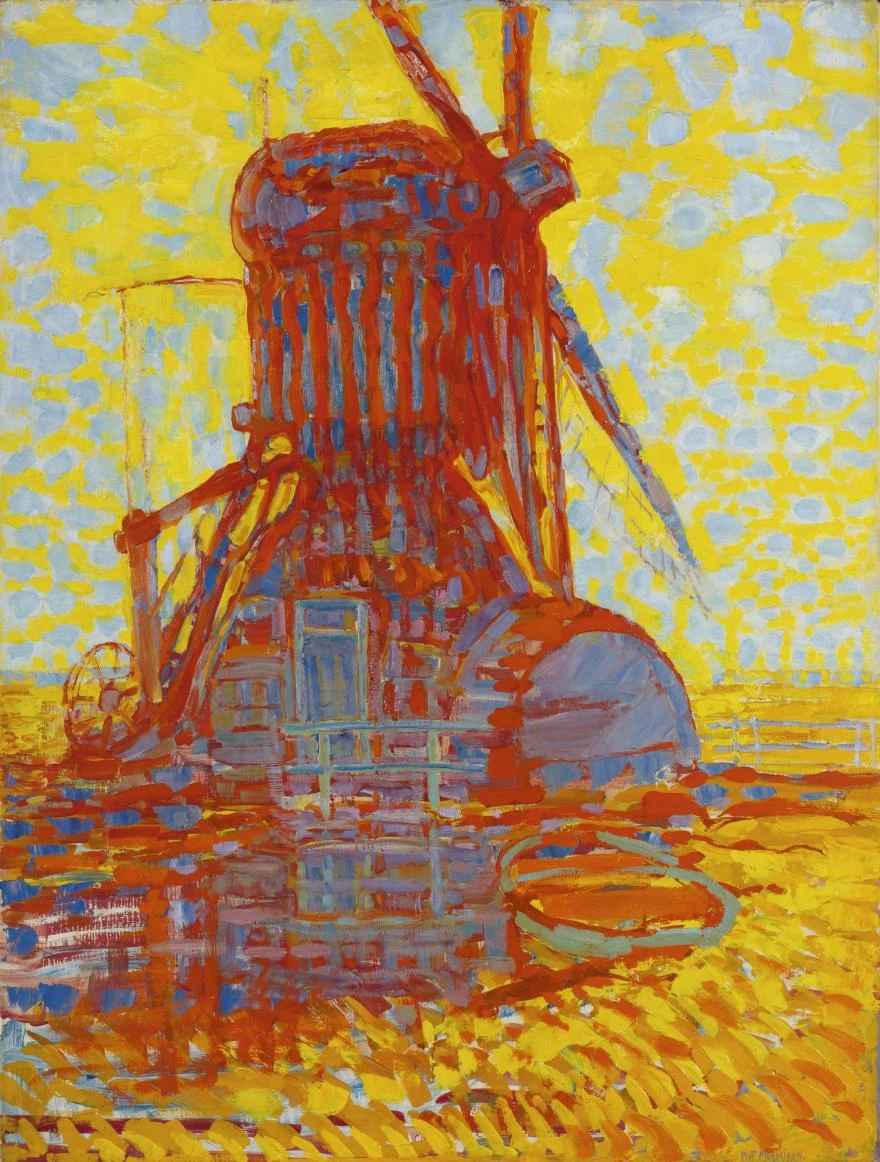
This windmill makes colour depart emphatically from a neutral description of an ordinary structure. Kunstsammlung Nordrhein-Westfalen places it within his response to modern French painting and notes the hostile reception it attracted. Our exercise is to compare the sails' intersecting directions with the blocks of colour around the tower. The painting demonstrates an interest in structure without already being a mature grid; the obvious subject and the independent colour can both remain active. Kunstsammlung Nordrhein-Westfalen: Mondrian, Evolution
Evening; Red Tree, 1908 to 1910
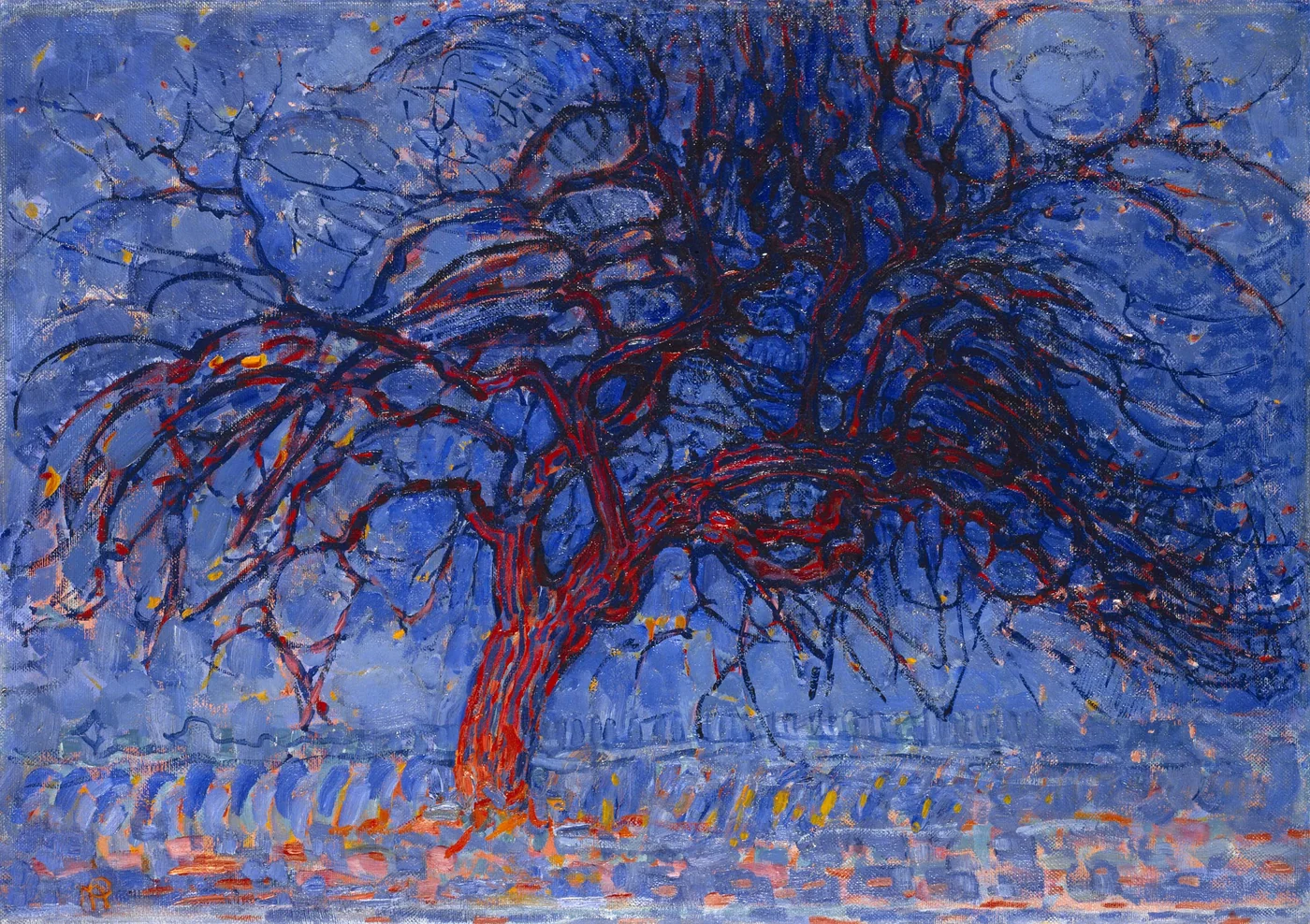
The branching tree remains identifiable while red and blue loosen colour from local appearance. Our proposed comparison is to look at the gaps between branches as carefully as the branches themselves. Do the intervals organise the painting, or are they simply leftover sky? That question prepares a comparison with later abstraction without claiming that the grid is already hidden intact inside the tree. The museum's development account places the work among the steps towards increasingly autonomous form. Kunstsammlung Nordrhein-Westfalen: Mondrian, Evolution
View from the Dunes with Beach and Piers, Domburg, 1909
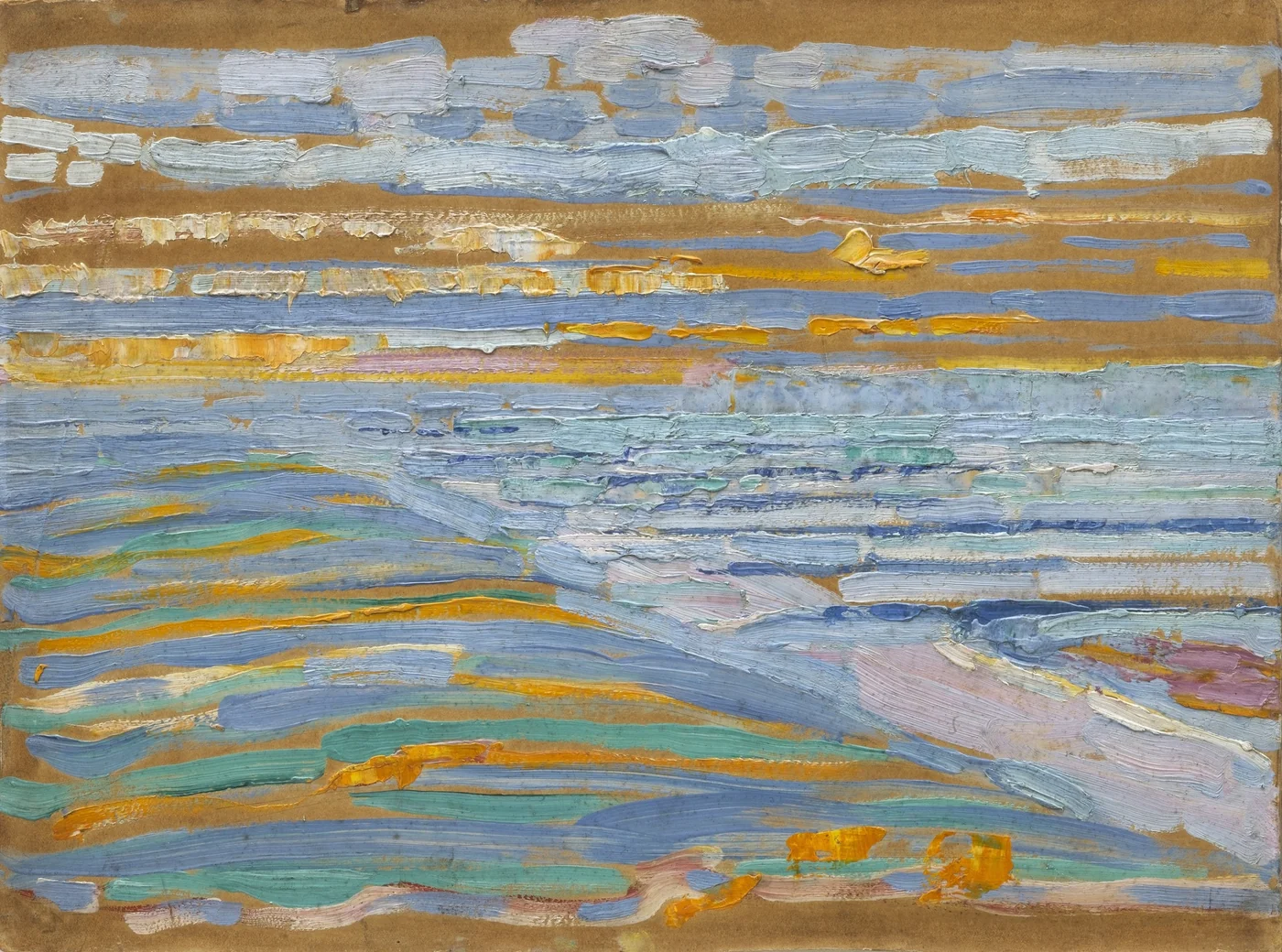
The coastal subject provides another relation between long horizontal divisions and shorter interruptions. Our looking exercise is to track those directions before trying to extract a future composition from them. Compare the broken brushwork with the more emphatic directional structure. The title, date and collection identity follow the opened Commons record; the wider significance of Domburg and its light is documented by Kunstsammlung Nordrhein-Westfalen. Wikimedia Commons Kunstsammlung Nordrhein-Westfalen: Mondrian, Evolution

Gray Tree, 1911
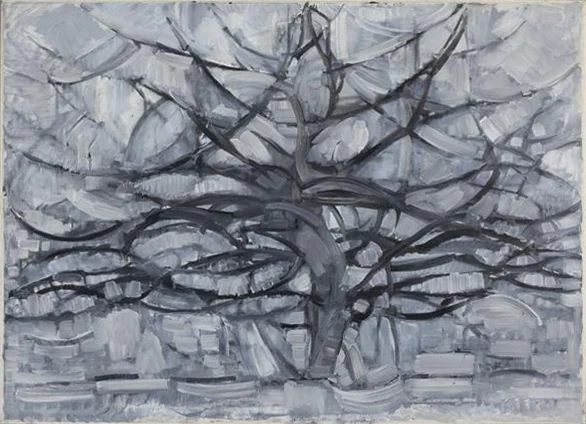
Colour is restrained, while the tree becomes a network of intersecting planes and contours. Our reading is to compare it directly with Red Tree: which changes come from colour, and which from the treatment of space? The date and ownership are recorded on the Commons file. It belongs near the encounter with Cubism rather than being evidence that his mature orthogonal language appeared all at once. Wikimedia Commons Wikipedia: Piet Mondrian

Tableau No. 3: Composition in Oval, 1913
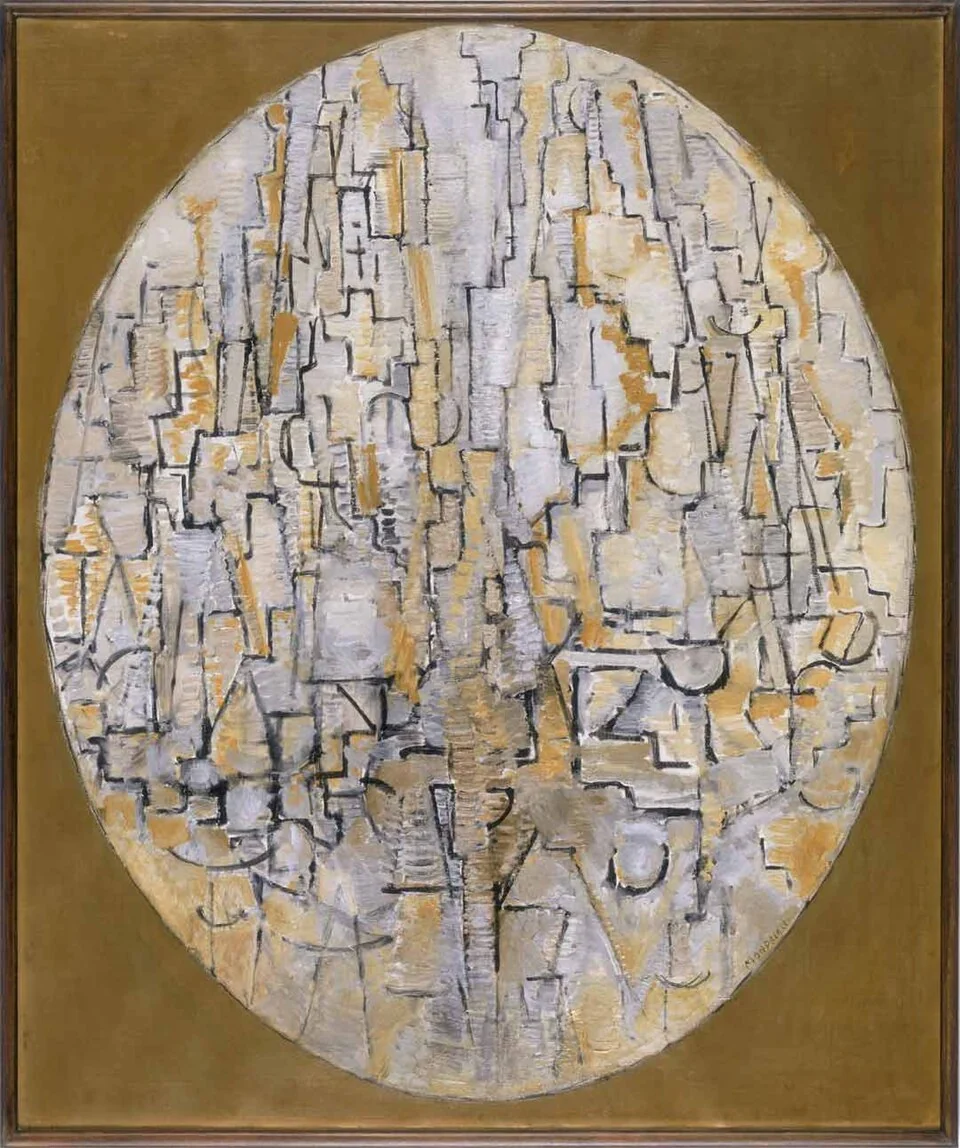
The Stedelijk's work retains a gathering oval rather than extending an even grid across the whole support. Our reading is to ask what the outer shape does: does it compress the fragments, separate them from the surrounding field, or make the composition feel suspended? Then look for places where a line implies an object without completing it. The file record supplies the work's title, 1913 date and museum identity. Wikimedia Commons

Tableau I, 1921
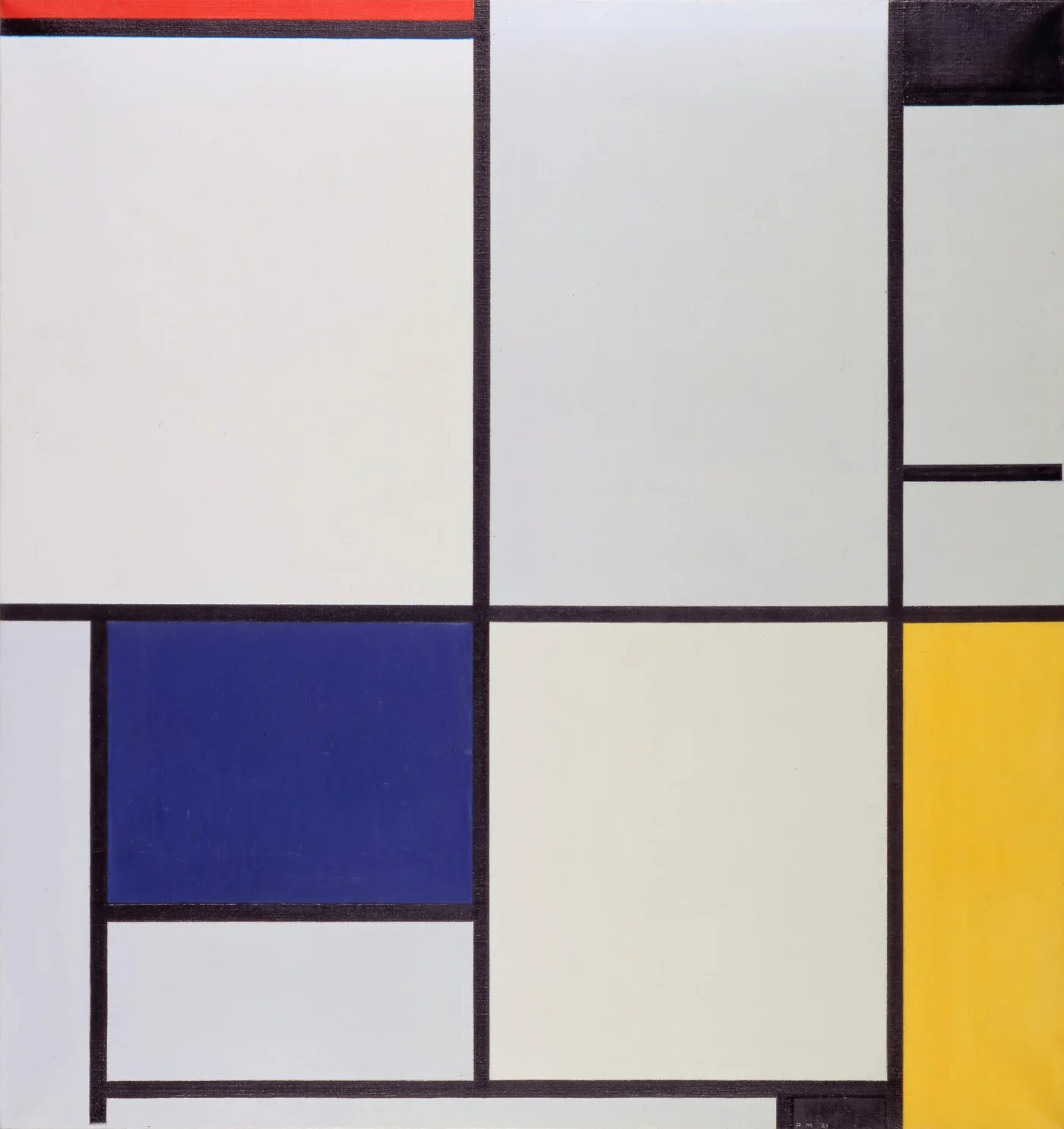
Here the familiar vocabulary is available, but our looking task is to notice its inequalities. Compare a broad neutral field with a smaller coloured one, and examine how the thick divisions meet. Which area feels most insistent, and is it also the largest? The work's date and collection follow its Commons record; the history of continual revisions and increasingly restricted means is documented in the German museum's account. Wikimedia Commons Kunstsammlung Nordrhein-Westfalen: Mondrian, Evolution

Composition with Red, Blue and Yellow, 1930, and the New York works
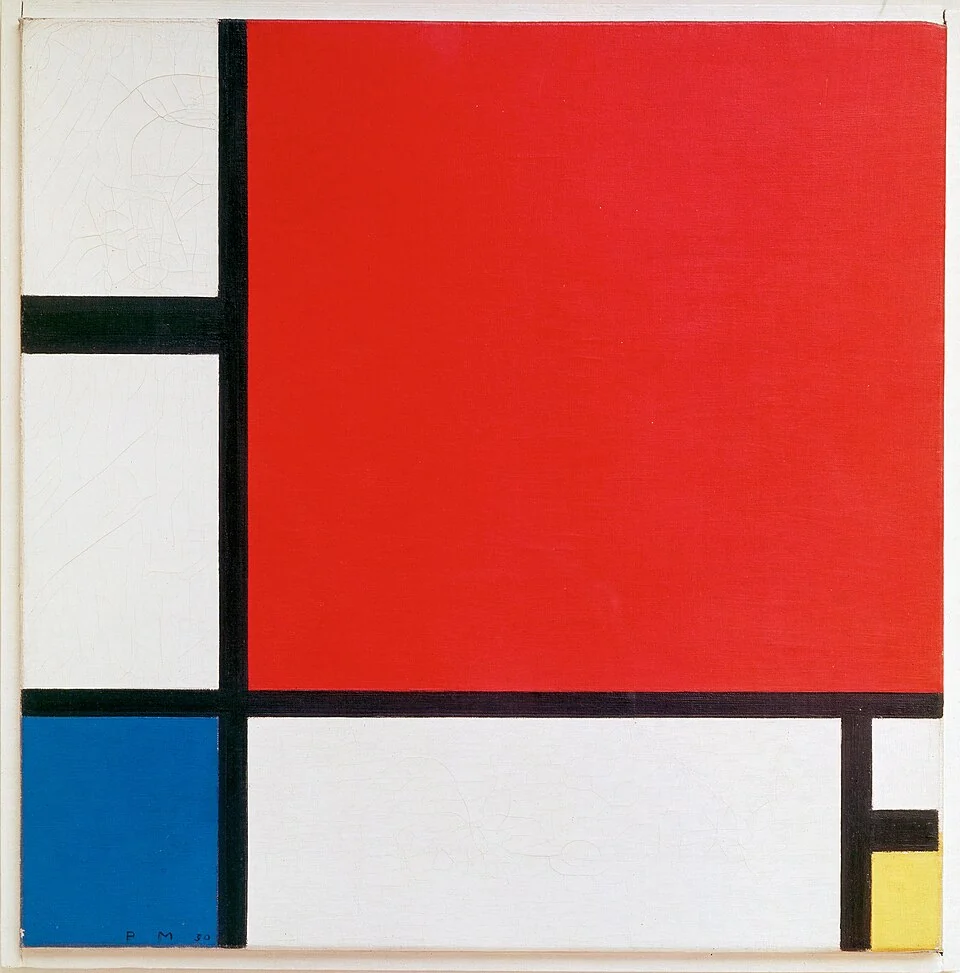
The Zurich painting demonstrates why exact catalogue identity matters. Its large red field is not enough to identify it with the similarly titled auction record. Our exercise is to compare its remaining white areas with the red, then follow the black divisions as shapes in their own right. For the late transformation, consult Centre Pompidou's New York City (1942) and Kunstmuseum's Victory Boogie Woogie (1942 to 1944): colour shifts into the line system and smaller rhythmic units. Wikimedia Commons Centre Pompidou: New York City Kunstmuseum Den Haag: Victory Boogie Woogie
Legacy, unfinished work and collecting
Victory Boogie Woogie remained unfinished when Mondrian died. The Kunstmuseum records oil, tape, paper, charcoal and pencil on canvas and describes repeated radical changes, including revisions during his final illness. Its status makes process unusually visible. The painting entered Dutch public stewardship in 1998 and is on long-term loan in The Hague. This is different from a claim that its final arrangement was a settled statement knowingly left for posterity. Kunstmuseum Den Haag: Victory Boogie Woogie
Our reading is that the gap between Mondrian's universal ambitions and his continual revision is productive. A proposed harmony had to be tested in individual paintings, and the late work still changed its terms. That gives a viewer something more demanding than recognition. Ask what one arrangement achieves that another does not, and what the visible alternatives suggest. The authority of the artist's name should sharpen comparison rather than bring it to an end.
The grid entered fashion and popular design, notably Yves Saint Laurent's 1965 collection. That reception explains some of its familiarity but can obscure the paintings' material particularity. Our inference is that resemblance is only the first step in a useful comparison: proportion, line width, paint surface and revision distinguish a painting from a printed pattern. A design inspired by Mondrian can be compelling in its own medium without being a substitute for the historical object. Wikipedia: Piet Mondrian
Our recommendation for collectors is to identify the exact work before discussing price: catalogue number, dimensions, support, date, provenance and condition. Similar titles make that especially important here. Ask how an attribution is documented, whether an offered object is a unique painting or a later reproduction, and whether its ownership history raises unresolved questions. The Sotheby's lot record models the detail required through its inscriptions, frame measurements and provenance. A square grid and three primary colours alone establish none of those things. Sotheby's: Composition No. II
Questions people ask about Piet Mondriaan
Is it Piet Mondrian or Piet Mondriaan?
Both spellings refer to the same artist, born Pieter Cornelis Mondriaan. He adopted the spelling Mondrian in the period of his move to Paris and integration into the international avant-garde. This page retains Mondriaan in its title and route while using Mondrian in discussion of the artist's international career. Wikipedia: Piet Mondrian
What is Piet Mondrian famous for?
He is famous for abstract compositions using horizontal and vertical lines, primary colours and neutral fields. His Neoplasticism pursued harmony through relationships rather than depicted objects. He also made a substantial earlier body of landscapes, trees, flowers and windmills. Kunstsammlung Nordrhein-Westfalen: Mondrian, Evolution Wikipedia: Piet Mondrian
What is the difference between De Stijl and Neoplasticism?
De Stijl was the journal and wider artistic grouping co-founded by Mondrian and Theo van Doesburg in 1917. Neoplasticism names Mondrian's theory and visual language of reduced means and balanced relationships. The terms overlap historically but do not describe exactly the same thing. Wikipedia: Piet Mondrian
Why did Mondrian use red, blue and yellow?
Primary colours, together with neutral fields and horizontal and vertical directions, formed a restricted language through which he pursued more universal relationships. This was an artistic and philosophical programme, not proof of one scientifically correct arrangement. He continued experimenting within and beyond the familiar black-grid format. Wikipedia: Piet Mondrian Kunstsammlung Nordrhein-Westfalen: Mondrian, Evolution
Did Mondrian use a mathematical formula?
His geometric compositions developed through searching, alteration and overpainting. Kunstsammlung Nordrhein-Westfalen stresses that process rather than a fixed advance plan. Our recommendation is to examine proportions and revisions without assuming that a single numerical formula explains every painting. Kunstsammlung Nordrhein-Westfalen: Mondrian, Evolution
How did jazz influence Mondrian?
His New York paintings connect coloured grids and small rhythmic units with the city and boogie-woogie. Centre Pompidou's New York City record describes the optical movement produced by coloured lines. The relationship is an artistic translation of rhythm, not a literal musical score. Centre Pompidou: New York City
What is Mondrian's auction record?
Composition No. II, painted in 1930, sold for US$51 million including fees at Sotheby's New York on 14 November 2022. Sotheby's reported an artist auction record and a buyer in Asia. The 51 cm canvas is distinct from the similarly titled 46 cm Zurich work reproduced on this page. Sotheby's: November 2022 New York results Sotheby's: Composition No. II Wikimedia Commons
Where can I see Mondrian's paintings?
Kunstmuseum Den Haag holds more than 300 works and displays Victory Boogie Woogie on long-term loan. Other collections discussed here include the Stedelijk Museum Amsterdam, Kunsthaus Zürich, MoMA and Centre Pompidou. Check each institution's current display and loans before travelling; ownership does not guarantee a work is on view. Kunstmuseum Den Haag: Forms of Life Kunstmuseum Den Haag: Victory Boogie Woogie Wikimedia Commons Wikimedia Commons Wikimedia Commons Centre Pompidou: New York City
Sources and image credits
Sources opened and checked on 26 October 2026. Our looking notes and suggested exercises are interpretations. The benchmark combined Wikipedia: Piet Mondrian, Kunstmuseum Den Haag: Forms of Life, Kunstsammlung Nordrhein-Westfalen: Mondrian, Evolution, Centre Pompidou: New York City. Collection records govern titles, dates and ownership; auction results distinguish realised prices from estimates. Each image caption links to its individual rights statement.
- Wikipedia: Piet Mondrian
- Kunstsammlung Nordrhein-Westfalen: Mondrian, Evolution
- Centre Pompidou: New York City
- Kunstmuseum Den Haag: Victory Boogie Woogie
- Kunstmuseum Den Haag: Forms of Life
- Pace: The Process Works
- Laura Cumming, The Guardian, 23 April 2023
- Sotheby's: November 2022 New York results
- Sotheby's: Composition No. II
- Wikimedia Commons
- The Art Newspaper: Mondrian record and mixed auction results, 2022
- Wikimedia Commons
- Wikimedia Commons
- Wikimedia Commons
- Wikimedia Commons