Artists / No. 012
Lee Krasner
Lee Krasner (1908 to 1984) was an American Abstract Expressionist painter whose repeated transformations of drawing, painting and collage made reinvention, rather than a single signature style, central to her work. Guggenheim Bilbao: Living Color
Begin with what survives a change. A dense field of small marks, a torn collage and a sweeping late canvas can all involve the same problem: how to make an arrangement feel alive without freezing it into a formula. This guide follows those changes, alongside the evidence of her life and reception.
How do you look at an artist who keeps changing?
Our suggested exercise begins with two works from different decades. Describe each in terms of scale, density and direction before looking for resemblance. Does the eye hop between small units, sweep across a curve or stop against a cut edge? The goal is to identify what the particular work asks you to do, rather than decide which one looks most like a Krasner.
Then compare the transitions. Our looking questions are these: where does a form become another form, where does a mark remain visibly separate, and what keeps the whole from falling apart? A torn edge and a painted edge can produce different kinds of interruption. Try making a verbal account that preserves that difference instead of calling both works energetic and leaving it there.
There is a historical basis for comparing distinct phases. Guggenheim Bilbao describes Krasner working in cycles and resisting the fixed signature image. Its exhibition moves from academic training and Little Images through collage, Umber paintings, large colour works and later reworkings. The variety is part of the argument about her achievement. Guggenheim Bilbao: exhibition structure
Our final pass asks what your first description missed. If you saw chaos, seek a repeated interval. If you saw a pattern, find the interruption. A good second reading should add something specific, such as a change in direction or the weight of a shape, rather than merely make the first adjective stronger.
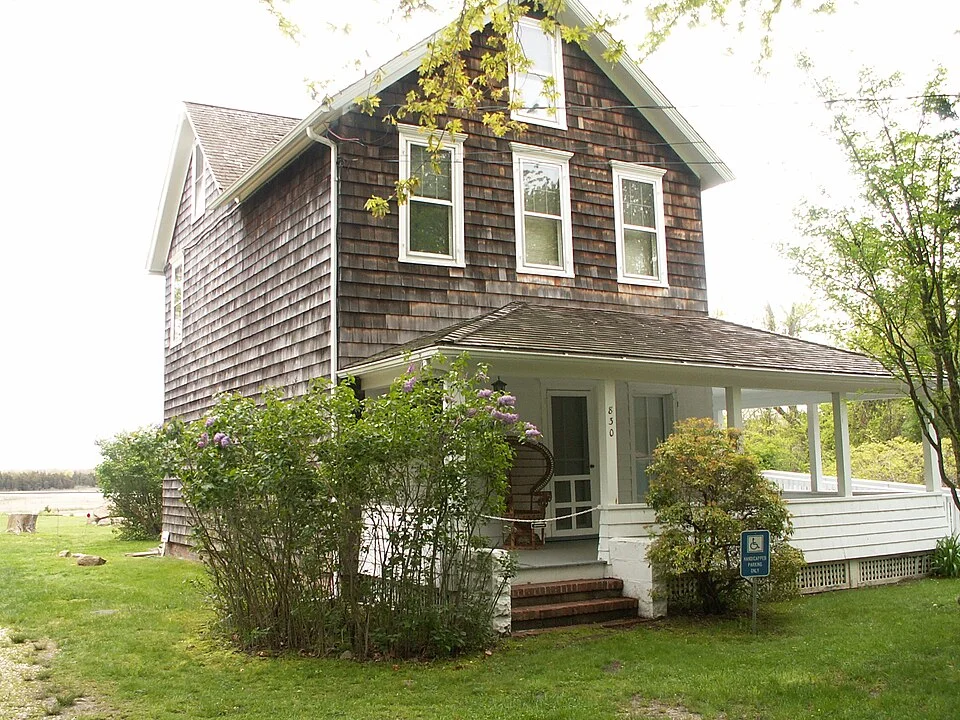
A career already underway before Pollock
- 1908 to the early 1930s: Born Lena Krassner in Brooklyn on 27 October 1908, she grew up in an Orthodox Jewish immigrant family. She pursued training at Cooper Union, the National Academy of Design and other New York institutions. Her names changed as she established her professional identity. Wikipedia: early life and education Charlotte Flint, Barbican: Introducing Lee Krasner
- 1930s: Modern art encountered at MoMA and study with Hans Hofmann helped redirect her academic training. Work for the WPA also placed her within the practical and political life of New York’s artists; she participated in protests over workers’ conditions. Barbican: modernism, Hofmann and the WPA
- 1941 to 1945: Her relationship with Jackson Pollock developed around their inclusion in John Graham’s 1942 exhibition. They married in 1945 and moved to Springs, Long Island. She was already an active artist, rather than beginning her career as his assistant. Barbican: meeting Pollock and moving to Springs
- Late 1940s to 1950s: Little Image paintings were followed by major collage experiments. A successful Stable Gallery exhibition came in 1955. Pollock died in a car crash in 1956; Krasner subsequently used the larger barn studio for her own work. Barbican: Little Images, collage and the barn
- 1965 to 1984: London’s Whitechapel Gallery mounted a survey in 1965. Further recognition included the Whitney’s large-painting exhibition in 1973 and the retrospective launched by the Museum of Fine Arts, Houston, in 1983. Krasner died in New York on 19 June 1984. Barbican: recognition and later career Wikipedia: exhibitions and death
The chronology has two simultaneous strands: Krasner made her own work and managed Pollock’s legacy after his death. Keeping both in view is more accurate than turning the first into an appendix to the second. Kasmin’s biography explicitly acknowledges how her marriage overshadowed the artistic vocation that preceded it. Kasmin: artist biography
The ideas: repetition, destruction, enlargement and return
Little Images make a surface out of many events
Kasmin describes thick paint and repeated abstract signs in the Little Image paintings. The Barbican situates their making in Krasner’s comparatively small upstairs working space at Springs. Their scale and dense activity provide a different model of abstraction from the familiar image of a painter confronting a vast barn wall. Kasmin: Little Images Barbican: working space
Our reading focuses on repetition that never becomes quite mechanical. Compare the size of neighbouring marks, the spaces between them and the way one seems to respond to another. Does density generate a stable grid or a field that keeps vibrating? The question lets small differences carry significance without requiring you to identify a hidden alphabet.
Collage turns dissatisfaction into new material
Krasner cut and recombined earlier work, including drawings and painted surfaces. Kasmin’s 2021 collage exhibition connected experiments across the period 1938 to 1981, while its 2024 presentation revisited geometric abstractions from 1948 to 1953. Those projects show how much the career contains beyond the most familiar later gestures. Kasmin: collage and geometric exhibitions
Our distinction is between destroying an object and discarding all of its potential. In a collage, a fragment can retain the trace of one arrangement while serving another. Ask whether an edge makes you aware of that double life. The earlier work becomes a material with a history, and the new arrangement has to make that history visually productive.
Umber paintings connect circumstance and formal constraint
The Barbican relates the restricted umber palette to Krasner’s insomnia and decision to work at night without relying on colour judgements under artificial light. These large paintings followed bereavements and the move into the barn studio. The circumstances are documented; the exact emotion any viewer experiences before a particular work remains a matter of interpretation. Barbican: Night Journeys
Our exercise examines what restriction permits. Compare the span of a gesture, the openings between arcs and the variation in paint density. A reduced palette can bring those differences forward. Resist treating every brown passage as a direct symbol for grief. Biography can explain a working situation without explaining away all the choices made within it.
Return is different from repetition
Guggenheim Bilbao ends its account with Eleven Ways, the group in which Krasner revisited older drawings through cutting and recombination. It also includes Palingenesis, a major shift towards broad, flatter colour forms. The career repeatedly changes the terms on which a recognisable visual problem can be addressed. Guggenheim Bilbao: Palingenesis and Eleven Ways
Our proposed comparison asks what a return makes newly visible. When an old drawing is cut up, the original body or composition may cease to govern the whole. A fragment becomes shape, direction and tone as well as a remnant. This is a useful way to understand reinvention as concrete work on materials, rather than a vague celebration of personal resilience.
What critics, museums, galleries and auctions say
Britain and Europe: independence through change
The Barbican’s account foregrounds Krasner’s own training, political activity, working spaces and decisions. The travelling Living Colour project reached Frankfurt, Bern and Bilbao as well as London. Guggenheim Bilbao’s presentation frames the range as an ongoing pursuit of authentic expression, rather than a failure to settle on a recognisable product. Barbican: Introducing Lee Krasner Guggenheim Bilbao: Living Color Kasmin: exhibition history
Adrian Searle’s 2019 Guardian review called her a “wild destructive genius”. Adrian Searle, The Guardian, 29 May 2019 Our response to that vivid critical label is to look for the constructive result of each cut or disruption. The useful question is what the changed arrangement achieves. Destruction alone is not a sufficient account of a completed painting.
New York in 2026: a parallel account of two careers
As of 26 October 2026, the Met lists Krasner and Pollock: Past Continuous on view through 31 January 2027. More than 120 works trace the full careers together, with the subtitle drawn from a Krasner painting of 1976. The museum emphasises distinct practices alongside their consequential relationship. This provides a current institutional alternative to treating her work simply as a response to his. The Met: Past Continuous
New York dealers: editing as a serious artistic activity
Kasmin emphasises Krasner’s sustained exploration of painting and collage. In Sotheby’s 2025 magazine account, Kasmin’s Eric Gleason called her “an exceptionally harsh editor”, explaining the comparatively limited surviving body of work through her practice of reusing and rejecting material. This is a dealer’s informed account of production and supply, not a reason to regard every surviving object as equally important. Kasmin biography Sarah Medford, Sotheby’s Magazine, 13 February 2025
A curator’s comparison within the auction catalogue
Sotheby’s catalogue for The Eye is the First Circle quotes curator David Anfam’s assessment that the work “held its own and more” beside Pollock paintings at the Royal Academy. The attribution matters: it is a particular comparative judgement, reproduced within a sale presentation that has a commercial purpose. It invites comparison rather than substituting a ranking for looking. Sotheby’s catalogue: Anfam on The Eye is the First Circle
The documented market high
Sotheby’s 2025 account identifies The Eye is the First Circle, painted in 1960, as Krasner’s auction record at approximately US$11.6 million, set on 16 May 2019 in New York. The original lot record gives the enormous canvas’s dimensions as 235.5 by 487.3 centimetres. Art.Salon’s dated sale archive corroborates the day and reports US$11,654,000. Art.Salon: sale on 16 May 2019 The rounded price is a published result, not the catalogue’s US$10 million to US$15 million estimate. Sotheby’s Magazine: record result Sotheby’s: original lot details
Our interpretation is that scale, period, provenance and exhibition history must be examined before drawing a market comparison. An auction record answers what one work achieved in one sale. It does not identify the correct price of a drawing, a collage or a different canvas, and it cannot settle a question about authenticity or physical condition.
Eight works across different kinds of invention
The facts below follow the linked museum and auction records. Our questions are looking notes to use alongside those records. None of the artist’s paintings is reproduced on this page.
1. Self-Portrait, circa 1928
Guggenheim Bilbao identifies the owner as the Jewish Museum in New York. Guggenheim Bilbao: Self-Portrait Our suggested comparison begins with the structure of the head and surrounding space. Before seeing it as a prediction of abstraction, ask what the portrait establishes about presence. Keeping the early work visible prevents an account of Krasner’s art from beginning only when her later marriage enters the story.
2. Shattered Color, 1947
This Little Image painting belongs to Guild Hall Museum in East Hampton. Guggenheim Bilbao: Shattered Color Our exercise follows three neighbouring marks and compares their intervals. Does the field appear continuous because the units repeat, or because they vary responsively? Try a close and a distant view. A small painting can generate an extensive visual experience without requiring physically monumental dimensions.
3. Bald Eagle, 1955
The 2020 Bilbao record identifies oil, paper and canvas collage on linen and credits Audrey Irmas; the Met’s 2026 exhibition credits name the ASOM Collection. Guggenheim Bilbao: Bald Eagle The Met: 2026 image credit Our reading asks where a cut becomes a compositional decision. Follow one fragment’s edge until it meets another surface, and compare that meeting with a painted boundary. The title supplies an association; the actual joins and overlaps give the interpretation something firmer to work with.
4. Prophecy, 1956
Bilbao’s exhibition record dates this oil painting to 1956 and lists a private collection. Guggenheim Bilbao: Prophecy Our looking question concerns the border between bodily recognition and abstract movement. Notice where a form begins to suggest an anatomical part, then where the relationship slips away. Avoid reading the title as evidence that the painting literally predicted a later tragedy. An evocative title is not a documented claim of foresight.
5. The Eye is the First Circle, 1960
Sotheby’s places this work among the Umber paintings and relates its title to Ralph Waldo Emerson’s essay Circles. Sotheby’s: title and context Our viewing exercise tracks a repeated arc across the wide canvas. Does repetition create a steady pattern or increase the pressure? Compare the full span with a single passage so that a dramatic detail does not hide the larger compositional argument.
6. Combat, 1965
Bilbao identifies this work with the National Gallery of Victoria in Melbourne and gives its width as 410.4 centimetres. Guggenheim Bilbao: Combat Our reading tests the title against the arrangement. What seems combative: contact between forms, directional force, colour relationships or your expectation? Naming the visual cause of an impression is more useful than assuming that a forceful title guarantees an experience shared by every viewer.
7. Palingenesis, 1971
The Bilbao presentation lists this painting with the Pollock-Krasner Foundation. Guggenheim Bilbao: Palingenesis Our comparison is with a Little Image: how does broad shape replace many small events, and what happens to the intervening space? The shift allows an especially clear test of the idea that an artist’s continuity can reside in recurring questions rather than repeated surface features.
8. Imperative, 1976
The museum record identifies oil, charcoal and paper on canvas and names the National Gallery of Art in Washington as owner. Guggenheim Bilbao: Imperative Our looking note attends to the fragment as both a piece of an earlier drawing and a shape in the present composition. Try describing the new arrangement without reconstructing its lost source, then bring that earlier history back into the reading.
What continues beyond the studio?
Krasner’s reputation includes the practical work of preserving Pollock’s legacy, her own changing practice and the later circulation of both through museums and scholarship. Kasmin’s sequence of focused exhibitions demonstrates that specific parts of her work still need individual attention, including collage and early geometric abstraction. Kasmin: biography and exhibitions
There is also a documented design afterlife. Sotheby’s magazine describes Ulla Johnson’s 2025 clothing collection using three Krasner paintings in collaboration with the Foundation. That project is an example of authorised adaptation across media; it is not evidence that an exhibition photograph or a painting found online is freely reusable. Sotheby’s Magazine: Ulla Johnson collaboration
Our contemporary lesson is to make revision visible to yourself. Keep photographs of an arrangement before changing it, then compare what the change actually improves. Preserve the distinction between learning from Krasner’s practice and imitating the appearance of a finished work. The useful inheritance is a question about how to continue when a reliable solution starts to become a constraint.
Questions people ask about Lee Krasner
What is Lee Krasner known for?
Lee Krasner is known for Abstract Expressionist paintings and collages that change markedly across her career. Major groups include the Little Images, collages, Umber paintings and later large colour works. Reinvention is central to her achievement. Guggenheim Bilbao
Was Lee Krasner an artist before she met Jackson Pollock?
Yes. She had trained at several New York art schools, studied with Hans Hofmann and worked within the city’s artistic networks before their relationship. They married in 1945. Her career should not be dated from the marriage. Barbican biography
What are the Little Image paintings?
They are relatively small, densely worked abstract paintings made from repeated marks and signs, associated with Krasner’s late 1940s work at Springs. Kasmin describes their thick paint and repetitive abstract symbols. Shattered Color, 1947, is an example discussed here. Kasmin Guggenheim Bilbao
Why did Krasner tear up her own work?
She reused drawings and painted surfaces as material for new collages. This made rejection and revision part of making another work, rather than simply discarding the earlier material. Our reading focuses on what the new arrangement achieves. Kasmin collage exhibition
Why are Krasner’s Umber paintings mostly brown and white?
The Barbican relates their restricted palette to insomnia and night-time working, when Krasner avoided relying on colour judgements under artificial light. These circumstances followed bereavements and her move into the barn studio. They do not dictate a single emotional response for every viewer. Barbican: Night Journeys
What is Lee Krasner’s documented auction record?
Sotheby’s reported in February 2025 that The Eye is the First Circle, 1960, held her auction record at approximately US$11.6 million, established on 16 May 2019 in New York. The original estimate was US$10 million to US$15 million. Art.Salon’s dated archive gives the precise result as US$11,654,000. Art.Salon sale archive An estimate and a realised result are different figures. Sotheby’s Magazine Original lot record
What should a buyer compare when considering a Krasner?
Our suggested checks concern the exact work’s medium, date, size, provenance, condition and documented exhibitions or publications. Compare the object with works from a relevant phase rather than treating every period as a single product. The auction catalogue demonstrates how detailed information belongs to a specific painting. Sotheby’s catalogue
Where can I see Lee Krasner’s work?
Collections represented in the sources include the Jewish Museum in New York, Guild Hall, the National Gallery of Art in Washington and the National Gallery of Victoria in Melbourne. A past exhibition credit does not establish current display. Confirm the particular work’s availability with its museum. Guggenheim Bilbao collection credits As of 26 October 2026, the Met lists Past Continuous on view through 31 January 2027. The Met exhibition
Sources and image credits
Sources opened on 26 October 2026. Biography, museum interpretation, commercial presentation and our looking notes are distinguished throughout. Collection ownership does not guarantee current display.
- Guggenheim Bilbao: Living Color
- Wikimedia Commons file
- Wikipedia: exhibitions and death
- Barbican: Night Journeys
- Kasmin collage exhibition
- Adrian Searle, The Guardian, 29 May 2019
- The Met exhibition
- Sotheby’s Magazine
- Sotheby’s catalogue
- Art.Salon sale archive

Photograph rights and conversion are stated in the caption. No reproductions of this artist’s paintings are hosted here.